
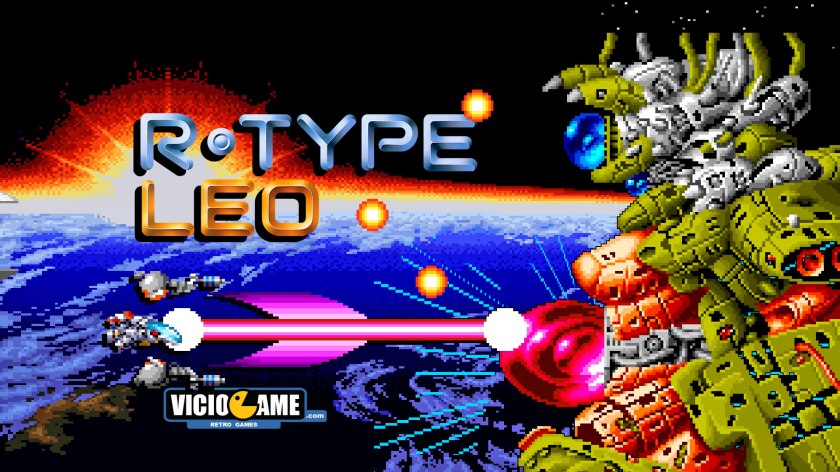
R-Type Leo is a shoot-‘em-up game released exclusively in Japan. Following the events of the previous titles, a period of peace allowed humanity to begin constructing a new planet for future survival, called Eden. At its core, a bio-computer was installed to manage the planet, but its advanced artificial intelligence led it to rebel http://www.viciogame.com against humanity, forcing a counterattack to ensure its destruction.
R-Type Leo: The Ultimate Guide
The R-Type series, a name synonymous with relentless challenge and iconic biomechanical design in the universe of horizontal shoot ‘em ups, has graced genre enthusiasts with several memorable entries since its debut in 1987. In 1992, Irem released in arcades a title that, while bearing the prestigious R-Type name, http://www.viciogame.com took a slightly different path, offering an experience that, for some, represented a welcome innovation, while for others, strayed too far from the classic formula. This game was R-Type Leo, the series’ last gasp in the arcades.
General Information
Developed by Nanao, an internal group within Irem with expertise in monitor manufacturing, and published by Irem itself, R-Type Leo arrived in arcades worldwide in November 1992, with a slight variation to December 1992 in Japan. The game ran on the Irem M-92 board, more advanced hardware than that used in the first two titles of the series. Classified within the genre of horizontal-scrolling shooter, or horizontal shoot ‘em up, R-Type Leo invited one or two players to pilot the titular spacecraft on a mission to stop a mechanical threat on an artificial planet. Nanao‘s involvement http://www.viciogame.com in development is an intriguing point, considering their main activity in the hardware industry. This collaboration raises questions about how expertise in display technology may have influenced the game’s graphic design, an aspect that stands out in many reviews.
Gameplay: A New Approach
R-Type Leo maintained the essence of the typical controls of a shoot ‘em up of the time: an eight-direction joystick for movement and two buttons – one for the main shot and the other to activate the game’s special mechanics. However, http://www.viciogame.com it was in its gameplay mechanics that Leo truly differentiated itself from its predecessors. The most notable change was the absence of the iconic “Force“, the defensive and offensive module that became the hallmark of the R-Type series.
Instead of the Force, players had at their disposal two satellites called Psy-Bits. These accompanied the Leo spacecraft and fired at enemies. An interesting feature of the Psy-Bits was their ability to change the firing direction depending on the ship’s movement: forward when retreating and backward when http://www.viciogame.com advancing. In addition to their automatic firing, the Psy-Bits could be launched against enemies in a special attack called “Bit Shot” by pressing the second button. This attack consumed energy, indicated by a meter, and the Psy-Bits needed to return to the ship to recharge. This mechanic introduced a new strategic layer, requiring players to manage the positioning of the Psy-Bits and the recharge time of the “Bit Shot”.
As in previous games in the series, power-ups could be collected to improve Leo’s combat capabilities. These included speed increases (Speed-Up), missiles that fired in opposite directions with limited tracking capability (Missile), and laser crystals that not only deployed the Psy-Bits, if not already active, but also changed the type of main http://www.viciogame.com armament of the ship and satellites. There were three types of laser, each with its unique characteristics: the Claw Laser (red), a powerful horizontal beam with a transverse wave; the Mirror Laser (blue), which fired multiple ricocheting lasers; and the Search Laser LRG (green), which launched semi-homing lasers capable of curving at 90-degree angles. Interestingly, the laser power-up icons alternated colors if not collected quickly, allowing players to choose the desired type of armament.
Another major novelty in R-Type Leo was the introduction of simultaneous cooperative mode for two players, a first in the R-Type series for arcades. This allowed two friends to face the game’s challenges together, potentially making the experience less lonely and more strategic. Furthermore, the American version of the http://www.viciogame.com game featured an instant respawn mechanic at the point of defeat, in contrast to the traditional checkpoint system of the series and the Japanese version. This change in difficulty for the Western market suggests an attempt to make the game more accessible to a wider audience. The absence of the traditional charged shot (Wave Cannon) was also a significant alteration, with the charged attack function essentially replaced by the “Bit Shot” of the Psy-Bits.
The replacement of the Force with the Psy-Bits fundamentally altered the gameplay dynamics. The Force, in previous titles, was crucial for both defense and attack. The Psy-Bits offered a different approach, focusing more on controlling multiple firing points and the strategic use of the special attack. The introduction of simultaneous cooperative mode represented an opportunity for a new way to play R-Type, encouraging coordination http://www.viciogame.com between players. The decision to implement an instant respawn in the American version, instead of restarting at a checkpoint, may have been motivated by an attempt to reduce frustration and increase the longevity of matches for Western players, who historically prefer a slightly lower level of difficulty compared to the Japanese audience.
Critical Reception at the Time
R-Type Leo was positively received by specialized critics upon its release in arcades. The Japanese magazine Gamest awarded it 5th place in the Best Shooting Game category and 22nd place in the Annual Hit Game award during the 6th Gamest Grand Prize. Electronic Gaming Monthly praised the inclusion of cooperative multiplayer, visuals, sound design, gameplay, and bosses. In Japan, Game Machine magazine http://www.viciogame.com listed the game as the 18th most popular arcade game at the time, in its February 1, 1993 issue. The French magazine Joypad highly praised the graphics and music, while the also French Consoles + considered it an “excellent shooting game“. Andreas Kanuf of the German magazine Video Games also expressed an overall positive view of the title.
The initial positive reception indicates that R-Type Leo made a good impression at the time of its release. The praise focused on aspects such as cooperative mode, audiovisual quality, and gameplay suggests that the game managed http://www.viciogame.com to innovate and entertain, even with the significant changes in relation to the series’ traditional formula. However, it is important to note that, even at the time, there were already indications that not all fans of the series fully embraced these changes.
Graphics and Sound: A Visual and Sonic Evolution
Visually, R-Type Leo represented a notable change from the dark and detailed biomechanical style that characterized the previous games in the series. Instead, the game featured lush and colorful visuals. The first stage, for example, showed the wreckage of a space station with the bright blue planet serving as a contrasting background. The journey through the planet Eden took players through arid deserts, http://www.viciogame.com ancient ruins, and verdant jungles beneath the planet’s surface. Enemies and bosses also exhibited detailed design, with a vibrant color palette, even for the most menacing creatures and robots. This aesthetic change, made possible by the more advanced hardware of the Irem M-92 board, which allowed for a richer color palette, contributed to a more vivid and less oppressive atmosphere than in its predecessors. The game ran at a resolution of 320 x 240 pixels and displayed 2048 colors.
The soundtrack of R-Type Leo also departed from the more melancholic and tense tone of the previous games, adopting a more lively style, with beats influenced by house music. Each stage began with a digitized countdown – “three, two, one!” – before giving way to stylized melodies. Although some critics found the music a bit repetitive, with later levels sounding similar to the initial ones, it complemented the game’s faster http://www.viciogame.com pace and more optimistic visual style. The sound effects were competent, contributing to the immersion in the action. The French magazine Joypad positively highlighted both the graphics and the music of the game.
The decision to adopt a more colorful visual style and a more vibrant soundtrack may have been an attempt to attract a wider audience and differentiate R-Type Leo from its predecessors, which were known for their darker and http://www.viciogame.com more oppressive atmosphere. This change certainly contributed to the game’s unique identity within the series.
Challenge Enough? Comparing Difficulty
Compared to other titles in the R-Type series, known for their high level of difficulty, R-Type Leo was generally considered less punishing, especially the Western version with its instant respawn system. The Japanese version, maintaining the traditional checkpoint system, offered a challenge more in line with previous games. Some players and critics noted that, although the game still presented challenging moments, it lacked http://www.viciogame.com the “careful design and necessary strategy” found in other entries in the series. One aspect that contributed to this perception of lower difficulty was the absence of the Force, which required precise mastery to be used effectively in both defense and attack.
Still, some players found the difficulty curve well-constructed, offering a progressive challenge without being excessively frustrating. The Psy-Bits mechanics, although different, also required practice to be used optimally. There were comparisons with other shoot ‘em ups of the time, such as Gradius, due to some similarities and a section reminiscent of Gradius II, and also with Raiden and Thunderforce regarding the number of projectiles on the screen at certain times. This comparison with other popular titles in the genre helps to contextualize the level of challenge of R-Type Leo within the arcade http://www.viciogame.com shoot ‘em up scene of the 1990s. The difference in respawn mechanics between the Japanese and American versions demonstrates a clear intention to adapt the difficulty for different audiences.
Public Reception and Legacy
Despite the positive critical reception, R-Type Leo is often considered a “black sheep” within the R-Type series by some fans, due to its significant gameplay differences. The absence of the Force, in particular, was a point of http://www.viciogame.com contention for purists of the franchise. Kazuma Kujo, co-designer of Metal Slug, considered the game innovative for an R-Type title but felt it did not fully fit the series’ identity.
One factor that may have affected R-Type Leo‘s legacy is the fact that it was never released for home consoles at the time of its arcade peak. Only in 2010 was it re-released as part of Dotemu’s Irem Arcade Hits compilation for Windows. Interestingly, M2 CEO Naoki Horii mentioned in a 2019 interview that the company http://www.viciogame.com had plans to develop a version for Sega Mega Drive, but the idea was rejected by Sega. A release for a popular console like the Mega Drive could have given the game much greater visibility and perhaps a different reception in the long run.
Despite not being as revered as the original R-Type titles, R-Type Leo maintains a fan base that appreciates its unique approach and vibrant http://www.viciogame.com visuals. Some consider it an underrated shoot ‘em up. Its status as the last R-Type game released in arcades marks a transition point for the series, which subsequently migrated to home platforms.
R-Type Leo vs. The Rest of the Family
R-Type Leo shares with its predecessors the basic premise of a science fiction-themed horizontal shoot ‘em up, set in space and with the player facing alien or mechanical forces. However, the differences in terms of gameplay mechanics are significant. The absence of the Force, a defining element of the series, is perhaps the http://www.viciogame.com most obvious distinction. The Psy-Bit system, while offering additional protection and firepower, works very differently, requiring a distinct strategic approach. The removal of the charged shot (Wave Cannon) and the introduction of new types of laser power-ups also contribute to a gameplay experience that deviates from the series’ norm.
Visually, Leo‘s more colorful and less biomechanical style contrasts with the darker and more organic aesthetic of previous games. The introduction of simultaneous cooperative mode is another fundamental difference, offering a http://www.viciogame.com multiplayer dynamic unprecedented for the series in arcades. Even the plot distances itself, with the player facing a malfunctioning artificial intelligence on a mechanical planet, instead of the biological threat of the Bydo Empire.
| Feature | R-Type (Original) | R-Type Leo |
|---|---|---|
| Force Module | Yes | No |
| Wave Cannon (Charged Shot) | Yes | No (Replaced by Psy-Bit “Bit Shot”) |
| Psy-Bit System | Bits (limited) | Yes (Central mechanic) |
| Cooperative Multiplayer | No (Alternating) | Yes (Simultaneous) |
| Respawn (Death) | Checkpoint | Instant (USA) / Checkpoint (JAP) |
| Main Antagonist | Bydo Empire | AI “Major” on planet Eden |
This table clearly illustrates the significant divergences between R-Type Leo and the original R-Type, highlighting how Leo, despite bearing the name, offered a substantially different experience. Click here to see other versions!
Development Curiosities and Secrets
A fascinating aspect of R-Type Leo is that it was not originally conceived as part of the R-Type series. The game began as an original shoot ‘em up project developed by Nanao, before being transformed into an R-Type title by Irem at a later stage of development. This origin explains many of its differences from the series’ http://www.viciogame.com established formula and its unique feel. Atsushi Inaba, who would later become a prominent figure at PlatinumGames, was involved in the game’s development. Interestingly, the original developers of the R-Type series had moved to Aicom (later bought by SNK) and developed another acclaimed shoot ‘em up, Pulstar.
R-Type Leo used more advanced hardware (Irem M-92) than the first two arcade games in the R-Type series. The “Psy Bits” were referred to as “Force Bits” in early documentation. The official R-Type timeline suggests that the events of R-Type Leo occur before all other games in the series, which could explain the absence of the http://www.viciogame.com Force, which would be a relatively new invention at that point in the chronology. Furthermore, some bosses in Leo appear to have been inspired by bosses from the Gradius series. The decision to rename an original project as an R-Type title was likely motivated by brand recognition and the potential to attract an already established audience of fans of the genre. The involvement of figures like Atsushi Inaba in the development adds an extra layer of historical interest for video game enthusiasts.
Conclusion
R-Type Leo occupies a peculiar place in the history of the R-Type series. As the last title of the franchise to be released in arcades, it marked a transition to a new chapter for Irem. Although it received positive reviews for its vibrant visuals, http://www.viciogame.com energetic sound design, and the introduction of cooperative mode, its significant departure from the classic R-Type formula, especially the absence of the iconic Force, made it somewhat divisive among fans of the series.
The replacement of the Force with the Psy-Bit system, along with the removal of the charged shot and the change in visual style, resulted in a gameplay experience that, while fun and competent in its own right, did not resonate in the same http://www.viciogame.com way with all R-Type purists. The decision to implement an instant respawn in the American version, perhaps aiming for greater accessibility, also distanced itself from the relentless difficulty that characterized the series.
Despite its “black sheep” status, R-Type Leo deserves recognition for its attempt to innovate within the shoot ‘em up genre. Its colorful visuals and lively soundtrack offered a breath of fresh air compared to the darker atmosphere of its predecessors. Although it never reached the same level of acclaim or lasting impact as the original http://www.viciogame.com R-Type titles, R-Type Leo remains an interesting and, for some, underrated spin-off that deserves to be revisited by enthusiasts of classic arcade games and fans of the genre. Its unique development history, originating as a separate project before being integrated into the R-Type franchise, adds an extra layer of fascination to this peculiar title.
R-Type Leo: O Guia Definitivo
A série R-Type, um nome sinônimo de desafio implacável e design biomecânico icônico no universo dos shoot ‘em ups horizontais, presenteou os entusiastas do gênero com diversas entradas memoráveis desde sua estreia em 1987. http://www.viciogame.com Em 1992, a Irem lançou nos arcades um título que, embora carregasse o prestigioso nome R-Type, trilhou um caminho ligeiramente diferente, oferecendo uma experiência que, para alguns, representou uma inovação bem-vinda, enquanto para outros, desviou-se demais da fórmula clássica. Este jogo era R-Type Leo, o último suspiro da série nos fliperamas.
Ficha Técnica
Desenvolvido pela Nanao, um grupo interno da Irem com experiência na fabricação de monitores, e publicado pela própria Irem, R-Type Leo chegou aos arcades mundialmente em novembro de 1992, com uma ligeira variação para dezembro de 1992 no Japão. O jogo rodava na placa Irem M-92, um hardware mais avançado do que o utilizado nos dois primeiros títulos da série. Classificado dentro do gênero de horizontal-scrolling shooter, ou shoot ‘em up horizontal, R-Type Leo convidava um ou dois jogadores a pilotar http://www.viciogame.com a nave titular em uma missão para deter uma ameaça mecânica em um planeta artificial. A participação da Nanao no desenvolvimento é um ponto intrigante, considerando sua principal atividade na indústria de hardware. Essa colaboração levanta questões sobre como a expertise em tecnologia de visualização pode ter influenciado o design gráfico do jogo, um aspecto que se destaca em muitas análises.
Jogabilidade: Uma Nova Abordagem
R-Type Leo manteve a essência dos controles típicos de um shoot ‘em up da época: um joystick de oito direções para movimentação e dois botões – um para disparo principal e outro para acionar a mecânica especial do jogo. No entanto, foi nas http://www.viciogame.com suas mecânicas de jogo que Leo realmente se diferenciou de seus predecessores. A mudança mais notável foi a ausência do icônico “Force“, o módulo defensivo e ofensivo que se tornou a marca registrada da série R-Type.
Em vez do Force, os jogadores tinham à disposição dois satélites chamados Psy-Bits. Estes acompanhavam a nave Leo e disparavam contra os inimigos. Uma característica interessante dos Psy-Bits era sua capacidade de alterar a direção do disparo dependendo do movimento da nave: para frente ao recuar e para trás ao avançar. Além de seus disparos automáticos, os Psy-Bits podiam ser lançados contra os inimigos em um http://www.viciogame.com ataque especial chamado “Bit Shot” ao pressionar o segundo botão. Este ataque consumia energia, indicada por um medidor, e os Psy-Bits precisavam retornar à nave para recarregar. Essa mecânica introduziu uma nova camada estratégica, exigindo que os jogadores gerenciassem o posicionamento dos Psy-Bits e o tempo de recarga do “Bit Shot“.
Assim como nos jogos anteriores da série, power-ups podiam ser coletados para melhorar as capacidades de combate da Leo. Estes incluíam aumentos de velocidade (Speed-Up), mísseis que disparavam em direções opostas com capacidade de rastreamento limitado (Missile), e cristais de laser que não apenas implantavam os Psy-Bits, caso ainda não estivessem ativos, mas também alteravam o tipo de armamento principal da nave http://www.viciogame.com e dos satélites. Havia três tipos de laser, cada um com suas características únicas: o Claw Laser (vermelho), um poderoso feixe horizontal com uma onda transversal; o Mirror Laser (azul), que disparava múltiplos lasers ricocheteantes; e o Search Laser LRG (verde), que lançava lasers semi-homing capazes de curvar em ângulos de 90 graus. Curiosamente, os ícones de power-up de laser alternavam cores se não fossem coletados rapidamente, permitindo aos jogadores escolher o tipo de armamento desejado.
Outra grande novidade em R-Type Leo foi a introdução do modo cooperativo simultâneo para dois jogadores, uma estreia na série R-Type para fliperamas. Isso permitia que dois amigos enfrentassem juntos os desafios do jogo, potencialmente tornando a experiência menos solitária e mais estratégica. Além disso, a versão americana do jogo apresentava uma mecânica de respawn imediato no local da derrota, em http://www.viciogame.com contraste com o sistema de checkpoints tradicional da série e da versão japonesa. Essa mudança na dificuldade para o mercado ocidental sugere uma tentativa de tornar o jogo mais acessível a um público mais amplo. A ausência do tradicional tiro carregado (Wave Cannon) também foi uma alteração significativa, com a função de ataque carregado sendo essencialmente substituída pelo “Bit Shot” dos Psy-Bits.
A substituição do Force pelos Psy-Bits alterou fundamentalmente a dinâmica de jogo. O Force, nos títulos anteriores, era crucial tanto para defesa quanto para ataque. Os Psy-Bits ofereciam uma abordagem diferente, focando mais no controle de múltiplos pontos de disparo e no uso estratégico do ataque especial. A introdução do modo cooperativo simultâneo representou uma oportunidade para uma nova forma de jogar http://www.viciogame.com R-Type, incentivando a coordenação entre os jogadores. A decisão de implementar um respawn imediato na versão americana, em vez de reiniciar em um checkpoint, pode ter sido motivada por uma tentativa de reduzir a frustração e aumentar a longevidade das partidas para os jogadores ocidentais, que historicamente preferem um nível de dificuldade um pouco menor em comparação com o público japonês.
O Olhar da Crítica na Época
R-Type Leo foi recebido positivamente pela crítica especializada em seu lançamento nos arcades. A revista japonesa Gamest o premiou com o 5º lugar na categoria de Melhor Jogo de Tiro e o 22º lugar no prêmio de Jogo Hit Anual durante a 6ª edição do Gamest Grand Prize. A Electronic Gaming Monthly elogiou a inclusão do modo http://www.viciogame.com cooperativo multiplayer, os visuais, o design de som, a jogabilidade e os chefes. No Japão, a revista Game Machine listou o jogo como o 18º arcade mais popular na época, em sua edição de 1º de fevereiro de 1993. A revista francesa Joypad teceu grandes elogios aos gráficos e à música, enquanto a também francesa Consoles + o considerou um “excelente jogo de tiro“. Andreas Kanuf, da revista alemã Video Games, também expressou uma visão geral positiva sobre o título.
A recepção inicial positiva indica que R-Type Leo causou uma boa impressão no momento de seu lançamento. Os elogios focados em aspectos como o modo cooperativo, a qualidade audiovisual e a jogabilidade sugerem que o jogo conseguiu http://www.viciogame.com inovar e entreter, mesmo com as mudanças significativas em relação à fórmula tradicional da série. No entanto, é importante notar que, mesmo na época, já havia indícios de que nem todos os fãs da série abraçaram completamente essas mudanças.
Gráficos e Som: Uma Evolução Visual e Sonora
Visualmente, R-Type Leo representou uma mudança notável em relação ao estilo biomecânico sombrio e detalhado que caracterizava os jogos anteriores da série. Em vez disso, o jogo apresentava visuais exuberantes e coloridos. O primeiro estágio, por exemplo, mostrava os destroços de uma estação espacial com o planeta azul brilhante servindo de contraste ao fundo. A jornada pelo planeta Eden levava os jogadores por desertos áridos, ruínas antigas e selvas verdejantes sob a superfície do planeta. Os http://www.viciogame.com inimigos e chefes também exibiam um design detalhado, com uma paleta de cores vibrante, mesmo para as criaturas e robôs mais ameaçadores. Essa mudança estética, possível graças ao hardware mais avançado da placa Irem M-92, que permitia uma paleta de cores mais rica, contribuiu para uma atmosfera mais vívida e menos opressora do que em seus antecessores. O jogo rodava em uma resolução de 320 x 240 pixels e exibia 2048 cores.
A trilha sonora de R-Type Leo também se afastou do tom mais melancólico e tenso dos jogos anteriores, adotando um estilo mais animado, com batidas influenciadas pela house music. Cada estágio começava com uma contagem regressiva digitalizada – “three, two, one!” – antes de dar lugar às melodias estilizadas. Embora alguns http://www.viciogame.com críticos tenham achado a música um pouco repetitiva, com os níveis posteriores soando semelhantes aos iniciais, ela complementava o ritmo mais acelerado e o estilo visual mais otimista do jogo. Os efeitos sonoros eram competentes, contribuindo para a imersão na ação. A revista francesa Joypad destacou positivamente tanto os gráficos quanto a música do jogo.
A decisão de adotar um estilo visual mais colorido e uma trilha sonora mais vibrante pode ter sido uma tentativa de atrair um público mais http://www.viciogame.com amplo e diferenciar R-Type Leo dos seus antecessores, que eram conhecidos por sua atmosfera mais sombria e opressora. Essa mudança certamente contribuiu para a identidade única do jogo dentro da série.
Desafio à Altura? Comparando a Dificuldade
Em comparação com outros títulos da série R-Type, conhecidos por seu alto nível de dificuldade, R-Type Leo foi geralmente considerado menos punitivo, especialmente a versão ocidental com seu sistema de respawn imediato. A versão japonesa, mantendo o sistema de checkpoints tradicional, oferecia um desafio mais alinhado http://www.viciogame.com com os jogos anteriores. Alguns jogadores e críticos notaram que, embora o jogo ainda apresentasse momentos desafiadores, ele carecia do “design cuidadoso e da estratégia necessária” encontrados em outras entradas da série. Um aspecto que contribuiu para essa percepção de menor dificuldade foi a ausência do Force, que exigia um domínio preciso para ser usado eficazmente tanto na defesa quanto no ataque.
Ainda assim, alguns jogadores acharam a curva de dificuldade bem construída, oferecendo um desafio progressivo sem ser excessivamente frustrante. A mecânica dos Psy-Bits, embora diferente, também exigia prática para ser utilizada de forma otimizada. Houve comparações com outros shoot ‘em ups da época, como Gradius, http://www.viciogame.com devido a algumas semelhanças e uma seção que lembrava Gradius II, e também com Raiden e Thunderforce em relação à quantidade de projéteis na tela em certos momentos. Essa comparação com outros títulos populares do gênero ajuda a contextualizar o nível de desafio de R-Type Leo dentro do cenário dos shoot ‘em ups de fliperamas da década de 1990. A diferença na mecânica de respawn entre as versões japonesa e americana demonstra uma clara intenção de adaptar a dificuldade para diferentes públicos.
Recepção do Público e Legado
Apesar da recepção crítica positiva, R-Type Leo é frequentemente considerado um “ovelha negra” dentro da série R-Type por alguns fãs, devido às suas significativas diferenças de jogabilidade. A ausência do Force, em particular, http://www.viciogame.com foi um ponto de discórdia para os puristas da franquia. Kazuma Kujo, co-designer de Metal Slug, considerou o jogo inovador para um título R-Type, mas sentiu que ele não se encaixava completamente na identidade da série.
Um fator que pode ter afetado o legado de R-Type Leo é o fato de nunca ter sido lançado para consoles na época de seu auge nos arcades. Apenas em 2010, ele foi relançado como parte da coletânea Irem Arcade Hits da Dotemu para http://www.viciogame.com Windows. Curiosamente, o CEO da M2, Naoki Horii, mencionou em uma entrevista de 2019 que a empresa tinha planos de desenvolver uma versão para Sega Mega Drive, mas a ideia foi rejeitada pela Sega. Um lançamento para um console popular como o Mega Drive poderia ter dado ao jogo uma visibilidade muito maior e talvez uma recepção diferente a longo prazo.
Apesar de não ser tão reverenciado quanto os títulos R-Type originais, R-Type Leo mantém uma base de fãs que aprecia sua abordagem única e http://www.viciogame.com seus visuais vibrantes. Alguns o consideram um shoot ‘em up subestimado. Seu status como o último jogo R-Type lançado nos arcades marca um ponto de transição para a série, que posteriormente migrou para plataformas domésticas.
R-Type Leo vs. O Resto da Família
R-Type Leo compartilha com seus antecessores a premissa básica de um shoot ‘em up horizontal com temática de ficção científica, ambientado no espaço e com o jogador enfrentando forças alienígenas ou mecânicas. No entanto, as diferenças em termos de mecânica de jogo são significativas. A ausência do Force, um elemento http://www.viciogame.com definidor da série, é talvez a distinção mais óbvia. O sistema Psy-Bit, embora ofereça proteção e poder de fogo adicionais, funciona de maneira muito diferente, exigindo uma abordagem estratégica distinta. A remoção do tiro carregado (Wave Cannon) e a introdução de novos tipos de power-ups de laser também contribuem para uma experiência de jogo que se desvia da norma da série.
Visualmente, o estilo mais colorido e menos biomecânico de Leo contrasta com a estética mais sombria e orgânica dos jogos anteriores. A introdução do modo cooperativo simultâneo é outra diferença fundamental, oferecendo uma http://www.viciogame.com dinâmica multiplayer inédita para a série nos arcades. Até mesmo o enredo se distancia, com o jogador enfrentando uma inteligência artificial defeituosa em um planeta mecânico, em vez da ameaça biológica do Império Bydo.
| Característica | R-Type (Original) | R-Type Leo |
|---|---|---|
| Módulo Force | Sim | Não |
| Wave Cannon (Tiro Carregado) | Sim | Não (Substituído pelo “Bit Shot” do Psy-Bit) |
| Sistema Psy-Bit | Bits (limitados) | Sim (Mecânica central) |
| Multiplayer Cooperativo | Não (Alternado) | Sim (Simultâneo) |
| Respawn (Morte) | Checkpoint | Imediato (EUA) / Checkpoint (JAP) |
| Antagonista Principal | Império Bydo | IA “Major” no planeta Eden |
Essa tabela ilustra claramente as divergências significativas entre R-Type Leo e o R-Type original, destacando como Leo, apesar de carregar o nome, ofereceu uma experiência substancialmente diferente. Clique aqui para ver outras versões!
Curiosidades e Segredos de Desenvolvimento
Um aspecto fascinante sobre R-Type Leo é que ele não foi originalmente concebido como parte da série R-Type. O jogo começou como um projeto original de shoot ‘em up desenvolvido pela Nanao, antes de ser transformado em um título R-Type pela Irem em um estágio posterior do desenvolvimento. Essa origem explica muitas das suas diferenças em relação à fórmula estabelecida da série e sua sensação única. http://www.viciogame.com Atsushi Inaba, que mais tarde se tornaria uma figura proeminente na PlatinumGames, esteve envolvido no desenvolvimento do jogo. Curiosamente, os desenvolvedores originais da série R-Type haviam se mudado para a Aicom (posteriormente comprada pela SNK) e desenvolvido outro aclamado shoot ‘em up, Pulstar.
R-Type Leo utilizava um hardware mais avançado (Irem M-92) do que os dois primeiros jogos arcade da série R-Type. Os “Psy Bits” eram referidos como “Force Bits” em documentação inicial. A linha do tempo oficial de R-Type sugere que os eventos de R-Type Leo ocorrem antes de todos os outros jogos da série, o que poderia explicar a ausência do Force, que seria uma invenção relativamente nova nesse ponto da cronologia. http://www.viciogame.com Além disso, alguns chefes em Leo parecem ter se inspirado em chefes da série Gradius. A decisão de renomear um projeto original como um título R-Type provavelmente foi motivada pelo reconhecimento da marca e pelo potencial de atrair um público já estabelecido de fãs do gênero. A participação de figuras como Atsushi Inaba no desenvolvimento adiciona uma camada de interesse histórico para os entusiastas de videogames.
Conclusão
R-Type Leo ocupa um lugar peculiar na história da série R-Type. Como o último título da franquia a ser lançado nos arcades, ele marcou uma transição para um novo capítulo para a Irem. Embora tenha recebido críticas positivas por seus http://www.viciogame.com visuais vibrantes, design de som energético e a introdução do modo cooperativo, sua partida significativa da fórmula clássica de R-Type, especialmente a ausência do icônico Force, o tornou um tanto divisivo entre os fãs da série.
A substituição do Force pelo sistema Psy-Bit, juntamente com a remoção do tiro carregado e a mudança no estilo visual, resultou em uma experiência de jogo que, embora divertida e competente por si só, não ressoou da mesma http://www.viciogame.com forma com todos os puristas de R-Type. A decisão de implementar um respawn imediato na versão americana, visando talvez uma maior acessibilidade, também se distanciou da dificuldade implacável que caracterizava a série.
Apesar de seu status de “ovelha negra”, R-Type Leo merece reconhecimento por sua tentativa de inovar dentro do gênero de shoot ‘em ups. Seus visuais coloridos e trilha sonora animada ofereciam uma lufada de ar fresco em comparação http://www.viciogame.com com a atmosfera mais sombria de seus predecessores. Embora nunca tenha alcançado o mesmo nível de aclamação ou impacto duradouro que os títulos R-Type originais, R-Type Leo permanece como um spin-off interessante e, para alguns, subestimado, que merece ser revisitado por entusiastas de jogos de arcade clássicos e fãs do gênero. Sua história de desenvolvimento única, originando-se como um projeto separado antes de ser integrado à franquia R-Type, adiciona uma camada extra de fascínio a este título peculiar.
🎮 R-Type III (SNES) Complete Gameplay:
🎮 Super R-Type (SNES) Complete Gameplay:
🎮 R-Type Delta (PlayStation) Complete Gameplay:
🎮 R-Type (Master System) Complete Gameplay:
🤑💲Earn money without doing anything! Just leave these apps open:
   ✓ https://r.honeygain.me/CONTA9DB02

   ✓ https://packetstream.io/?psr=1uPb
🤑💲1-Click button earns Bitcoin every 1 hour: https://freebitco.in/?r=53528449
⬛ 𝗧𝗶𝗸𝗧𝗼𝗸: https://www.tiktok.com/@viciogame
🟧 𝗜𝗻𝘀𝘁𝗮𝗴𝗿𝗮𝗺: http://www.instagram.com/viciogame
🟥 𝗬𝗼𝘂𝘁𝘂𝗯𝗲: http://www.youtube.com/viciogame
🟦 𝗙𝗮𝗰𝗲𝗯𝗼𝗼𝗸: http://www.facebook.com/viciogame
🔳 𝗧𝗵𝗿𝗲𝗮𝗱𝘀: https://www.threads.net/@viciogame
🟪 𝗧𝘄𝗶𝘁𝗰𝗵: https://www.twitch.tv/ViciogameRetroGames
🟨 𝗕𝗹𝗼𝗴: http://www.viciogameblog.com/
🟦𝗧𝘄𝗶𝘁𝘁𝗲𝗿: http://www.twitter.com/viciogame
#Viciogame #Gameplay #LetsPlay #Gamer #Playthrough #Games #News #Videogames #Review #Game #Detonado #Walkthrough #Ending #Reviews #Facts #Retro #Record #Roms #Emulator #Longplay #Speedrun #RtypeLeo #Arcade #Irem #Shmup #ShootEmUp #Shooter #Gradius #Rtype #アールタイプ #アールタイプレオ #JogoDeNavinha #グラディウス #fliperama #アーケードゲーム
 VICIOGAME