
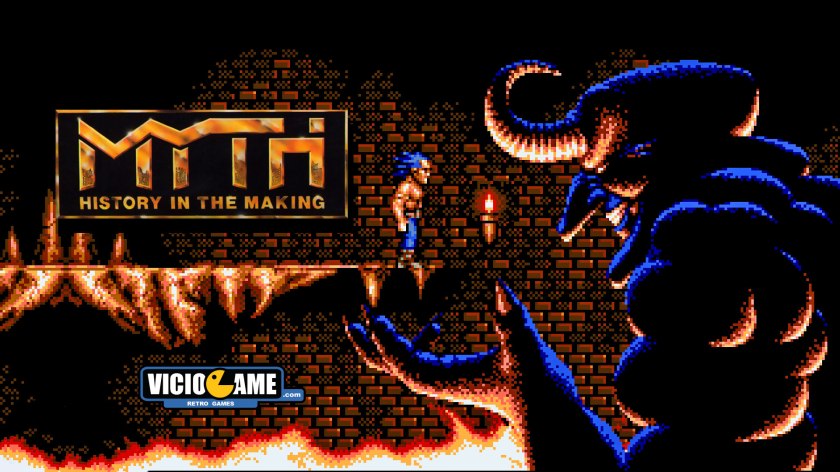
Myth: History in the Making is a 2D action-platformer game released in 1992 for the Commodore Amiga. The game spans multiple mythologies, from ancient Greece to Viking legends, where you face off against http://www.viciogame.com enemies like Thor, demons, and other legendary foes. You play as a mystic warrior who harnesses the powers of Stonehenge to travel through time and battle evil forces threatening history itself.
MYTH: History in the Making – The Ultimate Guide
On the shelf of classic games, few names resonate with the strength of MYTH: History in the Making. Originally released in 1989 for platforms like the Commodore 64, ZX Spectrum, and Amstrad CPC, this title from System 3 Software Ltd. was already acclaimed. But it was in 1992 that the legend truly took shape and power, http://www.viciogame.com landing on the Commodore Amiga. The wait was long, about two years of development filled with anticipation and advertising campaigns, but the result, as many attested at the time, was worth every second.
The premise throws us into a temporal whirlwind. The evil god Dameron has seized control, corrupting benevolent deities and threatening to alter the course of history and our destiny. Myths cease to be theory and become a palpable and dangerous reality. Unlike the 8-bit versions, where the hero was a 20th-century boy accidentally http://www.viciogame.com transported to the “Time of Legends,” the Amiga version introduces us to Ankalagan, a mystical warrior from 63 AD. Using the ancestral powers of Stonehenge, Ankalagan travels through mythological eras to stop the spread of evil, question the judgment of the gods, and face demons. His mission is clear: restore balance and ensure history follows its correct course.
MYTH on the Amiga presents itself as a platform-adventure game with strong beat ‘em up and puzzle elements. Controlling Ankalagan, the player explores vast scenarios recreating legendary locations. The journey begins in the fiery depths of Hades, the underworld of Greek mythology. There, we face hordes of skeleton warriors, whose decapitated skulls must be thrown into fire pits to summon a guardian demon. Defeating http://www.viciogame.com this creature grants the trident, essential for overcoming the next challenge: Cerberus, the three-headed dog (or, as described in some reviews, a leonine creature or the Chimera). The game’s progression follows this ingenious logic: each boss or challenge overcome provides the item or key needed to defeat the next, requiring not only combat skill but also reasoning and knowledge (or discovery) of the enemies’ mythological weaknesses.
After Hades, the adventure continues to Ancient Greece, facing Greek soldiers and the imposing statue of Achilles. Finding the legendary hero’s shield is crucial, not only to make the soldiers bow but mainly to defend against Medusa’s petrifying eye bolts. The confrontation with the gorgon demands precision: use the shield to deflect her attacks and, at the right moment, strike her neck with the sword. Medusa’s severed head then http://www.viciogame.com becomes the weapon to defeat the terrifying multi-headed Hydra, the final guardian of this era. The journey continues through Norse mythology, with its goblins and giant dragons, culminating in a clash against Thor himself. Finally, we travel to Ancient Egypt, unraveling enigmas in pyramids full of traps and mummies, before the final confrontation against Dameron in a surprising shoot ‘em up stage at the edge of existence.
The leap to the Amiga was monumental in technical terms. The graphics were completely redone, abandoning the simpler look of the 8-bit versions for meticulously drawn, detailed sprites with fluid animations. The protagonist Ankalagan, now with a tougher look and bluish hair, moves agilely through the environments. http://www.viciogame.com The stage bosses, like the demon emerging from the flames in Hades or Medusa herself, are imposing and visually impressive. System 3 managed to create a palpable mythological atmosphere, with scenarios that, according to critics at the time, exhibited “serious technical refinements geared towards the console market“. The smooth multi-directional scrolling followed the hero’s movements, contributing to the immersion.
Sound is another absolute highlight. The absence of music during most of the exploration was a bold choice, but one that worked magnificently, allowing the sound effects and the “atmosphere” created by Don Howard, Richard Joseph, and Phil Thornton to shine. The growing roar of infernal fire as you approach, the hisses and grunts of creatures, the metallic clash of swords – everything contributed to an immersive and http://www.viciogame.com memorable auditory experience. Amiga Action magazine declared that “the sound has to be heard to be believed“, while Zero called it “simply delicious“. A soundtrack emerges in the final battle against Dameron, adding an energetic climax, although some considered it a short and repetitive loop.
The development, led by Mark Cale (Design and Production), with programming by Dave Colclough and graphics by Robin Levy, among other talents at System 3, resulted in a robust game. Requiring an Amiga 500/2000 with 1MB of RAM, the game came on 3.5″ floppy disks and supported a digital joystick for one player. A special edition was released, including a comic book (by Colin Bradshaw-Jones) and a poster. In 1993, U.S. Gold Ltd. re-released the game under the budget label Kixx. An Amiga CD32 version appeared in 1994, but it was essentially a direct port of the floppy version, receiving criticism for not http://www.viciogame.com utilizing the console’s features, maintaining the scrolling considered “unstable” by some, and implementing problematic controls (using ‘up’ on the gamepad to jump), making the gameplay feel “slower” and “stiffer” than it should have. An Atari ST version was announced and even demonstrated, but never commercially released. Interestingly, the NES version, released in 1991 by Mindscape, was rebranded as Conan: The Mysteries of Time, adapting Robert E. Howard’s barbarian hero to the game’s structure.
Critical reception for MYTH on the Amiga was extremely positive. Amiga Action gave it 96%, calling it a “winner” and praising the “absolutely superb” graphics and sound. The One (93%) stated: “Great graphics, great sound, great gameplay – http://www.viciogame.com great Game!… He may have started life on the C64 as a boy, but Myth has made it onto the Amiga and become a man.” Zero (91%) highlighted the “beautifully fluid and fast” animation as “pure art“. Amiga Computing (94%) declared: “The best arcade adventure around… buy it… you’ll be hooked“. The 8-bit versions had already garnered awards, like the EMAP Golden Joystick Awards 1990 for Best 8-Bit Graphics, and acclaim from ZZAP!64 (94%), CRASH (96% for Spectrum), and CU Amiga (92% for C64). The game also featured in classic lists by Commodore Format.
However, not everything was perfect. Some criticisms pointed to the sometimes obscure nature of the puzzles. The solution to defeat certain enemies or progress could seem more like trial and error than deductive logic, leading to frustrating http://www.viciogame.com deaths, especially considering the stages weren’t excessively long. The comparison with First Samurai, another System 3 hit, was inevitable, with similarities in graphical style and platforming/combat gameplay. The CD32 version, as mentioned, suffered harsher criticism due to its direct conversion and control issues.
The difficulty was considered well-balanced, mixing hack ‘n’ slash action with puzzles that gradually increased in complexity. Although challenging – some reviewers admitted using save states to complete the game – it was possible to master the mechanics and progress. Replayability came from the satisfaction of http://www.viciogame.com overcoming challenges and mastering the fights against the mythological bosses, each with its unique strategy. There were no alternative game modes, focusing on the single-player main campaign.
The game’s ending on the Amiga showed Ankalagan returning to Stonehenge after defeating Dameron, with text announcing a sequel: Dawn of Steel. Unfortunately, this sequel never materialized, making MYTH Ankalagan’s only http://www.viciogame.com adventure. Years later, in 1998, System 3 planned to revive the franchise on the Sony PlayStation, but the project was canceled, partly due to a dispute with Eidos over the name “Myth” (Eidos had published a game with that name, developed by Bungie, on the PC).
MYTH: History in the Making remains a landmark in the Amiga library. It took the solid foundation of an 8-bit classic and expanded it with the platform’s technical prowess, delivering an atmospheric, challenging, and visually http://www.viciogame.com impactful adventure. Despite some rough edges in gameplay and puzzle design, and a disappointing CD32 version, the original floppy game for Amiga represents a peak of the action-adventure genre of its time. It was a demonstration of System 3‘s ability to create immersive worlds and engaging gameplay, leaving a lasting legacy as one of the great mythological journeys in video games. A true piece of history… in the making.
MYTH: History in the Making – O Guia Definitivo
Na prateleira dos jogos clássicos, poucos nomes ressoam com a força de MYTH: History in the Making. Lançado originalmente em 1989 para plataformas como Commodore 64, ZX Spectrum e Amstrad CPC, este título da System 3 Software Ltd. http://www.viciogame.com já era aclamado. Mas foi em 1992 que a lenda verdadeiramente ganhou forma e poder, ao desembarcar no Commodore Amiga. A espera foi longa, cerca de dois anos de desenvolvimento repletos de expectativa e campanhas publicitárias, mas o resultado, como muitos atestaram na época, valeu cada segundo.
A premissa nos joga em um turbilhão temporal. O deus maligno Dameron tomou o controle, corrompendo divindades benevolentes e ameaçando alterar o curso da história e do nosso destino. Os mitos deixam de ser teoria para se tornarem uma realidade palpável e perigosa. Diferente das versões de 8-bits, onde o herói http://www.viciogame.com era um garoto do século XX transportado acidentalmente para o “Tempo das Lendas”, a versão do Amiga nos apresenta Ankalagan, um guerreiro místico do ano 63 d.C. Utilizando os poderes ancestrais de Stonehenge, Ankalagan viaja através das eras mitológicas para deter a propagação do mal, questionar o julgamento dos deuses e enfrentar demônios. Sua missão é clara: restaurar o equilíbrio e garantir que a história siga seu curso correto.
MYTH no Amiga se apresenta como um jogo de plataforma e aventura com fortes elementos de beat ‘em up e puzzle. Controlando Ankalagan, o jogador explora vastos cenários que recriam locais lendários. A jornada começa nas profundezas flamejantes de Hades, o submundo da mitologia grega. Lá, enfrentamos hordas de esqueletos guerreiros, cujos crânios decapitados devem ser arremessados em poços de fogo para http://www.viciogame.com invocar um demônio guardião. Derrotar essa criatura concede o tridente, essencial para vencer o próximo desafio: Cérbero, o cão de três cabeças (ou, como descrito em algumas análises, uma criatura leonina ou a Quimera). A progressão do jogo segue essa lógica engenhosa: cada chefe ou desafio superado fornece o item ou a chave necessária para vencer o próximo, exigindo não apenas habilidade no combate, mas também raciocínio e conhecimento (ou descoberta) das fraquezas mitológicas dos inimigos.
Após Hades, a aventura segue para a Grécia Antiga, enfrentando soldados gregos e a imponente estátua de Aquiles. Encontrar o escudo do lendário herói é crucial, não apenas para fazer os soldados se curvarem, mas principalmente para se defender dos petrificantes raios oculares da Medusa. O confronto com a górgona exige precisão: usar o escudo para defletir seus ataques e, no momento certo, atacar seu pescoço com a http://www.viciogame.com espada. A cabeça decepada da Medusa torna-se, então, a arma para derrotar a terrível Hidra de múltiplas cabeças, guardiã final desta era. A jornada continua pela mitologia nórdica, com seus goblins e dragões gigantes, culminando em um embate contra o próprio Thor. Por fim, viajamos ao Egito Antigo, desvendando enigmas em pirâmides repletas de armadilhas e múmias, antes do confronto final contra Dameron em uma surpreendente fase de shoot ‘em up nos limites da existência.
O salto para o Amiga foi monumental em termos técnicos. Os gráficos foram completamente refeitos, abandonando o visual mais simples dos 8-bits por sprites meticulosamente desenhados, detalhados e com animações fluidas. O protagonista Ankalagan, agora com um visual mais “durão” e cabelo azulado, movimenta-se com agilidade pelos cenários. Os chefes de fase, como o demônio que emerge das chamas http://www.viciogame.com em Hades ou a própria Medusa, são imponentes e visualmente impressionantes. A System 3 conseguiu criar uma atmosfera mitológica palpável, com cenários que, segundo a crítica da época, exibiam “sérios requintes técnicos voltados para o mercado de consoles“. O scrolling multidirecional suave acompanhava os movimentos do herói, contribuindo para a imersão.
O som é outro ponto de destaque absoluto. A ausência de música durante a maior parte da exploração foi uma escolha ousada, mas que funcionou magnificamente, permitindo que os efeitos sonoros e a “atmosfera” criada por Don Howard, Richard Joseph e Phil Thornton brilhassem. O rugido crescente do fogo infernal ao se aproximar, os silvos e grunhidos das criaturas, o som metálico das espadas – tudo http://www.viciogame.com contribuía para uma experiência auditiva imersiva e memorável. A revista Amiga Action declarou que “o som tem que ser ouvido para ser acreditado“, enquanto a Zero o chamou de “simplesmente delicioso“. Uma trilha sonora surge na batalha final contra Dameron, adicionando um clímax energético, embora alguns a considerassem um loop curto e repetitivo.
O desenvolvimento, liderado por Mark Cale (Design e Produção), com programação de Dave Colclough e gráficos de Robin Levy, entre outros talentos da System 3, resultou em um jogo robusto. Exigindo um Amiga 500/2000 com 1MB de RAM, o jogo vinha em disquetes de 3.5″ e suportava joystick digital para um jogador. Uma edição especial foi lançada, incluindo uma história em quadrinhos (por Colin Bradshaw-Jones) e um pôster. Em 1993, a U.S. Gold relançou o jogo sob o selo econômico Kixx. Uma versão para o Amiga CD32 surgiu em 1994, mas foi essencialmente um porte direto da versão em http://www.viciogame.com disquete, recebendo críticas por não aproveitar os recursos do console, manter o scrolling considerado “instável” por alguns e implementar um controle problemático (usar o direcional para cima no gamepad para pular), tornando a jogabilidade mais “lenta” e “rígida” do que deveria. Uma versão para Atari ST foi anunciada e até demonstrada, mas nunca chegou a ser lançada comercialmente. Curiosamente, a versão para NES, lançada em 1991 pela Mindscape, foi rebatizada como Conan: The Mysteries of Time, adaptando o herói bárbaro de Robert E. Howard à estrutura do jogo.
A recepção da crítica ao MYTH no Amiga foi extremamente positiva. Amiga Action deu 96%, chamando-o de “vencedor” e elogiando os gráficos e som “absolutamente soberbos“. The One (93%) afirmou: “Ótimos gráficos, ótimo som, ótima jogabilidade – ótimo Jogo!… Ele pode ter começado a vida no C64 como um garoto, mas Myth chegou http://www.viciogame.com ao Amiga e se tornou um homem“. Zero (91%) destacou a animação “lindamente fluida e rápida” como “pura arte“. Amiga Computing (94%) cravou: “A melhor aventura arcade por aí… compre… você ficará viciado“. As versões 8-bits já haviam acumulado prêmios, como o EMAP Golden Joystick Awards 1990 de Melhores Gráficos 8-Bit, e aclamação da ZZAP!64 (94%), CRASH (96% para Spectrum) e CU Amiga (92% para C64). O jogo também figurou em listas de clássicos da Commodore Format.
No entanto, nem tudo eram flores. Algumas críticas apontavam para a natureza, por vezes, obscura dos puzzles. A solução para derrotar certos inimigos ou progredir podia parecer mais fruto de tentativa e erro do que lógica dedutiva, http://www.viciogame.com levando a mortes frustrantes, especialmente considerando que as fases não eram excessivamente longas. A comparação com First Samurai, outro sucesso da System 3, era inevitável, com similaridades no estilo gráfico e na jogabilidade de plataforma e combate. A versão CD32, como mencionado, sofreu com críticas mais severas devido à sua conversão direta e problemas de controle.
A dificuldade era considerada bem balanceada, misturando ação hack ‘n’ slash com quebra-cabeças que aumentavam gradualmente de complexidade. Embora desafiador – alguns analistas admitiram usar save states para completar o jogo –, era possível dominar as mecânicas e progredir. A rejogabilidade vinha da própria http://www.viciogame.com satisfação em superar os desafios e dominar as lutas contra os chefes mitológicos, cada uma com sua estratégia única. Não havia modos de jogo alternativos, focando-se na campanha principal para um jogador.
O final do jogo no Amiga mostra Ankalagan retornando a Stonehenge após derrotar Dameron, com um texto anunciando uma sequência: Dawn of Steel. Infelizmente, essa continuação nunca se materializou, tornando MYTH a única aventura http://www.viciogame.com de Ankalagan. Anos depois, em 1998, a System 3 planejou reviver a franquia no Sony PlayStation, mas o projeto foi cancelado, em parte devido a uma disputa com a Eidos sobre o nome “Myth” (a Eidos havia publicado um jogo com esse nome, desenvolvido pela Bungie, no PC).
MYTH: History in the Making permanece como um marco na biblioteca do Amiga. Ele pegou a base sólida de um clássico 8-bit e a expandiu com o poderio técnico da plataforma, entregando uma aventura atmosférica, desafiadora e visualmente impactante. Apesar de algumas arestas na jogabilidade e no design de puzzles, e uma http://www.viciogame.com versão CD32 decepcionante, o jogo original em disquete para Amiga representa um ápice do gênero action-adventure da época. Foi uma demonstração da capacidade da System 3 em criar mundos imersivos e jogabilidade envolvente, deixando um legado duradouro como uma das grandes jornadas mitológicas dos videogames. Uma verdadeira peça de história.
🤑💲Earn money without doing anything! Just leave these apps open:
   ✓ https://r.honeygain.me/CONTA9DB02

   ✓ https://packetstream.io/?psr=1uPb
🤑💲1-Click button earns Bitcoin every 1 hour: https://freebitco.in/?r=53528449
⬛ 𝗧𝗶𝗸𝗧𝗼𝗸: https://www.tiktok.com/@viciogame
🟧 𝗜𝗻𝘀𝘁𝗮𝗴𝗿𝗮𝗺: http://www.instagram.com/viciogame
🟥 𝗬𝗼𝘂𝘁𝘂𝗯𝗲: http://www.youtube.com/viciogame
🟦 𝗙𝗮𝗰𝗲𝗯𝗼𝗼𝗸: http://www.facebook.com/viciogame
🔳 𝗧𝗵𝗿𝗲𝗮𝗱𝘀: https://www.threads.net/@viciogame
🟪 𝗧𝘄𝗶𝘁𝗰𝗵: https://www.twitch.tv/ViciogameRetroGames
🟨 𝗕𝗹𝗼𝗴: http://www.viciogameblog.com/
🟦𝗧𝘄𝗶𝘁𝘁𝗲𝗿: http://www.twitter.com/viciogame
#Viciogame #Gameplay #LetsPlay #Gamer #Playthrough #Games #News #Videogames #Review #Game #Detonado #Walkthrough #Ending #Reviews #Facts #Retro #Record #Roms #Emulator #Longplay #Speedrun #Myth #HistoryInTheMaking #Amiga #Commodore #System3 #CD32 #AmstradCPC #Antstream #Commodore64 #NES #ZXSpectrum #Nintendo #CommodoreAmiga #Amstrad #AtariST #vikings #Thor #Stonehenge #Greece #mythology #Amiga500
 VICIOGAME