
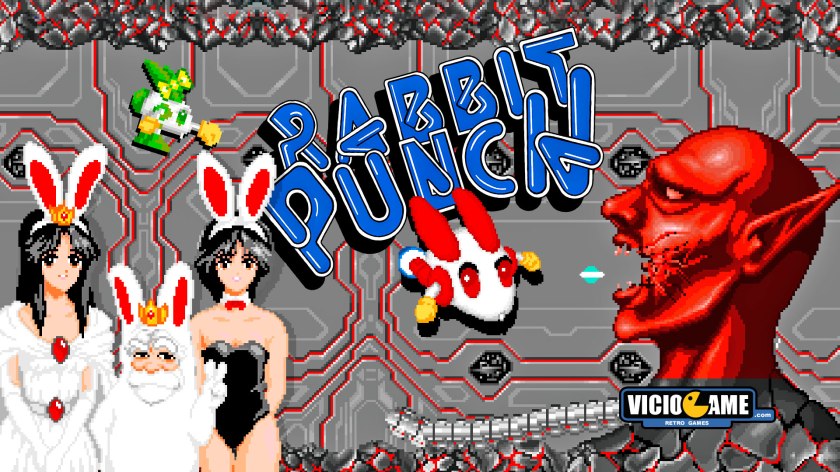
Rabbit Punch (known as Rabio Lepus in Japan) is a horizontal shoot-‘em-up released for arcades in 1987. In the year 6809, the princess of Bunnyland, http://www.viciogame.com her sister, and the king are kidnapped to be sacrificed to the Demon King. A brave robotic rabbit named Usagi embarks on a mission to rescue the hostages and vanquish the forces of evil.
Developer: Video System
Publisher: Midway
Release date: 1987
Platform: Arcade V-System board
Rabbit Punch: The Ultimate Guide
Rabbit Punch, known in Japan as Rabio Lepus, is a landmark arcade game from 1987, developed and published by V-System, which later became Video System. This horizontal scrolling shoot ‘em up stands out for its eccentric premise: robotic rabbits face a legion of monsters to save the royal family of Bunnyland. With vibrant graphics, http://www.viciogame.com a memorable soundtrack, and gameplay that mixes shooting and melee attacks, the game secured a special place among retro gaming fans, despite not achieving the fame of contemporaries like R-Type or Gradius. Its influence is felt in later titles from Video System, such as the Aero Fighters series, and its re-release on modern platforms maintains its relevance.
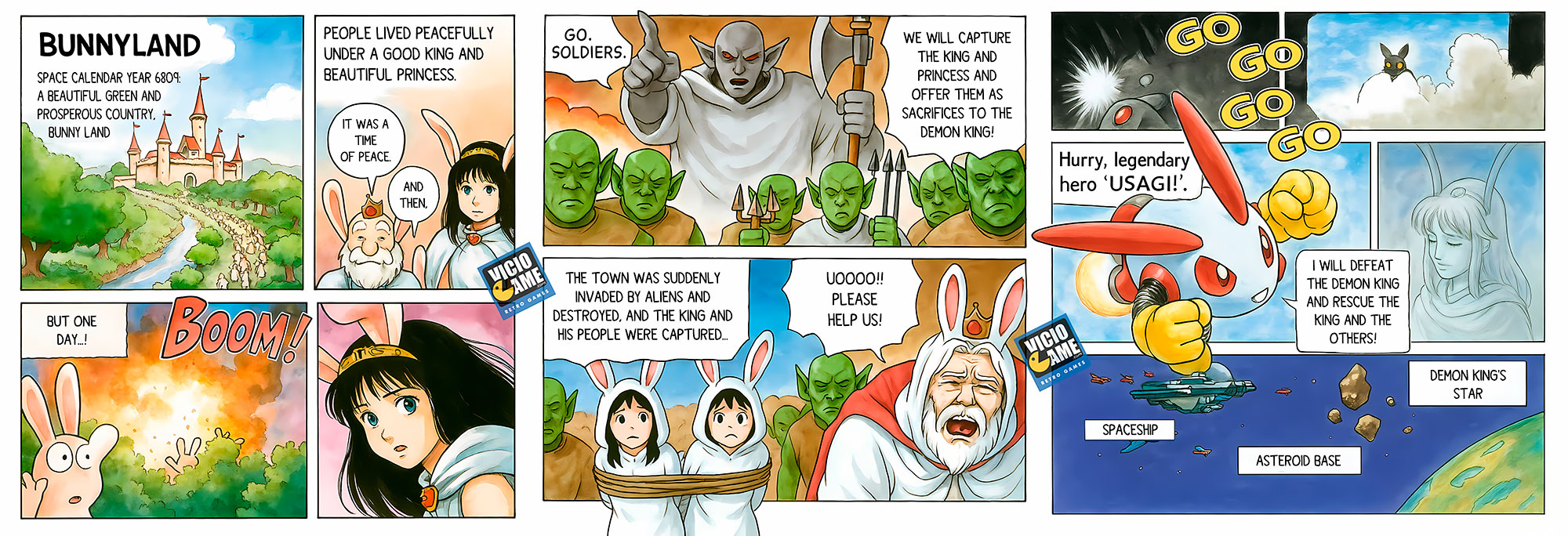
The story unfolds in the peaceful kingdom of Bunnyland, in the year 6809 of the space calendar. An alien invasion, led by the dreaded Demon King Yohmaoh, kidnaps Princess Komomo Kitashirakawa, her sister Kotomi, and King Taro Kitashirakawa. To rescue them, players control Rabio (red) and Lepus (green), two robotic rabbits called USAGI, equipped with high-tech weapons. The narrative advances through three http://www.viciogame.com main scenarios: the enemy spaceship, a base on an asteroid, and the surface of the alien planet. Brief cutscenes after every fourth stage show the rescue progress, although the American version, Rabbit Punch, omits part of the dialogue and removes the princesses from the story, focusing only on the king.
Rabio Lepus was originally released for arcades http://www.viciogame.com but gained several versions over the years, each with its own particularities:
Arcade (1987): The original version, distributed in Japan by V-System and in North America by Bally Midway as Rabbit Punch. It supports http://www.viciogame.com cooperative mode for two players and has twelve stages. The American version is more difficult, with a continue system that returns the player to stage nine after losing all lives.
NEC PC Engine – Rabio Lepus Special (1990): Developed by Minakuchi Engineering, this version condenses the original twelve stages into six, remixing enemies and bosses. It removes the cooperative mode, the introduction and ending http://www.viciogame.com cutscenes, and uses a checkpoint system that makes the game more punishing. The graphics are less detailed due to hardware limitations, but the soundtrack was enhanced. This version offered a form to win a Rabio plush toy, charging only the shipping cost.
PlayStation 2 – Oretachi Gēsen Zoku (2006): Part of the Japanese Oretachi Gēsen Zoku series, this is a faithful recreation of the arcade, http://www.viciogame.com including extras such as a soundtrack CD, a DVD with promotional videos, and a replica of the instruction booklet.
Nintendo Switch and PlayStation 4 – Arcade Archives (2022): Released by Hamster Corporation, this digital port uses the Japanese ROM, http://www.viciogame.com maintaining fidelity to the original arcade. It includes options to adjust difficulty and screen settings, plus online leaderboards.
The main antagonist responsible for kidnapping the princess, her sister, and the king is referred to in the original Japanese material as 妖魔王 (read as “Yōmaō”), which means “King of Evil Spirits” or “Demon King.” The most common http://www.viciogame.com transliteration of this name to the Latin alphabet is “Yohmaoh” (sometimes written as “Youmaou” or similar variations, depending on the romanization). The English version of the game, or other Western versions, simplify the name to “Demon King,” which is a direct translation of the Japanese term.
In the Japanese version of the arcade, after defeating the final boss, Yohmaoh, players rescue the royal family. A cutscene shows Princess Komomo thanking the rabbits with the phrase “Arigatou, Usagi-chan” written and spoken. The American http://www.viciogame.com arcade version was censored, removing Komomo and Kotomi from the narrative, which altered the story and emotional impact of the ending. Only the king is rescued (although it’s possible to hear the princess thanking them), and the princesses are not mentioned, resulting in a less complete ending.
The hardware of the Rabio Lepus arcade uses a robust configuration for its time, with a Motorola 68000 CPU as the main processor and a Z80 for secondary functions, such as sound. The printed circuit board (PCB) consists of http://www.viciogame.com two boards connected by ribbon cables, marked as BO84-91946-A000. This architecture allowed for detailed graphics and fluid gameplay, with support for complex sprites and horizontal scrolling scenarios.
Rabio Lepus was created by V-System, a Japanese company that would become Video System, known for the Aero Fighters series. The game design was led by Shinsuke Nakamura, who was also responsible for character and scenario design. The soundtrack was composed by Kenji Okuda and Yasutoshi Ishida, while Tadatsugu http://www.viciogame.com Honda acted as chief programmer. The NEC PC Engine version, Rabio Lepus Special, was developed by Minakuchi Engineering, with Naoki Itamura composing a new soundtrack.
One of the inspirations for the game was TwinBee (1985), from Konami, including its cute aesthetic in a shooting genre. The combination of adorable characters with intense action is a hallmark of the cute ‘em up subgenre, which http://www.viciogame.com TwinBee helped popularize. Rabio Lepus also paved the way for the Aero Fighters series, with characters like Rabio and Lepus appearing as secrets in Aero Fighters for Super Nintendo. Additionally, the game inspired other titles with futuristic rabbits, such as Astro Rabby and Jumping Flash.
The scoring system is typical of shoot ‘em ups from that era. Players earn points by destroying enemies, collecting score items, and completing stages. In Expert mode, the score is higher due to the increased difficulty and the presence of http://www.viciogame.com different enemies. After defeating a boss, a carrot bonus appears, which must be collected without letting any fall to maximize the score. The absence of continues in Expert mode encourages strategies to avoid deaths and increase the score.
The rabbits have three forms of attack. The first is Energy Beams, with unlimited shots fired with button A, with no power-up possibility. The second is Homing Missiles, which are guided missiles, fired with button B, and can be enhanced with http://www.viciogame.com ribbons, doubling their strength and quantity. The third is the Punch, a melee attack that causes significant damage but requires proximity to the enemy, increasing the risk.
Among the available items, we can find Canned Carrots, which enhance missiles and the punch attack; the Ribbons, which increase the power of missiles, with a yellow bow appearing on the rabbit’s ear as a visual indicator; the Health http://www.viciogame.com Carrots, which restore the life bar; and the Score Items that increase the score. Items are released from floating tomato cans, which must be carefully destroyed to prevent them from falling off the screen.
Rabio Lepus is notoriously difficult, with narrow stages and sudden enemy ambushes, requiring quick reflexes and pattern memorization. The American version, Rabbit Punch, is even more challenging, as it returns the player to stage http://www.viciogame.com nine after losing all lives, regardless of progress. In Expert mode, the difficulty increases with more aggressive enemies. The learning curve is steep but rewards skilled players who master the strategic use of missiles and punches.
The graphics are one of the highlights, with detailed scenarios that vary between metallic spaceships, rocky asteroids, and planetary landscapes. The sprites of the rabbits, with boxing gloves and adorable expressions, contrast with http://www.viciogame.com mechanical enemies, creating a unique visual style. For 1987, the visuals were advanced, with vibrant colors and fluid animations, although the PC Engine version suffers from less elaborate backgrounds due to hardware limitations.
The soundtrack, composed by Kenji Okuda and Yasutoshi Ishida, features energetic tracks that accompany each stage, with distinct themes for bosses and events. Sound effects include shots, explosions, and high-pitched screams of the http://www.viciogame.com rabbits when they die, adding personality. The PC Engine version has a different soundtrack, composed by Naoki Itamura, considered an improvement. The original soundtrack was released on CD in the Oretachi Gēsen Zoku series and in a collection with Turbo Force.
The arcade offers two Single-Player modes, where you control Rabio or Lepus alone; and Two-Player Co-op, where two players simultaneously http://www.viciogame.com control Rabio (red) and Lepus (green). Players choose between Normal and Expert at the start, with the latter being more difficult and offering a higher score. The PC Engine version is exclusively single-player, with no cooperative mode option.
The gameplay is engaging, combining classic shoot ‘em up elements with an innovative melee attack. Players navigate through horizontal scrolling stages, facing waves of enemies and bosses. The punch attack allows for significant damage, but requires precise maneuvers to avoid collisions. Managing missiles and collecting http://www.viciogame.com power-ups are crucial to surviving the more difficult stages. The combination of fast action and strategy makes the experience challenging and rewarding.
Rabio Lepus has twelve stages divided into three thematic areas. We start on the Enemy Spaceship (Stages 1-4), with metallic scenarios with narrow corridors and robotic enemies. Next, we encounter the Asteroid Base (Stages 5-8), with rocky environments, natural obstacles, and more aggressive enemies. The king is rescued at http://www.viciogame.com the end of this area. Finally, we go to the Planet Surface (Stages 9-12), where there are alien landscapes with a higher density of enemies. Stage 11 is a boss rush, facing bosses from stages 1, 3, 5, 6, and 7, while stage 12 culminates in the battle against Yohmaoh. Each stage presents unique challenges, such as environmental traps and complex attack patterns of the bosses. Stage 10 is considered the most difficult, with a high density of enemies and obstacles.
The title was well received in its time, with Game Machine magazine listing it as the fifth most popular arcade game in Japan in November 1987. Clare Edgeley, from Computer and Video Games, praised the detailed graphics and fun gameplay but criticized the later labyrinthine stages. Gamest awarded the game in the second http://www.viciogame.com edition of the Gamest Awards, placing 9th in the Best Shooting Award and 30th in the Annual Hit Game. However, Kurt Kalata, from Hardcore Gaming 101, noted that, although solid, the game falls behind competitors due to tight stages and enemy ambushes. The Rabio Lepus Special version received favorable reviews but was considered more punishing due to checkpoints.
Rabbit Punch / Rabio Lepus is a hidden treasure of the arcades, combining an adorable aesthetic with challenging gameplay. Its influence http://www.viciogame.com on the Aero Fighters series and its presence on modern platforms show its lasting relevance. Despite criticisms of the difficulty and design of some stages, the game remains a unique experience for fans of retro shoot ‘em ups, offering a mix of nostalgia and intense action.
Rabbit Punch: O Guia Definitivo
Rabbit Punch, conhecido no Japão como Rabio Lepus, é um marco dos arcades de 1987, desenvolvido e publicado pela V-System, que mais tarde se tornou Video System. Este shoot ‘em up de rolagem horizontal se destaca pela sua premissa excêntrica: coelhos robóticos enfrentam uma legião de monstros para salvar a família http://www.viciogame.com real de Bunnyland. Com gráficos vibrantes, trilha sonora memorável e uma jogabilidade que mistura tiros e ataques corpo a corpo, o jogo conquistou um lugar especial entre os fãs de jogos retrô, apesar de não alcançar a fama de contemporâneos como R-Type ou Gradius. Sua influência é sentida em títulos posteriores da Video System, como a série Aero Fighters, e seu relançamento em plataformas modernas mantém sua relevância.
A história se desenrola no reino pacífico de Bunnyland, no ano 6809 do calendário espacial. Uma invasão alienígena, liderada pelo temido Demon King Yohmaoh, sequestra a princesa Komomo Kitashirakawa, sua irmã Kotomi e o rei Taro Kitashirakawa. Para resgatá-los, os jogadores controlam Rabio (vermelho) e Lepus (verde), http://www.viciogame.com dois coelhos robóticos chamados USAGI, equipados com armas de alta tecnologia. A narrativa avança em três cenários principais: a nave espacial inimiga, uma base em um asteroide e a superfície do planeta alienígena. Breves cutscenes após cada quarto estágio mostram o progresso do resgate, embora a versão americana, Rabbit Punch, omita parte do diálogo e remova as princesas da história, focando apenas no rei.
Rabio Lepus foi originalmente lançado para http://www.viciogame.com arcades, mas ganhou várias versões ao longo dos anos, cada uma com particularidades:
Arcade (1987): A versão original, distribuída no Japão pela V-System e na América do Norte pela Bally Midway como Rabbit Punch. Suporta http://www.viciogame.com modo cooperativo para dois jogadores e possui doze estágios. A versão americana é mais difícil, com um sistema de continues que retorna o jogador ao estágio nove após perder todas as vidas.
NEC PC Engine – Rabio Lepus Special (1990): Desenvolvida pela Minakuchi Engineering, esta versão condensa os doze estágios originais em seis, remixando inimigos e chefes. Remove o modo cooperativo, as cutscenes de introdução e http://www.viciogame.com fim, e usa um sistema de checkpoints que torna o jogo mais punitivo. Os gráficos são menos detalhados devido às limitações do hardware, mas a trilha sonora foi aprimorada. Esta versão oferecia um formulário para ganhar o boneco de pelúcia de Rabio, sendo cobrado apenas o custo de envio.
PlayStation 2 – Oretachi Gēsen Zoku (2006): Parte da série japonesa Oretachi Gēsen Zoku, esta é uma recriação fiel do arcade, incluindo http://www.viciogame.com extras como trilha sonora em CD, um DVD com vídeos promocionais e uma réplica do folheto de instruções.
Nintendo Switch e PlayStation 4 – Arcade Archives (2022): Lançado pela Hamster Corporation, este port digital usa a ROM japonesa, mantendo http://www.viciogame.com a fidelidade ao arcade original. Inclui opções para ajustar dificuldade e configurações de tela, além de tabelas de pontuação online.
O antagonista principal responsável pelo sequestro da princesa, sua irmã e o rei é referido no material original japonês como 妖魔王 (lê-se “Yōmaō”), que significa “Rei dos Espíritos Malignos” ou “Rei Demônio”. A transliteração mais comum http://www.viciogame.com desse nome para o alfabeto latino é “Yohmaoh” (às vezes escrito como “Youmaou” ou variações similares, dependendo da romanização). Já a versão em inglês do jogo, ou demais versões ocidentais, simplificam o nome para “Demon King” (“Rei Demônio”), que é uma tradução direta do termo japonês.
Na versão japonesa do arcade, após derrotar o chefe final, Yohmaoh, os jogadores resgatam a família real. Uma cutscene mostra a princesa Komomo agradecendo aos coelhos com a frase “Arigatou, Usagi-chan” escrita e falada. A versão americana dos arcades sofreu censura, removendo Komomo e Kotomi da narrativa, o http://www.viciogame.com que alterou a história e o impacto emocional do final. Apenas o rei é resgatado (embora seja possível ouvir a princesa agradecendo), e as princesas não são mencionadas, resultando em um final menos completo.
O hardware do arcade de Rabio Lepus utiliza uma configuração robusta para a época, com uma CPU Motorola 68000 como processador principal e uma Z80 para funções secundárias, como som. A placa de circuito impresso (PCB) é composta por duas placas conectadas por cabos ribbon, marcadas como BO84-91946-A000. Essa http://www.viciogame.com arquitetura permitia gráficos detalhados e uma jogabilidade fluida, com suporte a sprites complexos e cenários de rolagem horizontal.
Rabio Lepus foi criado pela V-System, uma empresa japonesa que se tornaria Video System, conhecida pela série Aero Fighters. O design do jogo foi liderado por Shinsuke Nakamura, que também foi responsável pelo design de http://www.viciogame.com personagens e cenários. A trilha sonora foi composta por Kenji Okuda e Yasutoshi Ishida, enquanto Tadatsugu Honda atuou como programador chefe. A versão para NEC PC Engine, Rabio Lepus Special, foi desenvolvida pela Minakuchi Engineering, com Naoki Itamura compondo uma nova trilha sonora.
Uma das inspirações para o jogo foi TwinBee (1985), da Konami, incluindo sua estética fofa em um gênero de tiro. A combinação de personagens adoráveis com ação intensa é uma marca do subgênero cute ‘em up, que TwinBee ajudou a http://www.viciogame.com popularizar. Rabio Lepus também pavimentou o caminho para a série Aero Fighters, com personagens como Rabio e Lepus aparecendo como secretos em Aero Fighters para Super Nintendo. Além disso, o jogo inspirou outros títulos com coelhos futuristas, como Astro Rabby e Jumping Flash.
O sistema de pontuação é típico de shoot ‘em ups da época. Os jogadores ganham pontos ao destruir inimigos, coletar itens de pontuação (score items) e completar estágios. No modo Expert, a pontuação é maior devido à maior dificuldade e à presença de inimigos diferentes. Após derrotar um chefe, um bonus de cenouras http://www.viciogame.com aparece, que deve ser coletado sem deixar nenhuma cair para maximizar a pontuação. A ausência de continues no modo Expert incentiva estratégias para evitar mortes e aumentar a pontuação.
Os coelhos possuem três formas de ataque. O primeiro é o Energy Beams, com tiros ilimitados disparados com o botão A, sem possibilidade de power-up. O segundo é Homing Missiles, que são mísseis teleguiados, disparados com o botão http://www.viciogame.com B, e podem ser aprimorados com fitas (ribbons), dobrando sua força e quantidade. O terceiro é o Punch, um ataque corpo a corpo (soco) que causa dano significativo, mas exige proximidade com o inimigo, aumentando o risco.
Dentre os itens disponíveis, podemos encontrar os Canned Carrots, que aprimoram mísseis e o ataque de soco; os Ribbons, que aumentam a potência dos mísseis, com um laço amarelo aparecendo na orelha do coelho como indicador http://www.viciogame.com visual; os Health Carrots, que restauram a barra de vida; e os Score Items que aumentam a pontuação. Os itens são liberados de latas de tomate flutuantes, que devem ser destruídas com cuidado para evitar que caiam fora da tela.
Rabio Lepus é notoriamente difícil, com estágios estreitos e emboscadas súbitas de inimigos, exigindo reflexos rápidos e memorização de padrões. A versão americana, Rabbit Punch, é ainda mais desafiadora, pois retorna o jogador ao estágio nove após perder todas as vidas, independentemente do progresso. No modo http://www.viciogame.com Expert, a dificuldade aumenta com inimigos mais agressivos. A curva de aprendizado é íngreme, mas recompensa jogadores habilidosos que dominam o uso estratégico de mísseis e socos.
Os gráficos são um dos pontos altos, com cenários detalhados que variam entre naves espaciais metálicas, asteroides rochosos e paisagens planetárias. Os sprites dos coelhos, com luvas de boxe e expressões adoráveis, contrastam com inimigos mecânicos, criando um estilo visual único. Para 1987, os visuais eram avançados, http://www.viciogame.com com cores vibrantes e animações fluidas, embora a versão para PC Engine sofra com fundos menos elaborados devido às limitações do hardware.
A trilha sonora, composta por Kenji Okuda e Yasutoshi Ishida, apresenta faixas energéticas que acompanham cada estágio, com temas distintos para chefes e eventos. Efeitos sonoros incluem tiros, explosões e gritos agudos dos coelhos ao http://www.viciogame.com morrerem, adicionando personalidade. A versão para PC Engine tem uma trilha sonora diferente, composta por Naoki Itamura, considerada uma melhoria. A trilha original foi lançada em CD na série Oretachi Gēsen Zoku e em uma coleção com Turbo Force.
O fliperama oferece dois modos Single-Player, onde você controla Rabio ou Lepus sozinho; e Two-Player Co-op, onde dois jogadores controlem http://www.viciogame.com Rabio (vermelho) e Lepus (verde) simultaneamente. Os jogadores escolhem entre Normal e Expert no início, com o último sendo mais difícil e oferecendo maior pontuação. A versão para PC Engine é exclusivamente single-player, sem opção de modo cooperativo.
A jogabilidade é envolvente, combinando elementos clássicos de shoot ‘em up com um ataque corpo a corpo inovador. Os jogadores navegam por estágios de rolagem horizontal, enfrentando ondas de inimigos e chefes. O ataque de soco http://www.viciogame.com permite causar dano significativo, mas exige manobras precisas para evitar colisões. A gestão de mísseis e a coleta de power-ups são cruciais para sobreviver aos estágios mais difíceis. A combinação de ação rápida e estratégia torna a experiência desafiadora e gratificante.
Rabio Lepus possui doze estágios divididos em três áreas temáticas. Começamos na Nave Espacial Inimiga (Estágios 1-4), com cenários metálicos com corredores estreitos e inimigos robóticos. Em seguida conhecemos a Base no Asteroide (Estágios 5-8), com ambientes rochosos, obstáculos naturais e inimigos mais agressivos. O rei é resgatado no final desta área. Por último, vamos para a Superfície do Planeta (Estágios 9-12), http://www.viciogame.com onde tem paisagens alienígenas com maior densidade de inimigos. O estágio 11 é uma boss rush, enfrentando chefes dos estágios 1, 3, 5, 6 e 7, enquanto o estágio 12 culmina na batalha contra Yohmaoh. Cada estágio apresenta desafios únicos, como armadilhas ambientais e padrões de ataque complexos dos chefes. O estágio 10 é considerado o mais difícil, com alta densidade de inimigos e obstáculos.
O título foi bem recebido em sua época, com a revista Game Machine listando-o como o quinto jogo de arcade mais popular no Japão em novembro de 1987. Clare Edgeley, da Computer and Video Games, elogiou os gráficos detalhados e a jogabilidade divertida, mas criticou os estágios labirínticos posteriores. A Gamest premiou o jogo http://www.viciogame.com na segunda edição dos Gamest Awards, ficando em 9º lugar no Best Shooting Award e 30º no Annual Hit Game. No entanto, Kurt Kalata, do Hardcore Gaming 101, observou que, embora sólido, o jogo fica atrás de concorrentes devido aos estágios apertados e emboscadas de inimigos. A versão Rabio Lepus Special recebeu críticas favoráveis, mas foi considerada mais punitiva devido aos checkpoints.
Rabbit Punch / Rabio Lepus é um tesouro escondido dos arcades, combinando uma estética adorável com uma jogabilidade desafiadora. Sua influência na série Aero Fighters e sua presença em plataformas modernas http://www.viciogame.com mostram sua relevância duradoura. Apesar de críticas à dificuldade e ao design de alguns estágios, o jogo permanece uma experiência única para fãs de shoot ‘em ups retrô, oferecendo uma mistura de nostalgia e ação intensa.
🤑💲Earn money without doing anything! Just leave these apps open:
   ✓ https://r.honeygain.me/CONTA9DB02

   ✓ https://packetstream.io/?psr=1uPb
🤑💲1-Click button earns Bitcoin every 1 hour: https://freebitco.in/?r=53528449
⬛ 𝗧𝗶𝗸𝗧𝗼𝗸: https://www.tiktok.com/@viciogame
🟧 𝗜𝗻𝘀𝘁𝗮𝗴𝗿𝗮𝗺: http://www.instagram.com/viciogame
🟥 𝗬𝗼𝘂𝘁𝘂𝗯𝗲: http://www.youtube.com/viciogame
🟦 𝗙𝗮𝗰𝗲𝗯𝗼𝗼𝗸: http://www.facebook.com/viciogame
🔳 𝗧𝗵𝗿𝗲𝗮𝗱𝘀: https://www.threads.net/@viciogame
🟪 𝗧𝘄𝗶𝘁𝗰𝗵: https://www.twitch.tv/ViciogameRetroGames
🟨 𝗕𝗹𝗼𝗴: http://www.viciogameblog.com/
🟦𝗧𝘄𝗶𝘁𝘁𝗲𝗿: http://www.twitter.com/viciogame
#Viciogame #Gameplay #LetsPlay #Gamer #Playthrough #Games #News #Videogames #Review #Game #Detonado #Walkthrough #Ending #Reviews #Facts #Retro #Record #Roms #Emulator #Longplay #Speedrun #RabbitPunch #RabioLepus #Arcade #Midway #ShootEmUp #shooter #Gradius #Rtype #fliperama #Rabbit #coelho #ラビオレプス #アーケードゲーム #PcEngine #turbografx #NEC
 VICIOGAME