
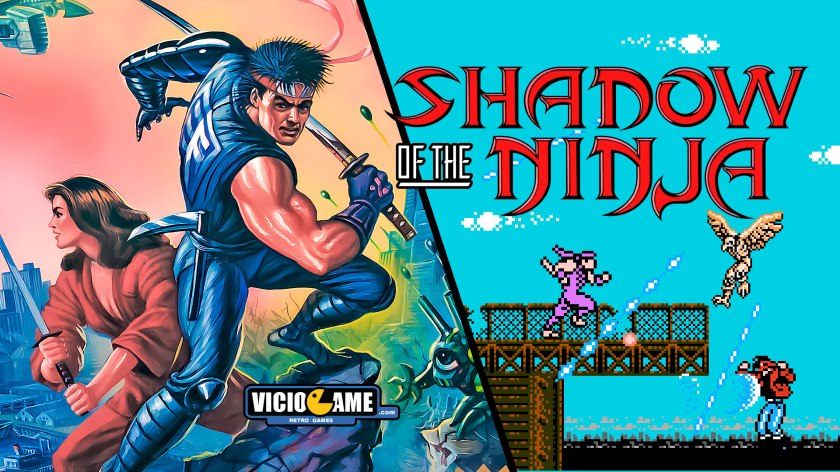
Shadow of the Ninja (known as Kage in Japan and Blue Shadow in Europe) is a 2D action-platformer game released for the Nintendo in 1990. A tyrannical emperor has constructed an impenetrable fortress, oppressing countless http://www.viciogame.com lives under his dictatorial rule. To end his reign of terror, a ninja clan dispatches two elite warriors on a mission to dismantle the threat and avenge the fallen victims.
Developer: Natsume
Publisher: Taito
Release date: 1990
Platform: Nintendo Entertainment System
Shadow of the Ninja: The Ultimate Guide
The 8-bit era of the Nintendo Entertainment System, or NES, was fertile ground for the proliferation of shadow warriors. Ninjas ran, jumped, and threw shurikens in a myriad of titles, capturing the imagination of players around http://www.viciogame.com the world. Amid giants like Ninja Gaiden and cultural phenomena like Teenage Mutant Ninja Turtles, one particular developer, Natsume, began to forge its reputation with high-quality action games. It was in this context that, in 1990, a gem of the side-scrolling action-platform genre emerged: Shadow of the Ninja.
However, the identity of this classic is more complex than it appears at first glance. In Japan, its homeland, it goes by the name Yami no Shigotonin Kage (闇の仕事人 KAGE), which translates to “Kage: The Ninja of Darkness.” In Europe and Australia, it became Blue Shadow. This fragmentation of names already foreshadows http://www.viciogame.com an intriguing international release story, marked by different publishers and potential regional adaptations. Frequently compared to its more famous Tecmo contemporary, Shadow of the Ninja is acclaimed by many as an equally challenging and well-constructed title, sometimes considered a “hidden treasure” or cult classic that offers unique elements, such as an acclaimed cooperative mode, a striking audiovisual presentation, and precise gameplay, earning a special place in the hearts of retro gaming fans.
The plot of Shadow of the Ninja transports us to a dystopian future, specifically the year 2029 A.D. In this dark scenario, the United States has fallen under the yoke of the tyrannical Emperor Garuda. Garuda and his followers have built an impenetrable fortress, a monument to his evil power, and his dictatorial government has http://www.viciogame.com claimed countless innocent lives. To combat this threat and avenge the victims of the oppressive regime, the Iga ninja clan sends two of its greatest masters on a suicide mission: Lord Hayate, a ninja dressed in purple garments, and Lady Kaede, a kunoichi (female ninja) in orange attire. The objective is clear and direct: infiltrate Garuda’s fortress and assassinate him, putting an end to his reign of terror.
The presence of Kaede as a playable female protagonist is a notable detail for the Nintendo era, a period when female characters in central action roles were less common, something that Nintendo Power magazine highlighted in 1991. The introduction sequence shows Garuda being informed of the ninjas’ approach, feeling a chill for the first time upon learning that his invaders are shadow warriors. The narrative follows the classic formula of “saving the world from a dictator,” common in video games of the era, http://www.viciogame.com but executed effectively. Although it’s a cliché martial arts story, the setting in the year 2029 gives it a distinctive touch. This futuristic scenario, advanced for the time of release in 1990, justifies the mixture of traditional ninja skills with technological elements, such as robotic enemies and advanced weaponry, creating a cyberpunk atmosphere even before this term was popular. This specific date led some fans to theorize a connection with the universe of Strider, another classic of futuristic action.
The gameplay of Shadow of the Ninja is based on solid foundations of the action-platform style. The controls allow for expected actions: running, jumping (A button), attacking (B button), crouching, and climbing ladders. The response to commands is precise. What truly distinguishes movement in this title is the unique ability to grab onto the underside of platforms and ledges, moving while hanging. With a simple command, http://www.viciogame.com the ninja can climb up to the platform above or descend to the hanging position. This mechanic adds an interesting layer of verticality and strategy, directly influencing the design of the stages and offering tactical options not seen in many contemporaries, such as Ninja Gaiden, which had the ability to climb walls instead of hanging. This capability allows alternating between attacking an enemy and dodging their attacks, and it is crucial in vertical climbing sections filled with dangers.
Before starting the journey, the player chooses between controlling Hayate or Kaede, either in single-player mode or in cooperative. A question that generates some discussion is whether there are performance differences between http://www.viciogame.com the two characters in the original NES version. They behave almost the same way. Hayate has a slightly longer attack range, while Kaede would attack a bit faster.
Beyond the basic abilities, the ninjas possess a special devastating resource: a lightning or storm attack that hits all enemies on the screen. To activate it, the player needs to hold down the attack button for approximately 6 seconds, provided that their vitality bar is above half. The life meter begins to flash, and upon releasing the button, the elemental fury is unleashed. However, this power comes at a very high cost: about half of http://www.viciogame.com the player’s maximum vitality is consumed. It’s a classic risk and reward mechanic, offering a powerful way out in critical moments – especially useful for gaining space in congested vertical sections – but forcing the player to carefully consider whether the immediate benefit compensates for the sacrifice of vital energy. It’s important to note that this attack is ineffective against some bosses.
The ninja duo of Shadow of the Ninja counts on a varied arsenal to face Garuda’s forces. The primary weapons are the katana and the kusarigama. The katana is the standard weapon, characterized by fast, short-range attacks. The kusarigama, a sickle attached to a chain, offers significantly greater range and the versatility http://www.viciogame.com of attacking horizontally and diagonally upward. However, besides not hitting crawling enemies, it is slower than the katana and has a blind spot very close to the character, where the attack doesn’t reach enemies. Players can find and alternate between these two weapons throughout the stages.
The power-up system adds a layer of depth. Collecting an icon of the weapon that the player is already wielding increases its power level, up to a maximum of three levels. For the katana, level 2 adds a small energy wave that almost doubles its range, while level 3 extends this wave across almost the entire screen. For the kusarigama, level 2 drastically increases its speed, making it almost as fast as the katana, and level 3 adds http://www.viciogame.com a small energy wave at the tip to cover the blind spot nearby. This progression encourages the player to maintain their weapons at the maximum level. However, suffering excessive damage results in the reduction of the weapon level by one point. There are also ninja scrolls, found in secret areas, that elevate the katana directly to the maximum level with a single collection. There is a glitch involving the kusarigama: by repeatedly pressing the Up directional during a jump attack, it’s possible to attack much more quickly than normal.
In addition to the main weapons, there are secondary weapons with limited ammunition. Shurikens (ninja stars) are long-range projectiles. Curiously, the power of the shurikens is tied to the level of the katana: at level 2, they transform into faster kunais (throwing daggers), and at level 3, they gain homing capability. This creates an interesting dynamic, where maintaining the katana at a high level directly benefits the http://www.viciogame.com secondary weapon. Bombs (or hand grenades) are another option, extremely powerful and particularly effective against bosses, but very rare and with limited supply. At level 1, they fall directly downward, while at levels 2 and 3, they are thrown a bit forward. All these weapons and power-ups, along with vitality potions to recover energy, are found by destroying item boxes scattered throughout the stages.
A recurring criticism of the original Nintendo gameplay is the impossibility of freely alternating between collected weapons. Once the player picks up shurikens or bombs, they must use all the ammunition before being able to return to their http://www.viciogame.com primary weapon (katana or kusarigama) or find another item box. This design decision forces a commitment to the secondary weapon and prevents strategies such as saving ammunition for specific moments, like boss fights, contributing to the challenging and “retro” feeling of the game.
One of the greatest assets of Shadow of the Ninja and a factor that distinguishes it from many other action titles of its time is its simultaneous cooperative mode for two players. While most multiplayer games on the NES offered alternating http://www.viciogame.com gameplay, Shadow of the Ninja allowed two friends to face the mission together, on the same screen, at the same time. This feature represented a considerable technical and design feat for the hardware, being frequently cited as a high point by critics and players.
In cooperative mode, each player assumes control of one of the ninjas, Hayate or Kaede. A crucial mechanic is that players share the same limited set of continues. This introduces an element of cooperative resource management and interdependence: one player’s error directly impacts the pair’s ability to progress, encouraging communication and teamwork. Fortunately, players cannot harm each other with their attacks. http://www.viciogame.com If one of the players loses all their vitality, the other can continue playing alone until they also die, complete the stage, or use a continue to bring the partner back. The presence of a second player can make the inherently high challenge of the game more manageable and, undoubtedly, more fun. However, the duplicated action on the screen can also lead to an increase in visual chaos and, potentially, to a greater occurrence of slowdown, especially in more intense moments. Despite this, the cooperative mode is universally praised as one of the strongest aspects of the game.
True to Natsume’s reputation and the standards of the 8-bit era, Shadow of the Ninja presents a high level of difficulty. The game is challenging, http://www.viciogame.com requiring quick reflexes, precision in jumps, and patience. However, the difficulty is fair, where progression depends more on the player’s skill and learning than on arbitrary or poorly designed elements.
The system of lives and continues contributes significantly to this difficulty. The player starts with a limited number of continues. Each time the ninja’s http://www.viciogame.com vitality is depleted, a continue is consumed. Crucially, there are no extra lives to be found during the stages. Once all continues are spent, the game ends.
The learning curve is steep, but rewarding. Success depends heavily on practice and memorization of enemy attack patterns and stage layouts. The game rewards repetition and learning, with players managing to advance further with each attempt. The difficulty is not constant, presenting notable peaks, especially http://www.viciogame.com in the boss fights of later stages. Compared to Ninja Gaiden, many consider Shadow of the Ninja challenging, but less punitive in certain aspects, such as the infamous enemy respawn and the knockback effect that frequently threw Ryu Hayabusa into abysses.
The mission to overthrow Emperor Garuda unfolds over five main stages, which in turn are subdivided into a total of 14 substages. The first four stages contain three substages each, culminating in a battle against a boss, while http://www.viciogame.com the fifth and final stage is composed of two substages and the final confrontation. The progression demonstrates an increasing variety of environments and challenges, starting at a harbor and advancing through sewers, city rooftops, a factory, and finally, Garuda’s base.
Stage 1: The Harbor
1-1 – The Ship: The adventure begins under heavy http://www.viciogame.com rain on a cargo ship. Initial enemies include basic sailors with green pants and blue hats, easily defeated. A commander awaits at the end of the section.
1-2 – The Sea: Outside the ship, still in the rainy http://www.viciogame.com harbor. The player must climb structures while avoiding missiles fired by fixed machines. Underwater enemies and serpent machines also appear. A level 2 katana can be found.
1-3 – The Harbor: A section over gaps and platforms. http://www.viciogame.com An energy box is available shortly before the entrance to the boss fight.
1-4 – Boss (The Mechanic Bird): A brown machine http://www.viciogame.com with a jet propulsor on its back, which shoots stars. The strategy is to avoid the projectiles and attack the machine’s hatch when it descends to the ground. Considered an easy boss.
Stage 2: The Sewers
2-1 – The Sewers: The scenario changes to the damp http://www.viciogame.com and dark sewers. The player faces a large mechanical serpent, crawling robots, and enemies that throw boomerangs. There is a choice of path between the upper and lower deck, with a hidden energy drink on the upper one.
2-2 – The Elevator Place: A short section with http://www.viciogame.com enemies such as the large brown soldiers before taking an elevator to go up.
2-3 – Boss (The Panzar): A huge yellow panzer tank. http://www.viciogame.com The tactic involves first destroying the lower cannon of the machine to create a safe point against fire. Then, attack the panzer’s eye when it exposes itself, retreating to the safe area when it fires. Also considered an easy boss.
Stage 3: The City
3-1 – New York City: The action moves to the http://www.viciogame.com rooftops, with the silhouette of New York in the background. Precise jumps over gaps and climbing ladders are necessary. Enemies include boomerang throwers, guards, and female figures with long-range weapons. An energy bottle is hidden in a dark area after descending some ledges.
3-2 – Boss (The Dead Samurai): An imposing http://www.viciogame.com samurai made of scrap, armed with a long dagger. The recommended strategy is to attack from close range (avoiding parts falling on the player if using long range), dodge the blow, and repeat. As it takes damage, the samurai becomes faster.
Stage 4: The Factory
4-1 – Out of the Factory: The exterior of an industrial http://www.viciogame.com facility. New enemies include white soldiers that shoot upward and agile boxers who try to knock down the player. It’s necessary to destroy some buttons on machines to progress.
4-2 – Inside the Factory: Considered by some the http://www.viciogame.com most difficult substage of the game. It presents a complex layout with many ascents, descents, moving platforms (elevators), and dangerous enemies such as spinning ninjas and giant yellow robots that, when destroyed, drop an energy bottle. A pointing hand indicates the correct path. A katana can be found in hidden boxes.
4-3 – Boss (The Falcon Man): One of the most difficult bosses. A man in a red jacket that transforms into an eagle (or falcon). He attacks http://www.viciogame.com with kicks, laser shots, and quick dives. Requires precise dodging (running from one side of the screen to the other during the dive) and timely attacks. The katana is recommended over the kusarigama. The special lightning attack is useless against him.
Stage 5: Garuda’s Place
5-1 – Outside Garuda’s Place: The final scenario shows skyscrapers in flames in the background. The player must run to escape from jumping http://www.viciogame.com robots, avoid deadly lasers, bombs, and ignore distant lance throwers. The use of shurikens is recommended. An energy recharge can be obtained after defeating some robots.
5-2 – Inside Garuda’s Place: The last section before the final boss. The floor begins to rise, requiring a quick climb. Lance throwers continue http://www.viciogame.com to be a threat. A crucial item box appears near the final ladder, offering the choice between a fully charged katana (scroll) or energy. Getting both is difficult, but advantageous for the final battle.
5-3 – Boss – Emperor Garuda: The final and most difficult battle of the game. Garuda initially appears as a scientist before transforming into a large green ninja. The fight demands perfect reflexes and precise timing. The long-range katana (level 3) is essential. The strategy involves attacking Garuda when he lands from his jumps, dodging his quick lunge with the dagger, crouching to avoid an energy wave he launches, http://www.viciogame.com and fleeing from the energy fields he fires. As Garuda takes damage, he turns red and his movements become much faster, requiring improvisation and skill to survive and deliver the final blows. An interesting mechanic is that the boss explosion, upon being defeated, heals the player – the closer to the explosion, the greater the healing.
Beyond solid gameplay, Shadow of the Ninja stands out for its high-quality audiovisual presentation, especially considering the limitations of the NES hardware. The graphics are consistently praised for their dark and detailed atmosphere. The sprites of characters and enemies are well animated and rich in details, http://www.viciogame.com but remain clear and distinguishable on the screen. The background scenery also receives special attention, displaying details, good color choice, and even elements of animation and unique visual effects, such as the silhouette of New York or the burning skyscrapers in the last stage. The game successfully establishes a dark theme with varied stages, giving personality to the game world. The overall graphic quality is excellent for the time, comparing favorably to other top titles on the console.
The sound effects complement the action effectively, being excellent. However, it is the soundtrack that often steals the show. Composed by the legendary duo from Natsume, Iku Mizutani and Kouichi Yamanishi, the music of Shadow of the Ninja is acclaimed as one of the strongest points of the game. The soundtrack http://www.viciogame.com presents memorable melodies and a pulsating rhythm that perfectly accompanies the ninja action. Iku Mizutani, in particular, is known for helping create “the iconic Natsume sound,” and his contribution here solidifies the game’s reputation as one of the best musical examples on the Nintendo. An interesting production detail is the smooth transition between the end-game music and the credits theme, a touch of polish that demonstrates care in composition and implementation.
The main team behind this work includes programmer Kazuhiko Ishihara, artist Shunichi Taniguchi, and composers Iku Mizutani and Kouichi Yamanishi. This team represents part of Natsume’s internal talent responsible for http://www.viciogame.com several acclaimed action games on the NES, such as Shatterhand – released as Tokkyū Shirei Soruburein (特救指令ソルブレイン) in Japan -, which also counted with Ishihara and Mizutani. This team consistency helps explain the high quality level and the Natsume touch present in this classic.
The game did not reach the international market with a unique identity. It has three main regional versions, each with its particularities, http://www.viciogame.com reflecting different publishing decisions, technical adjustments, and even possible influences of censorship.
Japan (JP): Released as Yami no Shigotonin Kage (闇の仕事人 KAGE) by Natsume itself on August 10, 1990. This original version allows players to http://www.viciogame.com skip the introduction cutscene, starting the game more quickly. For speedrun practitioners, the Japanese version is a bit faster.
North America (NA): Arrived in the United States as Shadow of the Ninja, also published by Natsume, in December 1990. This is the standard http://www.viciogame.com NTSC version, displaying the Natsume logo before the title screen. A glaring difference in gameplay is that the sailors in Stage 1 require only one hit to be defeated.
Europe and Australia (EU/AU): Was released as Blue Shadow, with publishing handled by Taito, on July 25, 1991. The name change is attributed to the UK censorship laws of the time, which restricted references to ninjas in children’s media (a parallel can be drawn with Teenage Mutant Hero Turtles). Ironically, the introduction text still refers to the characters as “Ninja,” suggesting an incomplete edit. The Taito logo replaces http://www.viciogame.com Natsume’s. Technically, this PAL version (optimized for 50Hz TVs) runs faster than the NTSC version when executed on NTSC hardware or emulation (60Hz). This occurs because the PAL game generates fewer frames per second, and these frames are displayed at a higher rate on the NTSC system, accelerating gameplay. This speed difference is counterintuitive, as PAL games frequently ran slower, and significantly impacts the feel of the game. Additionally, the sailors in Stage 1 in this version require two hits to be defeated.
These variations show that the localization of Shadow of the Ninja was a multifaceted process, involving different publishers, technical http://www.viciogame.com adjustments that altered the gaming experience, and adaptations to regional cultural norms.
There is also unused content. The PAL version (Blue Shadow) contains remnants of the development and localization process. Unused graphics that form the word “Sample” are present in the title screen data, linked to an earlier American http://www.viciogame.com prototype. Part of the American title screen text (“of the”) also remained in the RAM memory of the PAL version. These digital artifacts serve as a kind of development archaeology, revealing connections between versions.
Shadow of the Ninja is the fruit of the work of Natsume Co., Ltd., a Japanese developer that established itself as a heavyweight name in the NES era for its well-executed action games. The company’s Nagoya division, which would later http://www.viciogame.com develop the Game Boy version, was involved in the creation of the original. The development period occurred between late 1989 and mid-1990. A prototype of the American version, dated October 16, 1990, confirms that localization was in progress during this period, shortly before the US release in December.
The influence of contemporary games is noticeable. The most obvious comparison is with Tecmo’s Ninja Gaiden series, due to the ninja theme, platform action, and high level of challenge. Elements such as the futuristic setting and the mechanic of hanging on platforms can also evoke comparisons with Capcom’s Strider. http://www.viciogame.com The publishing dynamic is also interesting: Natsume chose to publish the game directly in Japan and North America, but licensed the publishing rights to Taito in the European and Australian territories. This decision reflects different market strategies or Natsume’s international distribution capacity at the time, seeking a partner with greater presence in Europe. The result is a game that carries the Natsume quality mark, a product of an experienced team that consistently delivered memorable action titles for the Nintendo.
Shadow of the Ninja holds some secrets and tricks http://www.viciogame.com for the most dedicated or curious players.
Stage Selection: On the title screen, when the option to choose the number of players appears, it’s necessary to enter the following button sequence on controller 1: A (4 times), B (4 times), A, B, A, B, A, B, A, B. A sound will confirm the correct http://www.viciogame.com activation of the code. Then, hold the appropriate button combination on controllers 1 and 2 simultaneously (according to the table below) and press Start on controller 1 to begin at the desired stage.
| Stage | Controller 1 | Controller 2 |
|---|---|---|
| 1-1 | – | – |
| 1-2 | – | B |
| 1-3 | – | A |
| 1-4 | – | A+B |
| 2-1 | B | – |
| 2-2 | B | B |
| 2-3 | B | A |
| 3-1 | B | A+B |
| 3-2 | A | – |
| 3-3 | A | B |
| 4-1 | A | A |
| 4-2 | A | A+B |
| 4-3 | A+B | – |
| 5-1 | A+B | B |
| 5-2 | A+B | A |
Music Test: Using the same initial code (A x4, B x4, A, B, A, B, A, B, A, B) on the player selection screen, wait for the confirmation sound. Then, http://www.viciogame.com hold A + B on both controllers (1 and 2) and press Start on controller 1 to access the music test, allowing you to listen to all the tracks of the game.
The impact of Shadow of the Ninja extends beyond the original NES cartridge. Its story intertwines with that of another famous ninja franchise and inspires sequels and a modern rebirth. The most notorious connection is with Ninja Gaiden Shadow for the portable Game Boy. Originally, Natsume (through its Nagoya division) http://www.viciogame.com was developing a portable adaptation of Shadow of the Ninja for Nintendo’s monochrome console. However, Tecmo, holder of the popular Ninja Gaiden brand, acquired the publishing rights of the game in development. In a branding maneuver, Tecmo chose to rename and adjust the title to fit it into its own franchise. Thus was born Ninja Gaiden Shadow (known as Ninja Ryūkenden GB: Matenrō Kessen (忍者龍剣伝GB 摩天楼決戦) in Japan and Shadow Warriors in Europe/Australia), released in 1991.
The resulting game maintains many similarities with Shadow of the Ninja, including the mechanic of hanging on platforms (although the wall climbing of Ninja Gaiden has been removed) and the presence of the villain Garuda (now described as a servant of Jaquio, antagonist of Ninja Gaiden). A hook was added, http://www.viciogame.com and the ninja arts system was simplified. This transformation is a fascinating example of the licensing and marketing practices of the video game industry in the early 90s, where the strength of an established brand led to the appropriation of Hayate and Kaede’s adventure, attributing it to Ryu Hayabusa.
Despite this deviation, the story of Hayate and Kaede had continuity. In 2001, Natsume released a direct sequel for the Game Boy Color entitled Return of the Ninja. More recently, the legacy of the original game was celebrated with a complete remake: Shadow of the Ninja: Reborn, released in August 2024 for modern platforms such as Nintendo Switch, PlayStation 4, PlayStation 5, Windows, and Xbox Series X/S. http://www.viciogame.com The development was handled by Tengo Project, a studio formed by members of the original Natsume team who worked on the Nintendo classic. The remake updates the graphics to a more detailed pixel art style, expands the characters’ moveset, adds a new stage, and features a reworked soundtrack by Iku Mizutani and Hiroyuki Iwatsuki (another veteran Natsume composer).
Additionally, the original NES version was made available to new generations of players through various digital platforms, including the Virtual Console of the Wii, 3DS, and Wii U, and the Nintendo Switch Online service. A physical http://www.viciogame.com re-edition in collector’s edition was also released by Limited Run Games in 2020, reinforcing its appeal among retro gaming enthusiasts.
Evaluating its place in the vast Nintendo library, Shadow of the Ninja establishes itself as a high-quality action title and one of Natsume’s best works on the system. Although it may have remained in the “shadow” of Ninja Gaiden in http://www.viciogame.com terms of popular recognition, it conquered its own niche and respect, especially for its excellent cooperative mode. Its story is complex, marked by different regional identities and by the curious transformation of its portable version.
For retro gaming enthusiasts who seek a robust challenge, precise gameplay, and the rare opportunity for cooperative ninja action, Shadow of the Ninja (or Kage, or Blue Shadow) is a certain recommendation. It is a challenging gem http://www.viciogame.com that, for those who discovered it in its time or revisit it today, represents a memorable and enduring 8-bit experience. The recent rebirth through the remake Shadow of the Ninja: Reborn is the final proof.
Shadow of the Ninja: O Guia Definitivo
A era 8-bits do Nintendo Entertainment System, ou NES, foi um terreno fértil para a proliferação de guerreiros das sombras. Ninjas corriam, saltavam e lançavam shurikens em uma miríade de títulos, capturando a imaginação de jogadores ao redor do mundo. Em meio a gigantes como Ninja Gaiden e fenômenos culturais como http://www.viciogame.com Teenage Mutant Ninja Turtles, uma desenvolvedora em particular, a Natsume, começava a forjar sua reputação com jogos de ação de alta qualidade. Foi nesse contexto que, em 1990, surgiu uma joia do gênero ação-plataforma de rolagem lateral: Shadow of the Ninja.
Contudo, a identidade deste clássico é mais complexa do que parece à primeira vista. No Japão, sua terra natal, ele atende pelo nome Yami no Shigotonin Kage (闇の仕事人 KAGE), que se traduz como “Kage: O Ninja da Escuridão”. Já na Europa e Austrália, ele se tornou Blue Shadow. Essa fragmentação de nomes já prenuncia uma história de lançamento internacional intrigante, marcada por diferentes publicadoras e potenciais adaptações regionais. Frequentemente comparado ao seu contemporâneo mais http://www.viciogame.com famoso da Tecmo, Shadow of the Ninja é aclamado por muitos como um título igualmente desafiador e bem construído, por vezes considerado um “tesouro escondido” ou cult classic que oferece elementos únicos, como um aclamado modo cooperativo, uma apresentação audiovisual marcante e uma jogabilidade precisa, conquistando um lugar especial no coração dos fãs de jogos retrô.
A trama de Shadow of the Ninja nos transporta para um futuro distópico, especificamente o ano de 2029 A.D. Nesse cenário sombrio, os Estados Unidos caíram sob o jugo do tirânico Imperador Garuda. Garuda e seus seguidores construíram uma fortaleza impenetrável, um monumento ao seu poder maligno, e seu governo ditatorial ceifou http://www.viciogame.com inúmeras vidas inocentes. Para combater essa ameaça e vingar as vítimas do regime opressor, o clã ninja Iga envia dois de seus maiores mestres em uma missão suicida: Lord Hayate, um ninja trajando vestes púrpuras, e Lady Kaede, uma kunoichi (ninja feminina) em traje laranja. O objetivo é claro e direto: infiltrar a fortaleza de Garuda e assassiná-lo, pondo fim ao seu reinado de terror.
A presença de Kaede como uma protagonista feminina jogável é um detalhe notável para a época do Nintendo, um período em que personagens femininas em papéis centrais de ação eram menos comuns, algo que a revista Nintendo Power destacou em 1991. A sequência de introdução mostra Garuda sendo informado da aproximação dos ninjas, sentindo um arrepio pela primeira vez ao saber que seus invasores são guerreiros das sombras. A narrativa segue a fórmula clássica de “salvar o mundo de um http://www.viciogame.com ditador”, comum nos videogames da era, mas executada com eficácia. Embora seja clichê esta história de artes marciais, a ambientação no ano 2029 confere um toque distinto. Esse cenário futurista, avançado para a época do lançamento em 1990, justifica a mistura de habilidades ninjas tradicionais com elementos tecnológicos, como inimigos robóticos e armamentos avançados, criando uma atmosfera cyberpunk antes mesmo deste termo ser popular. Essa data específica levou alguns fãs a teorizar uma conexão com o universo de Strider, outro clássico da ação futurista.
A jogabilidade de Shadow of the Ninja se baseia em fundamentos sólidos do estilo ação-plataforma. Os controles permitem as ações esperadas: correr, pular (botão A), atacar (botão B), agachar e subir escadas. A resposta aos comandos são precisos. O que realmente distingue a movimentação neste título é a habilidade única de se agarrar à parte inferior de plataformas e beiradas, movendo-se pendurado. Com um simples comando, o ninja pode subir para a plataforma acima ou descer para a posição http://www.viciogame.com pendurada. Essa mecânica adiciona uma camada de verticalidade e estratégia interessante, influenciando diretamente o design das fases e oferecendo opções táticas não vistas em muitos contemporâneos, como Ninja Gaiden, que possuía a habilidade de escalar paredes em vez de se pendurar. Essa capacidade permite alternar entre atacar um inimigo e se esquivar de seus ataques, e é crucial em seções de escalada vertical repletas de perigos.
Antes de iniciar a jornada, o jogador escolhe entre controlar Hayate ou Kaede, seja no modo para um jogador ou no cooperativo. Uma questão http://www.viciogame.com que gera alguma discussão é se existem diferenças de performance entre os dois personagens na versão original do NES. Eles se comportam quase da mesma maneira. Hayate tem um alcance de ataque ligeiramente maior, enquanto Kaede atacaria um pouco mais rápido.
Além das habilidades básicas, os ninjas possuem um recurso especial devastador: um ataque de relâmpagos ou tempestade que atinge todos os inimigos na tela. Para ativá-lo, o jogador precisa manter pressionado o botão de ataque por aproximadamente 6 segundos, contanto que sua barra de vitalidade esteja acima da metade. O medidor de vida começa a piscar, e ao soltar o botão, a fúria elemental é liberada. No entanto, http://www.viciogame.com esse poder tem um custo altíssimo: cerca de metade da vitalidade máxima do jogador é consumida. Trata-se de uma clássica mecânica de risco e recompensa, oferecendo uma saída poderosa em momentos críticos – especialmente útil para ganhar espaço em seções verticais congestionadas – mas forçando o jogador a ponderar cuidadosamente se o benefício imediato compensa o sacrifício de energia vital. É importante notar que este ataque é ineficaz contra alguns chefões.
A dupla de ninjas de Shadow of the Ninja conta com um arsenal variado para enfrentar as forças de Garuda. As armas primárias são a katana e a kusarigama. A katana é a arma padrão, caracterizada por ataques rápidos e de curto alcance. A kusarigama, uma foice presa a uma corrente, oferece um alcance significativamente http://www.viciogame.com maior e a versatilidade de atacar na horizontal e na diagonal para cima. Contudo, além de não acertar inimigos rasteiros, ela é mais lenta que a katana e possui um ponto cego muito próximo ao personagem, onde o ataque não atinge os inimigos. Os jogadores podem encontrar e alternar entre essas duas armas ao longo das fases.
O sistema de power-ups adiciona uma camada de profundidade. Coletar um ícone da arma que o jogador já está empunhando aumenta seu nível de poder, até um máximo de três níveis. Para a katana, o nível 2 adiciona uma pequena onda de energia que quase dobra seu alcance, enquanto o nível 3 estende essa onda por quase toda a tela. Para a kusarigama, o nível 2 aumenta drasticamente sua velocidade, tornando-a quase http://www.viciogame.com tão rápida quanto a katana, e o nível 3 adiciona uma pequena onda de energia na ponta para cobrir o ponto cego próximo. Essa progressão incentiva o jogador a manter suas armas no nível máximo. No entanto, sofrer dano excessivo resulta na redução do nível da arma em um ponto. Existem também pergaminhos ninja (scrolls), encontrados em áreas secretas, que elevam a katana diretamente ao nível máximo com uma única coleta. Há um glitch que envolve a kusarigama: ao pressionar repetidamente o direcional para Cima durante um ataque em salto, é possível atacar muito mais rapidamente do que o normal
Além das armas principais, há armas secundárias com munição limitada. Os shurikens (estrelas ninja) são projéteis de longo alcance. Curiosamente, o poder dos shurikens está atrelado ao nível da katana: no nível 2, eles se transformam em kunais (adagas de arremesso) mais rápidos, e no nível 3, ganham capacidade teleguiada. Isso cria uma dinâmica interessante, onde manter a katana em alto nível beneficia diretamente a http://www.viciogame.com arma secundária. As bombas (ou granadas de mão) são outra opção, extremamente poderosas e particularmente eficazes contra chefes, mas muito raras e com suprimento limitado. No nível 1, elas caem diretamente para baixo, enquanto nos níveis 2 e 3 são arremessadas um pouco à frente. Todas essas armas e power-ups, juntamente com poções de vitalidade para recuperar energia, são encontrados destruindo caixas de itens espalhadas pelas fases.
Uma crítica recorrente à jogabilidade original do Nintendo é a impossibilidade de alternar livremente entre as armas coletadas. Uma vez que o jogador pega shurikens ou bombas, ele deve usar toda a munição antes de poder retornar à sua arma primária (katana ou kusarigama) ou encontrar outra caixa de item. Essa decisão de http://www.viciogame.com design força um comprometimento com a arma secundária e impede estratégias como guardar munição para momentos específicos, como lutas contra chefes, contribuindo para a sensação desafiadora e “retrô” do jogo.
Um dos maiores trunfos de Shadow of the Ninja e um fator que o distingue de muitos outros títulos de ação da sua época é o seu modo cooperativo simultâneo para dois jogadores. Enquanto a maioria dos jogos multiplayer no NES oferecia jogabilidade alternada, Shadow of the Ninja permitia que dois amigos enfrentassem a http://www.viciogame.com missão juntos, na mesma tela, ao mesmo tempo. Essa característica representou um feito técnico e de design considerável para o hardware, sendo frequentemente citada como um ponto alto por críticos e jogadores.
No modo cooperativo, cada jogador assume o controle de um dos ninjas, Hayate ou Kaede. Uma mecânica crucial é que os jogadores compartilham o mesmo conjunto limitado de continues. Isso introduz um elemento de gerenciamento de recursos cooperativo e interdependência: o erro de um jogador impacta diretamente a capacidade da dupla de progredir, incentivando a comunicação e o trabalho em equipe. Felizmente, os jogadores não podem ferir um ao outro com seus ataques. Caso um dos jogadores perca http://www.viciogame.com toda a sua vitalidade, o outro pode continuar jogando sozinho até que também morra, complete a fase ou utilize um continue para trazer o parceiro de volta. A presença de um segundo jogador pode tornar o desafio inerentemente alto do jogo mais gerenciável e, sem dúvida, mais divertido. No entanto, a ação duplicada na tela também pode levar a um aumento do caos visual e, potencialmente, a uma maior ocorrência de lentidão, especialmente em momentos mais intensos. Apesar disso, o modo cooperativo é universalmente elogiado como um dos aspectos mais fortes do jogo.
Fiel à reputação da Natsume e aos padrões da era 8-bits, Shadow of the Ninja apresenta um nível de dificuldade elevado. O jogo é desafiador, http://www.viciogame.com exigindo reflexos rápidos, precisão nos saltos e paciência. Contudo, a dificuldade é justa, onde a progressão depende mais da habilidade e aprendizado do jogador do que de elementos arbitrários ou mal projetados.
O sistema de vidas e continues contribui significativamente para essa dificuldade. O jogador começa com um número limitado de continues. http://www.viciogame.com Cada vez que a vitalidade do ninja se esgota, um continue é consumido. Crucialmente, não existem vidas extras para serem encontradas durante as fases. Uma vez que todos os continues são gastos, o jogo termina.
A curva de aprendizado é íngreme, mas recompensadora. O sucesso depende fortemente da prática e da memorização dos padrões de ataque dos inimigos e do layout das fases. O jogo recompensa a repetição e o aprendizado, com jogadores conseguindo avançar cada vez mais a cada tentativa. A dificuldade não é constante, apresentando picos notáveis, especialmente nas lutas contra os chefes das fases posteriores. Comparado a Ninja Gaiden, muitos consideram Shadow of the Ninja desafiador, mas menos punitivo em certos aspectos, como o infame respawn de inimigos e o efeito de knockback que frequentemente arremessava Ryu Hayabusa para abismos.
A missão para derrubar o Imperador Garuda se desenrola ao longo de cinco fases principais, que por sua vez são subdivididas em um total de 14 estágios. As primeiras quatro fases contêm três estágios cada, culminando em uma batalha contra http://www.viciogame.com um chefe, enquanto a quinta e última fase é composta por dois estágios e o confronto final. A progressão demonstra uma variedade crescente de ambientes e desafios, começando em um porto e avançando por esgotos, telhados da cidade, uma fábrica e, finalmente, a base de Garuda.
Fase 1: The Harbor
1-1 – The Ship: A aventura começa sob chuva forte em um navio cargueiro. Os inimigos iniciais incluem marinheiros básicos de calças verdes http://www.viciogame.com e chapéus azuis, facilmente derrotados. Um comandante aguarda no final da seção.
1-2 – The Sea: Fora do navio, ainda no porto chuvoso. O jogador deve escalar estruturas enquanto evita mísseis disparados por máquinas fixas. Inimigos subaquáticos e máquinas-serpente também aparecem. Uma katana de http://www.viciogame.com nível 2 pode ser encontrada.
1-3 – The Harbor: Uma seção sobre vãos e plataformas. Uma caixa de energia está disponível pouco antes da entrada para a luta contra o http://www.viciogame.com chefe.
1-4 – Chefe (The Mechanic Bird): Uma máquina marrom com um propulsor a jato nas costas, que dispara estrelas. A estratégia é evitar os projéteis http://www.viciogame.com e atacar a escotilha da máquina quando ela desce ao chão. Considerado um chefe fácil.
Fase 2: The Sewers
2-1 – The Sewers: O cenário muda para os úmidos e escuros esgotos. O jogador enfrenta uma grande serpente mecânica, robôs rastejantes e http://www.viciogame.com inimigos que lançam bumerangues. Há uma escolha de caminho entre o deck superior e inferior, com uma bebida energética escondida no superior.
2-2 – The Elevator Place: Uma seção curta com http://www.viciogame.com inimigos como os grandes soldados marrons antes de pegar um elevador para subir.
2-3 – Chefe (The Panzar): Um enorme tanque panzer amarelo. A tática envolve destruir primeiro o canhão inferior da máquina para criar um ponto http://www.viciogame.com seguro contra o fogo. Depois, atacar o olho do panzer quando ele se expõe, recuando para a área segura quando ele dispara. Também considerado um chefe fácil.
Fase 3: The City
3-1 – New York City: A ação se move para os telhados, com a silhueta de Nova York ao fundo. Saltos precisos sobre vãos e escalada de escadas são necessários. Inimigos incluem os lançadores de bumerangue, guardas e figuras http://www.viciogame.com femininas com armas de longo alcance. Uma garrafa de energia está escondida em uma área escura após descer algumas saliências.
3-2 – Chefe (The Dead Samurai): Um imponente samurai feito de sucata, armado com uma longa adaga. A estratégia recomendada é atacar de http://www.viciogame.com perto (evitando que as partes caiam sobre o jogador se usar longo alcance), esquivar-se do golpe e repetir. Conforme sofre dano, o samurai se torna mais rápido.
Fase 4: The Factory
4-1 – Out of the Factory: O exterior de uma instalação industrial. Novos inimigos incluem soldados de branco que atiram para cima e boxeadores http://www.viciogame.com ágeis que tentam derrubar o jogador. É preciso destruir alguns botões em máquinas para progredir.
4-2 – Inside the Factory: Considerada por alguns a sub-fase mais difícil do jogo. Apresenta um layout complexo com muitas subidas, descidas, plataformas móveis (elevadores) e inimigos perigosos como ninjas giratórios e robôs gigantes http://www.viciogame.com amarelos que, ao serem destruídos, deixam cair uma garrafa de energia. Uma mão apontando indica o caminho correto. Uma katana pode ser encontrada em caixas escondidas.
4-3 – Chefe (The Falcon Man): Um dos chefes mais difíceis. Um homem de jaqueta vermelha que se transforma em uma águia (ou falcão). Ele ataca com chutes, tiros de laser e mergulhos rápidos. Exige esquiva precisa (correr de um lado http://www.viciogame.com para o outro da tela durante o mergulho) e ataques oportunos. A katana é recomendada sobre a kusarigama. O ataque especial de relâmpago é inútil contra ele.
Fase 5: Garuda’s Place
5-1 – Outside Garuda’s Place: O cenário final mostra arranha-céus em chamas ao fundo. O jogador deve correr para escapar de robôs saltadores, http://www.viciogame.com evitar lasers mortais, bombas e ignorar lançadores de lança distantes. O uso de shurikens é recomendado. Uma recarga de energia pode ser obtida após derrotar alguns robôs.
5-2 – Inside Garuda’s Place: A última seção antes do chefe final. O chão começa a subir, exigindo uma escalada rápida. Lançadores de lança continuam a ser uma ameaça. Uma caixa de item crucial aparece perto da escada final, oferecendo http://www.viciogame.com a escolha entre uma katana totalmente carregada (pergaminho) ou energia. Obter ambos é difícil, mas vantajoso para a batalha final.
5-3 – Chefe – Emperor Garuda: A batalha final e a mais difícil do jogo. Garuda aparece inicialmente como um cientista antes de se transformar em um grande ninja verde. A luta exige reflexos perfeitos e timing preciso. A katana de longo alcance (nível 3) é essencial. A estratégia envolve atacar Garuda quando ele aterrissa de seus saltos, esquivar-se de sua investida rápida com a adaga, agachar-se para evitar uma onda http://www.viciogame.com de energia que ele lança e fugir dos campos de energia que ele dispara. Conforme Garuda sofre dano, ele fica vermelho e seus movimentos se tornam muito mais rápidos, exigindo improvisação e habilidade para sobreviver e desferir os golpes finais. Uma mecânica interessante é que a explosão do chefe, ao ser derrotado, cura o jogador – quanto mais perto da explosão, maior a cura.
Além da jogabilidade sólida, Shadow of the Ninja se destaca por sua apresentação audiovisual de alta qualidade, especialmente considerando as limitações do hardware do NES. Os gráficos são consistentemente elogiados por sua atmosfera sombria e detalhada. Os sprites dos personagens e inimigos são bem animados e http://www.viciogame.com ricos em detalhes, mas permanecem claros e distinguíveis na tela. Os cenários de fundo também recebem atenção especial, exibindo detalhes, boa escolha de cores e até mesmo elementos de animação e efeitos visuais únicos, como a silhueta de Nova York ou os arranha-céus em chamas da última fase. O jogo estabelece com sucesso um tema dark com fases variadas, conferindo personalidade ao mundo do jogo. A qualidade gráfica geral é excelente para a época, comparando-se favoravelmente a outros títulos de ponta do console.
Os efeitos sonoros complementam a ação de forma eficaz, sendo excelentes. No entanto, é a trilha sonora que frequentemente rouba a cena. Composta pela dupla lendária da Natsume, Iku Mizutani e Kouichi Yamanishi, a música de Shadow of the Ninja é aclamada como um dos pontos mais fortes do jogo. A trilha apresenta melodias memoráveis e um ritmo pulsante que acompanha perfeitamente a ação ninja. Iku http://www.viciogame.com Mizutani, em particular, é conhecido por ajudar a criar “o som icônico da Natsume“, e sua contribuição aqui solidifica a reputação do jogo como um dos melhores exemplos musicais no Nintendo. Um detalhe de produção interessante é a transição suave entre a música do final do jogo e o tema dos créditos, um toque de polimento que demonstra cuidado na composição e implementação.
A equipe principal por trás desta obra inclui o programador Kazuhiko Ishihara, o artista Shunichi Taniguchi e os compositores Iku Mizutani e Kouichi Yamanishi. Este time representa parte do talento interno da Natsume responsável por http://www.viciogame.com diversos jogos de ação aclamados no NES, como Shatterhand – lançado como Tokkyū Shirei Soruburein (特救指令ソルブレイン) no Japão -, que também contou com Ishihara e Mizutani. Essa consistência de equipe ajuda a explicar o alto nível de qualidade e o toque da Natsume presente neste clássico.
O jogo não chegou ao mercado internacional com uma identidade única. Ele possui três versões regionais principais, cada uma com suas http://www.viciogame.com particularidades, refletindo diferentes decisões de publicação, ajustes técnicos e até mesmo possíveis influências de censura.
Japão (JP): Lançado como Yami no Shigotonin Kage (闇の仕事人 KAGE) pela própria Natsume em 10 de agosto de 1990. Esta versão http://www.viciogame.com original permite que os jogadores pulem a cutscene de introdução, iniciando o jogo mais rapidamente. Aos praticantes de speedrun, a versão japonesa é um pouco mais rápida.
América do Norte (NA): Chegou aos Estados Unidos como Shadow of the Ninja, também publicado pela Natsume, em dezembro de 1990. Esta é a versão NTSC padrão, exibindo o logo da Natsume antes da tela de título. Uma http://www.viciogame.com diferença gritante na jogabilidade é que os marinheiros na Fase 1 exigem apenas um golpe para serem derrotados.
Europa e Austrália (EU/AU): Foi lançado como Blue Shadow, com a publicação a cargo da Taito, em 25 de julho de 1991. A mudança de nome é atribuída às leis de censura do Reino Unido da época, que restringiam referências a ninjas em mídias infantis (um paralelo pode ser traçado com Teenage Mutant Hero Turtles). Ironicamente, o texto da introdução ainda se refere aos personagens como “Ninja”, sugerindo uma edição incompleta. O logo da Taito substitui o da Natsume. Tecnicamente, esta versão PAL http://www.viciogame.com (otimizada para TVs de 50Hz) roda mais rápido que a versão NTSC quando executada em hardware ou emulação NTSC (60Hz). Isso ocorre porque o jogo PAL gera menos quadros por segundo, e esses quadros são exibidos em uma taxa mais alta no sistema NTSC, acelerando a jogabilidade. Essa diferença de velocidade é contraintuitiva, pois jogos PAL frequentemente rodavam mais devagar, e impacta significativamente a sensação do jogo. Além disso, os marinheiros da Fase 1 nesta versão exigem dois golpes para serem derrotados.
Essas variações mostram que a localização de Shadow of the Ninja foi um processo multifacetado, envolvendo diferentes http://www.viciogame.com publicadoras, ajustes técnicos que alteraram a experiência de jogo e adaptações a normas culturais regionais.
Existe também um conteúdo não utilizado. A versão PAL (Blue Shadow) contém resquícios do processo de desenvolvimento e localização. Gráficos não utilizados que formam a palavra “Sample” estão presentes nos dados da tela de título, ligados a um protótipo americano anterior. Parte do texto da tela de título americana http://www.viciogame.com (“of the”) também permaneceu na memória RAM da versão PAL. Esses artefatos digitais servem como uma espécie de arqueologia do desenvolvimento, revelando conexões entre as versões.
Shadow of the Ninja é fruto do trabalho da Natsume Co., Ltd., uma desenvolvedora japonesa que se estabeleceu como um nome de peso na era NES por seus jogos de ação bem executados. A divisão de Nagoya da empresa, que mais tarde desenvolveria a versão Game Boy, esteve envolvida na criação do original. O período de http://www.viciogame.com desenvolvimento ocorreu entre o final de 1989 e meados de 1990. Um protótipo da versão americana, datado de 16 de outubro de 1990, confirma que a localização estava em andamento nesse período, pouco antes do lançamento nos EUA em dezembro.
A influência de jogos contemporâneos é perceptível. A comparação mais óbvia é com a série Ninja Gaiden da Tecmo, devido ao tema ninja, à ação de plataforma e ao alto nível de desafio. Elementos como a ambientação futurista e a mecânica de se pendurar em plataformas também podem evocar comparações com Strider da Capcom. A dinâmica de publicação também é interessante: a Natsume optou por publicar o http://www.viciogame.com jogo diretamente no Japão e na América do Norte, mas licenciou os direitos de publicação para a Taito nos territórios europeu e australiano. Essa decisão reflete diferentes estratégias de mercado ou a capacidade de distribuição internacional da Natsume na época, buscando um parceiro com maior presença na Europa. O resultado é um jogo que carrega a marca de qualidade da Natsume, produto de uma equipe experiente que entregou consistentemente títulos de ação memoráveis para o Nintendo.
Shadow of the Ninja guarda alguns segredos http://www.viciogame.com e truques para os jogadores mais dedicados ou curiosos.
Seleção de Fases: Na tela de título, ao aparecer a opção de escolher o número de jogadores, é preciso inserir a seguinte sequência de botões no controle 1: A (4 vezes), B (4 vezes), A, B, A, B, A, B, A, B. Um som confirmará a ativação http://www.viciogame.com correta do código. Em seguida, segure a combinação de botões apropriada nos controles 1 e 2 simultaneamente (conforme a tabela abaixo) e pressione Start no controle 1 para iniciar na fase desejada.
| Fase | Controle 1 | Controle 2 |
|---|---|---|
| 1-1 | – | – |
| 1-2 | – | B |
| 1-3 | – | A |
| 1-4 | – | A+B |
| 2-1 | B | – |
| 2-2 | B | B |
| 2-3 | B | A |
| 3-1 | B | A+B |
| 3-2 | A | – |
| 3-3 | A | B |
| 4-1 | A | A |
| 4-2 | A | A+B |
| 4-3 | A+B | – |
| 5-1 | A+B | B |
| 5-2 | A+B | A |
Teste de Música: Utilizando o mesmo código inicial (A x4, B x4, A, B, A, B, A, B, A, B) na tela de seleção de jogadores, aguarde o som de http://www.viciogame.com confirmação. Depois, segure A + B em ambos os controles (1 e 2) e pressione Start no controle 1 para acessar o teste de música, permitindo ouvir todas as faixas do jogo.
O impacto de Shadow of the Ninja se estende além do cartucho original do NES. Sua história se entrelaça com a de outra franquia ninja famosa e inspira continuações e um renascimento moderno. A conexão mais notória é com Ninja Gaiden Shadow para o portátil Game Boy. Originalmente, a Natsume (através de sua divisão de Nagoya) estava desenvolvendo uma adaptação portátil de Shadow of the Ninja http://www.viciogame.com para o console monocromático da Nintendo. No entanto, a Tecmo, detentora da popular marca Ninja Gaiden, adquiriu os direitos de publicação do jogo em desenvolvimento. Em uma manobra de branding, a Tecmo optou por renomear e ajustar o título para encaixá-lo em sua própria franquia. Assim nasceu Ninja Gaiden Shadow (conhecido como Ninja Ryūkenden GB: Matenrō Kessen (忍者龍剣伝GB 摩天楼決戦) no Japão e Shadow Warriors na Europa/Austrália), lançado em 1991.
O jogo resultante mantém muitas semelhanças com Shadow of the Ninja, incluindo a mecânica de se pendurar em plataformas (embora a escalada de paredes de Ninja Gaiden tenha sido removida) e a presença do vilão Garuda (agora descrito como um servo de Jaquio, antagonista de Ninja Gaiden). Um gancho foi adicionado, e http://www.viciogame.com o sistema de artes ninja foi simplificado. Essa transformação é um exemplo fascinante das práticas de licenciamento e marketing da indústria de videogames no início dos anos 90, onde a força de uma marca estabelecida levou à apropriação da aventura de Hayate e Kaede, atribuindo-a a Ryu Hayabusa.
Apesar desse desvio, a história de Hayate e Kaede teve continuidade. Em 2001, a Natsume lançou uma sequência direta para o Game Boy Color intitulada Return of the Ninja. Mais recentemente, o legado do jogo original foi celebrado com um remake completo: Shadow of the Ninja: Reborn, lançado em agosto de 2024 para http://www.viciogame.com plataformas modernas como Nintendo Switch, PlayStation 4, PlayStation 5, Windows e Xbox Series X/S. O desenvolvimento ficou a cargo do Tengo Project, um estúdio formado por membros da equipe original da Natsume que trabalharam no clássico de Nintendo. O remake atualiza os gráficos para um estilo pixel art mais detalhado, expande o conjunto de movimentos dos personagens, adiciona uma nova fase e conta com uma trilha sonora retrabalhada por Iku Mizutani e Hiroyuki Iwatsuki (outro compositor veterano da Natsume).
Além disso, a versão original de NES foi disponibilizada para novas gerações de jogadores através de várias plataformas digitais, incluindo o http://www.viciogame.com Virtual Console do Wii, 3DS e Wii U, e o serviço Nintendo Switch Online. Uma reedição física em edição de colecionador também foi lançada pela Limited Run Games em 2020, reforçando seu apelo junto aos entusiastas de jogos retrô.
Avaliando seu lugar na vasta biblioteca do Nintendo, Shadow of the Ninja se firma como um título de ação de alta qualidade e um dos melhores trabalhos da Natsume no sistema. Embora talvez tenha permanecido na “sombra” de http://www.viciogame.com Ninja Gaiden em termos de reconhecimento popular, ele conquistou seu próprio nicho e respeito, especialmente por seu excelente modo cooperativo. Sua história é complexa, marcada por diferentes identidades regionais e pela curiosa transformação de sua versão portátil.
Para os entusiastas de jogos retrô que buscam um desafio robusto, uma jogabilidade precisa e a rara oportunidade de ação ninja cooperativa, Shadow of the Ninja (ou Kage, ou Blue Shadow) é uma recomendação certa. É uma joia desafiadora http://www.viciogame.com que, para aqueles que a descobriram em sua época ou a revisitam hoje, representa uma experiência 8-bits memorável e duradoura. O recente renascimento através do remake Shadow of the Ninja: Reborn é a prova final de que esta sombra ninja, mesmo após mais de três décadas, ainda tem muito a oferecer.
 VICIOGAME