
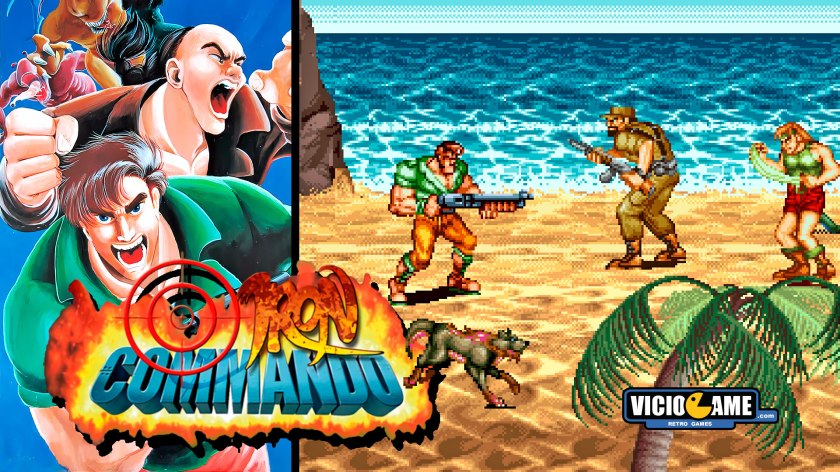
Iron Commando: Koutetsu no Senshi is a beat ‘em up style game released for the Super Nintendo in 1995. The terrorist organization G.H.O.S.T. has stolen a radioactive meteorite to manufacture nuclear weapons. Chang Li and Jake must join forces to defeat the villains and recover the valuable material.
Developer: Arcade Zone
Publisher: Poppo
Release date: 1995
Platform: Super Famicom / Super Nintendo Entertainment System
Iron Commando: The Ultimate Guide
Developed by Arcade Zone and published in Japan by Poppo, this game offers a unique blend of action, variety, and challenge that sets it apart from other games in the genre. Although it didn’t receive an official release outside of Japan until recent years, thanks to Piko Interactive, it has gained a cult following among retro gaming enthusiasts.
Iron Commando tells the story of a terrorist organization called G.H.O.S.T., which stole a radioactive meteorite with nefarious intentions. To stop them, the Iron Commando team, consisting of Jake, a skilled soldier, and Chang Li, a martial arts master, is sent on a mission to recover the meteorite and thwart the evil plans.
The game takes players through ten diverse environments, from warehouses and temples to the enemy headquarters, each filled with unique enemies and challenges. The narrative, while simple, serves as a backdrop for the intense action that unfolds, with the player’s goal being to progress through each stage, defeating enemies and bosses along the way.
Each character has their own set of moves, but shares the same basic mechanics. The gameplay revolves around a three-hit combo, aerial kicks, throws, and knee attacks, allowing players to eliminate enemies with a variety of attacks. One of the highlights is the frequent weapon drops from enemies, including batons, pistols, machine guns, and shotguns, which add a layer of strategy to combat.
However, the game is known for its unbalanced difficulty, with enemies that take too long to defeat and weapons with slow reload times, which can make the experience frustrating for some players.
What sets it apart from other beat ‘em ups is the inclusion of vehicle stages. Players can pilot a jeep, a mine cart, and even a motorcycle, each offering unique gameplay mechanics and adding variety to the progression. These sections break up the traditional side-scrolling action and provide a fresh challenge, requiring players to shoot at hordes of enemies while navigating the vehicles.
Additionally, the levels are filled with traps that players must avoid, further increasing the difficulty. The game also supports simultaneous two-player gameplay, allowing friends to team up to face the challenges together. This cooperative mode can make the game more manageable, as players can cover each other and defeat enemies more efficiently. For those playing solo, the game’s difficulty can be quite punishing, with aggressive enemies that frequently attack from behind or stay out of range, making it difficult to land hits without taking damage. There’s no health recovery between levels, so managing health is crucial, especially during boss battles, which are few but memorable.
Visually, Iron Commando is impressive for its time, featuring some of the largest and most detailed sprites on the Super Nintendo. The character designs are vibrant and expressive, with Jake and Chang Li standing out as distinct heroes. The enemies are equally well-designed, with each stage introducing new and unique adversaries that fit the environment, from punks and shooters to knights and strange creatures. The backgrounds are richly detailed, providing a sense of depth and immersion as players travel through different locations on their mission across the country.
One of the game’s strengths is the absence of slowdown, even when multiple enemies are on screen, a common problem in many SNES games. This smooth performance enhances the gaming experience, allowing players to focus on the action without technical interruptions. The attention to detail in the sprites and animations is impressive, making Iron Commando a visual treat for fans of the genre. The audio is another area where the game shines. The sound effects are impactful, with punches and kicks that add weight to combat. The music, composed by Carlo Perconti, is decent and fits the game’s tone, providing an adequate backdrop for the action, though it’s not particularly memorable. While it doesn’t stand out as one of the console’s best soundtracks, it serves its purpose in enhancing the game’s overall atmosphere.
The game’s enemies are resilient and aggressive, often requiring players to be precise in their attacks and movements. The lack of health recovery between levels means players must be careful not to take too much damage, as losing lives can set them back significantly. Boss battles are challenging and require learning patterns and exploiting weaknesses. The game’s difficulty is compounded by its unbalanced mechanics, such as the time required to defeat enemies. This can lead to frustration, especially for players who aren’t accustomed to the more punishing aspects of retro games.
There’s a useful cheat code to revisit locations after beating the game (or for those who have already given up playing): during the intro cutscene, hold the Y + X + Select buttons on controller 1, and X + UP on controller 2. Then press START and go to the options screen. An additional menu for stage selection will appear there.
Arcade Zone is a French developer, and was initially programming the game for release in Europe by Sony Electronic Publishing. However, Sony canceled the release to focus on the PlayStation, leaving the game without a publisher. It was eventually localized and published in Japan by Pack-In-Video’s subsidiary Poppo on February 10, 1995, under the title “Iron Commando: Koutetsu no Senshi”. The game remained exclusive to Japan until 2016, when Piko Interactive acquired the international rights and released it digitally on Steam. In 2017, Piko Interactive also released a reproduction cartridge for the Super Nintendo, making the game officially available in North America for the first time.
There exists a prototype of the European version that, although not released, is complete and perfectly playable. The regional differences are basically in the publisher’s logo, opening screens, title screen, and continue screen. Additionally, there’s translation of the text in the opening and ending cutscenes. The Japanese version has English textual content during gameplay and better speed, therefore, there’s not much reason for someone to prefer playing the European version.
The beat ‘em up genre was highly saturated in the early 1990s, with titles like Streets of Rage 3 and Final Fight 3 dominating the market. Iron Commando entered this crowded field with its own unique approach to the genre, offering larger sprites, more detailed graphics, and varied gameplay elements like vehicle stages. Despite its qualities, the game’s high difficulty and some unbalanced mechanics prevented it from achieving widespread acclaim.
Iron Commando is remembered as a beautiful but frustrating game that didn’t leave Japan until recent years. Its legacy is tied to its status as a hidden gem in the SNES library, appreciated for its visual style and unique features, but criticized for its difficulty and some design flaws. The game’s predecessor, Legend, also developed by Arcade Zone, is sometimes mentioned in comparison, highlighting the developer’s talent, but also the lack of polish in Iron Commando.
The re-release by Piko Interactive helped introduce the game to a new audience, with many players discovering its charms through emulation or the reproduction cartridge. While not considered a classic on the level of Final Fight or Streets of Rage, Iron Commando holds a special place in the hearts of those who appreciate its ambition and the effort put into its creation.
Iron Commando is a game that embodies the spirit of the beat ‘em up genre while adding its own special touch. It can be a pleasant surprise, especially for retro gaming fans looking for something different. Whether you’re an experienced beat ‘em up enthusiast or a curious newcomer, Iron Commando offers an adventure worth exploring.
Iron Commando: O Guia Definitivo
Desenvolvido pela Arcade Zone e publicado no Japão pela Poppo, este jogo oferece uma mistura única de ação, variedade e desafio que o diferencia de outros jogos do gênero. Embora não tenha recebido um lançamento oficial fora do Japão até anos recentes, graças à Piko Interactive, ele conquistou um seguimento cult entre entusiastas de jogos retrô.
Iron Commando conta a história de uma organização terrorista chamada G.H.O.S.T., que roubou um meteorito radioativo com intenções nefastas. Para detê-los, a equipe Iron Commando, composta por Jake, um soldado habilidoso, e Chang Li, um mestre de artes marciais, é enviada em uma missão para recuperar o meteorito e frustrar os planos malignos.
O jogo leva os jogadores por dez ambientes diversos, de armazéns e templos até a sede inimiga, cada um repleto de inimigos únicos e desafios. A narrativa, embora simples, serve como pano de fundo para a ação intensa que se desenrola, com o objetivo do jogador sendo progredir por cada estágio, derrotando inimigos e chefes ao longo do caminho.
Cada personagem tem seu próprio conjunto de movimentos, mas compartilhando as mesmas mecânicas básicas. A jogabilidade gira em torno de um combo de três golpes, chutes aéreos, arremessos e ataques com joelhada, permitindo que os jogadores eliminem inimigos com uma variedade de ataques. Um dos destaques é a frequente queda de armas pelos inimigos, incluindo bastões, pistolas, metralhadoras e espingardas, que adicionam uma camada de estratégia ao combate.
No entanto, o jogo é conhecido por sua dificuldade desbalanceada, com inimigos que demoram muito para serem derrotados e armas com tempos de recarga lentos, o que pode tornar a experiência frustrante para alguns jogadores.
O que o diferencia de outros beat ‘em ups é a inclusão de estágios com veículos. Os jogadores podem pilotar um jipe, um carrinho de mina e até uma motocicleta, cada um oferecendo mecânicas de jogabilidade únicas e adicionando variedade à progressão. Essas seções quebram a ação tradicional de rolagem lateral e proporcionam um desafio novo, exigindo que os jogadores atirem em hordas de inimigos enquanto navegam pelos veículos.
Além disso, os níveis são cheios de armadilhas que os jogadores devem evitar, aumentando ainda mais a dificuldade. O jogo também suporta jogo simultâneo para dois jogadores, permitindo que amigos se unam para enfrentar os desafios juntos. Esse modo cooperativo pode tornar o jogo mais gerenciável, já que os jogadores podem cobrir um ao outro e derrotar inimigos mais eficientemente. Para quem joga sozinho, a dificuldade do jogo pode ser bastante punitiva, com inimigos agressivos que frequentemente atacam por trás ou ficam fora de alcance, dificultando acertar golpes sem receber dano. Não há recuperação de vida entre os níveis, então gerenciar a saúde é crucial, especialmente durante as batalhas contra chefes, que são poucas, mas memoráveis.
Visualmente, Iron Commando é impressionante para sua época, apresentando alguns dos maiores e mais detalhados sprites do Super Nintendo. Os designs dos personagens são vibrantes e expressivos, com Jake e Chang Li se destacando como heróis distintos. Os inimigos são igualmente bem projetados, com cada estágio introduzindo novos e únicos adversários que se encaixam no ambiente, de punks e atiradores a cavaleiros e criaturas estranhas. Os cenários são ricamente detalhados, proporcionando uma sensação de profundidade e imersão enquanto os jogadores viajam por diferentes locais em sua missão pelo país.
Uma das forças do jogo é a ausência de slowdown, mesmo quando vários inimigos estão na tela, um problema comum em muitos jogos do SNES. Esse desempenho fluido melhora a experiência de jogo, permitindo que os jogadores se concentrem na ação sem interrupções técnicas. A atenção aos detalhes nos sprites e animações é impressionante, tornando Iron Commando um deleite visual para fãs do gênero. O áudio é outra área onde o jogo brilha. Os efeitos sonoros são impactantes, com socos e chutes que adicionam peso ao combate. A música, composta por Carlo Perconti, é decente e se encaixa no tom do jogo, fornecendo um pano de fundo adequado para a ação, embora não seja particularmente memorável. Embora não se destaque como uma das melhores trilhas sonoras do console, ela cumpre seu papel em melhorar a atmosfera geral do jogo.
Os inimigos do jogo são resistentes e agressivos, muitas vezes exigindo que os jogadores sejam precisos em seus ataques e movimentos. A falta de recuperação de vida entre os níveis significa que os jogadores devem ser cuidadosos para não sofrer muito dano, pois perder vidas pode atrasá-los significativamente. As batalhas contra chefes são desafiadoras e exigem aprender padrões e explorar fraquezas. A dificuldade do jogo é agravada por suas mecânicas desbalanceadas, como o tempo necessário para derrotar inimigos. Isso pode levar à frustração, especialmente para jogadores que não estão acostumados com os aspectos mais punitivos dos jogos retrô.
Há um código de trapaça útil para revisitar os locais depois de zerar o jogo (ou para quem já desistiu de jogar): durante a cutscene de introdução, segure os botões Y + X + Select no controle 1, e X + CIMA no controle 2. Então pressione START e vá para a tela de opções. Lá vai aparecer um menu adicional para seleção de fases.
Arcade Zone é uma desenvolvedora francesa, e estava inicialmente programando o jogo para lançamento na Europa pela Sony Electronic Publishing. No entanto, a Sony cancelou o lançamento para focar no PlayStation, deixando o jogo sem um editor. Ele foi eventualmente localizado e publicado no Japão pela subsidiária Poppo da Pack-In-Video em 10 de fevereiro de 1995, sob o título Iron Commando: Koutetsu no Senshi. O jogo permaneceu exclusivo do Japão até 2016, quando a Piko Interactive adquiriu os direitos internacionais e o lançou digitalmente no Steam. Em 2017, a Piko Interactive também lançou um cartucho de reprodução para o Super Nintendo, tornando o jogo oficialmente disponível na América do Norte pela primeira vez.
Existe um protótipo da versão europeia que, embora não tenha sido lançada, é completa e perfeitamente jogável. As diferenças regionais ficam basicamente na logomarca da publicadora, nas telas de abertura, de título, e de continue. Além disso, há tradução do texto nas cutscenes inicial e final. A versão japonesa possui conteúdo textual em inglês durante o jogo e velocidade melhor, portanto, não há muito motivo para alguém preferir jogar a versão europeia.
O gênero beat ‘em up estava altamente saturado no início dos anos 1990, com títulos como Streets of Rage 3 e Final Fight 3 dominando o mercado. Iron Commando entrou nesse campo lotado com sua própria abordagem única ao gênero, oferecendo sprites maiores, gráficos mais detalhados e elementos de jogabilidade variados, como estágios com veículos. Apesar de suas qualidades, a alta dificuldade do jogo e algumas mecânicas desbalanceadas impediram que ele alcançasse aclamação generalizada.
Iron Commando é lembrado como um jogo bonito, mas frustrante, que não saiu do Japão até anos recentes. Seu legado está ligado ao seu status como uma joia escondida da biblioteca do SNES, apreciada por seu estilo visual e características únicas, mas criticada por sua dificuldade e algumas falhas de design. O antecessor do jogo, Legend, também desenvolvido pela Arcade Zone, é às vezes mencionado em comparação, destacando o talento da desenvolvedora, mas também a falta de polimento em Iron Commando.
O relançamento pela Piko Interactive ajudou a apresentar o jogo a uma nova audiência, com muitos jogadores descobrindo seus encantos por meio de emulação ou do cartucho de reprodução. Embora não seja considerado um clássico no nível de Final Fight ou Streets of Rage, Iron Commando ocupa um lugar especial no coração daqueles que apreciam sua ambição e o esforço colocado em sua criação.
Iron Commando é um jogo que incorpora o espírito do gênero beat ‘em up enquanto adiciona seu próprio toque especial. Pode ser uma boa surpresa, especialmente para fãs de jogos retrô que procuram algo diferente. Seja você um entusiasta experiente de beat ‘em up ou um novato curioso, Iron Commando oferece uma aventura que vale a pena explorar.
🤑💲Earn money without doing anything! Just leave these apps open:
   ✓ https://r.honeygain.me/CONTA9DB02

   ✓ https://packetstream.io/?psr=1uPb
🤑💲1-Click button earns Bitcoin every 1 hour: https://freebitco.in/?r=53528449
⬛ 𝗧𝗶𝗸𝗧𝗼𝗸: https://www.tiktok.com/@viciogame
🟧 𝗜𝗻𝘀𝘁𝗮𝗴𝗿𝗮𝗺: http://www.instagram.com/viciogame
🟥 𝗬𝗼𝘂𝘁𝘂𝗯𝗲: http://www.youtube.com/viciogame
🟦 𝗙𝗮𝗰𝗲𝗯𝗼𝗼𝗸: http://www.facebook.com/viciogame
🔳 𝗧𝗵𝗿𝗲𝗮𝗱𝘀: https://www.threads.net/@viciogame
🟪 𝗧𝘄𝗶𝘁𝗰𝗵: https://www.twitch.tv/ViciogameRetroGames
🟨 𝗕𝗹𝗼𝗴: http://www.viciogameblog.com/
🟦𝗧𝘄𝗶𝘁𝘁𝗲𝗿: http://www.twitter.com/viciogame
#Viciogame #Gameplay #LetsPlay #Gamer #Playthrough #Games #News #Videogames #Review #Game #Detonado #Walkthrough #Ending #Reviews #Facts #Retro #Record #Roms #Emulator #Longplay #Speedrun #IronCommando #SuperNintendo #KoutetsuNoSenshi #SNES #BeatEmUp #SuperFamicom #ArcadeZone #Piko #Prototype #Nintendo #Poppo #アイアンコマンド #鋼鉄の戦士 #PikoInteractive #FinalFight #GoldenAxe #StreetsOfRage #Legend #スーパーファミコン #Proto #任天堂
 VICIOGAME