
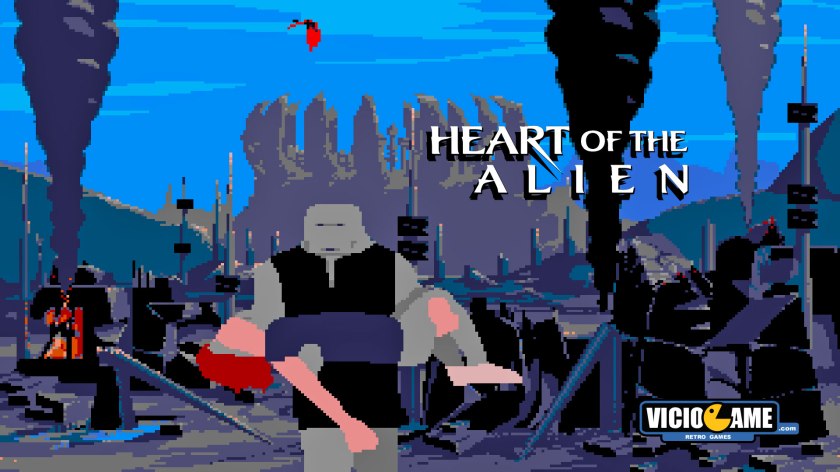
Heart of the Alien: Out of This World Parts I and II is an cinematic platformer game released in 1994 for Sega CD. This is the direct sequel to the game Out of This World. The story picks up immediately after the ending of the first title. Now you control Buddy, the alien, who must return to the prison he once escaped from to rescue his people.
Developer: Interplay
Publisher: Virgin
Release date: 1994
Platform: Sega CD / Mega CD / Sega Genesis / Mega Drive
Heart of the Alien – The Ultimate Guide
Heart of the Alien: Out of This World Parts I and II arrived in the North American market in July 1994 as an exclusive release for the Sega CD, representing the direct continuation of the story that began in Another World (known as Out of This World in North America). Developed by Interplay Productions and published by Virgin Interactive Entertainment, the game was the product of a commercial decision that sought to exploit the capabilities of CD-ROM, including on the same disc both the sequel and an enhanced version of the original game. This complete package offered players the full experience of the saga of Lester Knight Chaykin and his alien companion, known simply as Buddy, through a continuous narrative that spanned two distinct but interconnected adventures.
The development of Heart of the Alien arose from Interplay’s insistence on creating a sequel to Another World, one of the most acclaimed titles of the early 1990s. Eric Chahi, the original creator, initially did not plan a continuation, but after discussions with the company, he agreed to the project under the condition that the narrative be told from the alien’s perspective. Chahi envisioned scenes where Lester would appear in the background fighting guards while the player controlled the alien in the foreground, creating moments of convergence between the characters. However, Chahi did not actively participate in the full development, which was left entirely in Interplay’s hands. Years later, the French designer publicly declared that neither the animations nor the game itself achieved the expected level of quality, considering the final result a failure and going so far as to repudiate the title as an official sequel to his creation. This public statement by Chahi became one of the most controversial aspects related to the game, especially considering the ending presented in the story.
The team responsible for Heart of the Alien included various professionals from both companies involved. On the Virgin Interactive Entertainment side, Neil Young served as executive producer, Tom Gibson as lead producer, and Jeff Buccellato as assistant producer. Chris McFarland led the quality control group, with Jon Williams as lead analyst and a team composed of Chad Soares, Scott Manning, Paul Shoener, Mitch Feldman, Chris Toft, and Jared Brinkley. Mark Poleyn wrote the game manual and Crystal Wines was responsible for its design. On the Interplay Productions side, Brian Fargo held the position of executive producer, Alan Pavlish was the producer, Feargus Urquhart worked as line producer, and Jeremy S. Barnes led the project. Michael Burton programmed the game with assistance from Doug Nonast, while Todd Camasta directed the art with Corey Comstock as lead artist and additional contributions from Judy Kriger and Arlene Somers. Jean-François Freitas handled sound and music, with the original game design remaining credited to Eric Chahi.
Out of This World, included on the same disc, tells the story of Dr. Lester Knight Chaykin, a young and brilliant physicist who was working on a particle accelerator experiment. During an electrical storm, his experiment went terribly wrong. Lester, sitting in his office filled with pizza boxes and clutter, had entered the parameters for his new test and confidently awaited the results while drinking a soda. At the exact moment the computer activated the accelerator, a massive lightning bolt struck the laboratory with deadly precision. The lightning penetrated the system and exploded through the wall, hitting Lester directly. The electrical discharge wrapped around him like a serpent until a massive charge accumulated, detonating in a brilliant flash and leaving only an empty space where the scientist used to be. Lester found himself suddenly in an alien world, part future and part prehistoric, where terrestrial beasts and humanoids roamed barren lands, but modern weapons like laser pistols and electric shields were available.
Lester’s mission in the first game was to return to the safety of his home world. He faced poisonous leeches and aggressive beasts until he was knocked out and taken prisoner. Some time later, he found himself with a bump on his head, sharing a suspended cage with a strange-looking humanoid. This humanoid helped in his escape and quickly became his friend. Together, they crawled through tunnels, swam through channels, battled prison guards, and evaded security forces. At the end of Out of This World, Lester and Buddy escaped from the clutches of the evil prison director, flying to safety on the back of a futuristic pterodactyl. The game ended on a cliffhanger, with the two characters flying toward the unknown, leaving players eager to discover what would happen next.
Heart of the Alien picks up the narrative exactly where its predecessor ended. The opening cinematic sequence shows Lester and Buddy landing with the flying creature in the middle of a small ruined village. Lester is unconscious, probably due to injuries suffered during the escape. As Buddy places Lester in a bed to recover, he has a revealing flashback. That small village had been prosperous and full of citizens, and Buddy was their leader, strong and kind. One day, without warning, the village was attacked and destroyed by the slave prison guards, led by a humanoid with glowing red eyes. Buddy’s loyal pet was sent running for its life during the attack. Throughout the assault, Buddy used his energized whip to valiantly defend his village, but was disarmed and overpowered. He remembers waking up in the same suspended cage next to Lester, the moment he met this strange-looking being for the first time.
The role reversal represents the central element of Heart of the Alien. While the first game placed players in control of Lester, the sequel transfers that control to Buddy. The player’s mission now is to return to the prison and rescue the enslaved inhabitants of the village. The ultimate goal is to find and kill the prison director, the red-eyed humanoid, avenging himself for his role in the attack on the peaceful village. Buddy begins his journey with only his strength and intelligence, making wise use of both resources crucial, as the future of his village depends entirely on his actions. The energized whip becomes the centerpiece of Buddy’s arsenal, a unique weapon he must find as quickly as possible, as it will be his only survival tool throughout the entire adventure.
The control system of Heart of the Alien maintains similarities with its predecessor but introduces new elements related to Buddy’s powerful energized whip. The directional pad to the sides moves the character, and the directional up allows him to climb or jump to grab ledges. The A button makes the character run when moving, but fires an energy blast when standing still. Holding the A button makes it possible to form a super shot as in Out of This World. Briefly tapping the button produces a small shot, holding the button creates a protective force field, and continuing to hold the button generates a devastating Super Shot. The B button specifically controls the whip, the only weapon available throughout the game. The directional can be used to aim the whip to the right, left, or upward, but it is not possible to whip downward. An important mechanic allows the whip to attach to objects on the ceiling, enabling Buddy to swing across chasms. The C button executes a forward jump, and pressing A and C together with the directional performs a running leap. The START button starts the game and also pauses the action during play.
One of the distinctive features of Heart of the Alien compared to the original game is that Buddy’s shields deploy instantly, unlike Lester’s shields, which take a few seconds to charge. This change reflects both a difference in equipment and the alien’s natural abilities. The energized whip offers versatility beyond melee combat, serving as an environment traversal tool. When the whip’s energy is depleted or the equipment malfunctions, Buddy is vulnerable until he locates a recharge station. These stations appear at strategic points throughout the stages, allowing the weapon to be automatically re-energized. The search for these stations becomes an essential part of the progression strategy, especially in areas with multiple enemies or obstacles that require intensive use of the whip.
The bomb and its timer represent crucial elements that the player must locate during the journey. These items appear separately in different parts of the prison complex, and once assembled, they form a complete explosive device. Using the bomb requires careful planning, as there is only one opportunity to place it correctly. After positioning the bomb near the designated target, the player must exit the screen immediately, as remaining in the area during detonation results in instant death. Approximately ten seconds after leaving the area, the screen shakes, indicating that the explosion occurred successfully. The destruction caused by the bomb opens new paths that were previously blocked, allowing access to the final part of the game. The combination of the bomb with its timer is done automatically when both components are collected, and pressing the A, B, and C buttons simultaneously activates the device when positioned near the appropriate target.
The password system of Heart of the Alien allows players to return to specific points in the game without needing to restart from the beginning. At certain moments during the game, a four-letter code is provided. The twelfth stage presents the final confrontation. This part comes down to whipping the villain until he is over a platform, and then pressing a switch that makes him fall, completing the confrontation.
The ending of Heart of the Alien becomes one of the most controversial aspects of the game. The cinematic sequence shows the guard fighting gladiator-style with a lion while prisoners watch. The alien then walks through the burned ruins of the ransacked prison and discovers his human companion, dead or unconscious. The alien carries Lester somewhere and places him in what appears to be a cremation chamber. Lester’s body is completely vaporized, with clothes, skin, muscles, and soft tissues disappearing in a flash. The alien then walks around the surroundings while recycled images of the happy village from the introduction appear. The village is rebuilt with its citizens living again in harmony. Lester’s coffin or memorial can be seen outside Buddy’s hut, serving as a tribute to the human who helped save the village from slavery.
This ending provoked intensely negative reactions from many players who invested hours keeping Lester alive through the first game only to discover that he died in the sequel. Lester’s death occurs during a cinematic sequence in the middle of the game, between codes RLRB and RJLG, where he fights with a guard and falls directly into electric beams, dying while saving Buddy from being killed by the red-eyed alien. The final sequence shows Buddy returning to recover Lester’s body for cremation. The leader of the soldiers who attacked the village, the guard that Lester faces in the middle sequence, and the boss at the end of the game all have glowing red eyes, suggesting they are the same character. This identification through the red eyes provides motivation for Buddy’s actions, seeking revenge against the one responsible for the destruction of his village and capture of its inhabitants. When Buddy finally kills the red-eyed alien at the end, the revenge is complete and the inhabitants are freed.
The player community developed extensive theories trying to make sense of the ending. Some theories suggest there are two Lesters due to the particle accelerator accident creating a split in reality. Other theories propose that Heart of the Alien is not really a chronological sequel, but rather a retelling of Out of This World from the alien’s perspective, with the cremation scenes representing the true present time. One particularly coherent theory suggests that Lester was not dead at the beginning of Heart of the Alien, as evidenced by his eyes blinking during the introductory sequence when Buddy places him in bed. Lester quickly recovers from his injuries and joins Buddy before the middle of the game, saving him but dying in the process. This interpretation creates a timeline where the red-eyed alien leads the attack on Buddy’s village, captures its inhabitants for gladiatorial combat, imprisons Buddy in the suspended cage where he meets Lester, escapes with Lester to the village ruins, leaves Lester to recover while searching for his whip, reunites with Lester who is now recovered, loses Lester when he dies saving Buddy from the electric beams, continues causing massive damage to the complex with bombs and destroyed machines, finally confronts the red-eyed alien again and eliminates him in the beast arena, frees the captive inhabitants who set fire to the citadel, and returns to cremate Lester’s body before rebuilding the village.
The reviews received by Heart of the Alien were divided between praise and reservations. GamePro acclaimed the game as even better than the original Out of This World, praising its sharply animated cinematic sequences, ingenious stage design, evocative soundtrack, and the inclusion of the original game on the disc. The magazine acknowledged that the controls are sometimes frustrating, but felt that practice and patience would inevitably overcome this problem. The four reviewers at Electronic Gaming Monthly equally considered it a strong sequel despite the control difficulties. They commented that the graphics suit the game’s theme, the puzzle-type challenges are engaging, and the cinematic sequences and animations are extraordinary. Sebastian Sponsel of Sega-16 gave the game a score of 8 out of 10, and although he criticized its relentless difficulty and controls, he called the game a “pleasurable experience and true sequel to a classic.”
Negative criticism focused mainly on three aspects. First, the controls suffered a decline compared to the first game, with the character moving in a granular manner with lag, making precise control difficult. Second, the game now requires pixel-perfect precision in many places, combining this with a predilection for instant death traps that seem much more prevalent than in Out of This World. Third, the aesthetics, plot, and attitude of the game all seem wrong and a corruption of Chahi’s vision. The puzzles were considered bland and unfair. For example, the button combination to place the bomb is not mentioned in the manual, forcing players to guess. The final screen before the confrontation presents another undocumented input that must be executed on an almost invisible background object, creating moments of extreme frustration. Although the original game also had undocumented inputs, such as the roll that must be executed at a certain point, there it seemed totally natural, while here it seems like “screw the player.”
The version of Out of This World included on the disc also received criticism. The CD audio is acceptable at some moments but inadequate at others. The vocal sound effects were redone and represent lower quality compared to the originals. The controls are not responsive, with noticeable lag on multiple occasions beyond the usual in other versions. Many players prefer the Super Nintendo or 3DO versions over this Sega CD version. However, the soundtrack represents a significant improvement, and the convenience of having both games on a single disc remains appealing to fans of the series.
The exclusivity for Sega CD represents one of the most intriguing decisions related to Heart of the Alien. While Out of This World was released for virtually every computer and console available at the time, including Apple IIgs, Super Nintendo, Genesis, DOS, Macintosh, 3DO, Amiga, and various other systems, totaling thirteen official ports and at least six unofficial ones, the sequel appeared exclusively on the Sega CD, which did not have significant commercial success in North America. This platform limitation meant that plans for expansion to other systems and even an additional sequel never materialized. The developers ran out of money and enthusiasm during the development of the Sega CD version, and acknowledged that negative reactions to the controversial ending would make it problematic to release the game on additional platforms.
Eric Chahi later developed Heart of Darkness in 1998, a cinematic platform game that shares thematic and stylistic elements with his Another World series, although without direct narrative connection. The name coincidence between Heart of the Alien and Heart of Darkness is interesting but not intentional. Chahi continued creating cinematic experiences in games, but clearly went in different directions from those taken by Interplay with the unauthorized sequel. Chahi’s vision for a possible continuation of Another World remains unknown, only with initial statements about the desire to tell the story from the alien’s perspective. A concept that was implemented but not with the execution he imagined.
The relentless difficulty of Heart of the Alien deserves detailed analysis. On each screen, each incorrect step or action results in death. Environmental hazards lurk everywhere, and the player must painfully discover where to stand, what to do, when to avoid or kill an enemy. Facing and trying to defeat every enemy encountered is not the wisest idea, as a single hit kills instantly. The entire game is a trial-and-error experience. Taking a few steps, failing, and trying again becomes the constant cycle. Players die a lot, repeatedly, in increasingly creative and painful ways. This design philosophy contrasts with modern games that offer frequent checkpoints and forgiving mechanics. Heart of the Alien offers no mercy, only brutal challenge and eventual satisfaction when one finally discovers the correct solution to each deadly puzzle.
The penultimate screen of the game became infamous among players for its absurd difficulty. Many players report being driven to the brink of madness trying to figure out the exact sequence of actions needed to progress. The need to stand in precise positions and press specific buttons at exact moments, combined with multiple instant deaths while trying to figure out what to do, creates an incredibly frustrating experience. Unlike Out of This World, where each death provided a clear idea of what went wrong and what to do to avoid it next time, Heart of the Alien presents multiple moments where the player dies without knowing exactly what they should have done differently. This failure in game feedback represents one of the biggest design problems, transforming legitimate challenge into gratuitous frustration.
The visual elements of Heart of the Alien use polygonal graphics similar to those of the original game, a stylistic choice that defines the Another World series. Although the graphics seem dated compared to modern standards, they still fulfill their purpose of creating an alien and mysterious atmosphere. The cinematic sequences received special attention, with fluid animations that tell the story without words or on-screen text. This visual narrative approach remains impressive even decades after release. However, some critics felt that the developers could have done more to improve the graphics, especially considering that Flashback, released later, achieved superior visual quality. The animations in Heart of the Alien sometimes seem less polished than those of the original, with some polygons appearing out of place or with fewer animation frames.
The soundtrack of Heart of the Alien takes advantage of the Sega CD‘s CD audio capabilities, offering quality music that represents a significant improvement over the limitations of the Genesis‘s synthesized audio. Jean-François Freitas, who also worked on the audio of the first game, composed atmospheric music that complements the action and creates tension during crucial moments. Tommy Tallarico, who worked on numerous classic games, does not appear credited in Heart of the Alien but contributed to the Sega CD version of Out of This World included on the disc. The evocative music helps build the alien world and keeps players immersed even during the most frustrating sections. The sound effects vary in quality, with some distinctive alien sounds creating effective atmosphere while others sound dated or inadequate.
The legacy of Heart of the Alien remains complex and divided. For dedicated fans of Another World, the game offers the only official continuation of Lester and Buddy’s story, providing narrative closure even if controversial. The inverted perspective of controlling Buddy instead of Lester represents an interesting experiment in game design, allowing players to see familiar events from a different angle. However, the execution flaws, combined with Eric Chahi’s public repudiation and the death of the human protagonist, significantly tarnished the game’s reputation. Many fans prefer to ignore Heart of the Alien completely, treating Another World as a complete and self-contained story that needs no sequel. This attitude is reinforced by the fact that modern re-releases of Another World completely omit the sequel, treating it as non-canonical apocrypha.
The game serves as an example of how sequels not supervised by the original creator can deviate significantly from the artistic vision that made the original work special. Interplay’s insistence on creating a sequel to capitalize on Another World‘s success, combined with Chahi’s limited participation, resulted in a product that technically implemented his conceptual suggestions but failed to capture the essence and execution quality of the original. This situation became relatively common in the gaming industry, where commercial pressures frequently conflict with artistic integrity. Heart of the Alien remains as a case study in how not to make a sequel, despite containing genuinely interesting moments and innovative ideas.
The complete experience of playing both Out of This World and Heart of the Alien in sequence offers a unique perspective on how the narrative evolves and how gameplay mechanics transform between the two titles. Lester’s journey from confused physicist lost in an alien world to hero who sacrifices his life to save his alien friend creates a tragic narrative arc that resonates emotionally, even if the execution leaves much to be desired. Buddy’s journey from peaceful village leader to vengeful warrior who eventually frees his people and rebuilds his community provides a counterpoint to Lester’s story. Together, the two stories create a more complete portrait of the Another World universe, even if many fans prefer to imagine happier alternative endings for Lester.
Heart of the Alien: Out of This World Parts 1 and 2 represents a fascinating but imperfect chapter in the history of cinematic platform games. Its exclusivity for Sega CD, combined with problematic development, mixed reception, and repudiation by the original creator, transformed it into a historical curiosity rather than a revered classic. The game demonstrates both the potential and the pitfalls of creating sequels without proper supervision from the original visionary. For players willing to face its brutal difficulty, imprecise controls, and controversial ending, Heart of the Alien offers a unique experience that expands the Another World universe in unforeseen ways. Despite all its flaws, the game remains an important title from the 16-bit era and an ambitious attempt to continue one of video gaming’s most distinctive stories.
Heart of the Alien – O Guia Definitivo
Heart of the Alien: Out of This World Parts I and II chegou ao mercado norte-americano em julho de 1994 como um lançamento exclusivo para o Sega CD, representando a continuação direta da história iniciada em Another World (conhecido como Out of This World na América do Norte). Desenvolvido pela Interplay Productions e publicado pela Virgin Interactive Entertainment, o jogo foi produto de uma decisão comercial que buscava explorar as capacidades do CD-ROM, incluindo no mesmo disco tanto a sequência quanto uma versão aprimorada do jogo original. Este pacote completo oferecia aos jogadores a experiência integral da saga de Lester Knight Chaykin e de seu companheiro alienígena, conhecido simplesmente como Buddy, através de uma narrativa contínua que se estendia por duas aventuras distintas mas interconectadas.
O desenvolvimento de Heart of the Alien surgiu da insistência da Interplay em criar uma sequência para Another World, um dos títulos mais aclamados do início dos anos 1990. Eric Chahi, o criador original, inicialmente não planejava uma continuação, mas após discussões com a empresa, concordou com o projeto sob a condição de que a narrativa fosse contada a partir da perspectiva do alienígena. Chahi imaginou cenas onde Lester apareceria ao fundo combatendo guardas enquanto o jogador controlaria o alienígena em primeiro plano, criando momentos de convergência entre os personagens. No entanto, Chahi não participou ativamente do desenvolvimento completo, que ficou inteiramente nas mãos da Interplay. Anos depois, o designer francês declarou publicamente que nem as animações nem o jogo em si alcançaram o nível de qualidade esperado, considerando o resultado final um fracasso e chegando a repudiar o título como sequência oficial de sua criação. Esta declaração pública de Chahi tornou-se um dos aspectos mais controversos relacionados ao jogo, especialmente considerando o final apresentado na história.
A equipe responsável por Heart of the Alien incluía diversos profissionais de ambas as empresas envolvidas. Do lado da Virgin Interactive Entertainment, Neil Young atuou como produtor executivo, Tom Gibson como produtor principal, e Jeff Buccellato como produtor assistente. Chris McFarland liderou o grupo de controle de qualidade, com Jon Williams como analista principal e uma equipe composta por Chad Soares, Scott Manning, Paul Shoener, Mitch Feldman, Chris Toft e Jared Brinkley. Mark Poleyn escreveu o manual do jogo e Crystal Wines foi responsável pelo design do mesmo. Do lado da Interplay Productions, Brian Fargo ocupou o cargo de produtor executivo, Alan Pavlish foi o produtor, Feargus Urquhart trabalhou como produtor de linha, e Jeremy S. Barnes liderou o projeto. Michael Burton programou o jogo com assistência de Doug Nonast, enquanto Todd Camasta dirigiu a arte com Corey Comstock como artista principal e contribuições adicionais de Judy Kriger e Arlene Somers. Jean-François Freitas cuidou do som e música, com o design de jogo original permanecendo creditado a Eric Chahi.
Out of This World, incluído no mesmo disco, conta a história do Dr. Lester Knight Chaykin, um jovem e brilhante físico que trabalhava em um experimento de aceleração de partículas. Durante uma tempestade elétrica, seu experimento deu terrivelmente errado. Lester, sentado em seu escritório repleto de caixas de pizza e entulho, havia inserido os parâmetros para seu novo teste e aguardava confiante os resultados enquanto bebia um refrigerante. No momento exato em que o computador ativou o acelerador, um raio massivo atingiu o laboratório com precisão mortal. O raio penetrou o sistema e explodiu através da parede, atingindo Lester diretamente. A descarga elétrica envolveu-o como uma serpente até que uma carga massiva se acumulou, detonando em um clarão brilhante e deixando apenas um espaço vazio onde o cientista costumava estar. Lester descobriu-se subitamente em um mundo alienígena, parte futuro e parte pré-histórico, onde bestas terrestres e humanoides percorriam terras áridas, mas armas modernas como pistolas laser e escudos elétricos estavam disponíveis.
A missão de Lester no primeiro jogo era retornar à segurança de seu mundo natal. Ele enfrentou sanguessugas venenosas e bestas agressivas até ser nocauteado e feito prisioneiro. Algum tempo depois, encontrou-se com uma protuberância na cabeça, compartilhando uma gaiola suspensa com um humanoide de aparência estranha. Este humanoide ajudou em sua fuga e rapidamente tornou-se seu amigo. Juntos, rastejaram por túneis, nadaram por canais, batalharam contra guardas prisionais e evadiram as forças de segurança. No final de Out of This World, Lester e Buddy escaparam das garras do diretor maligno da prisão, voando para a segurança nas costas de um pterodátilo futurista. O jogo encerrava-se em um suspense, com os dois personagens voando em direção ao desconhecido, deixando jogadores ansiosos para descobrir o que aconteceria em seguida.
Heart of the Alien retoma a narrativa exatamente onde o antecessor terminou. A sequência cinematográfica inicial mostra Lester e Buddy pousando com a criatura voadora no meio de uma pequena vila em ruínas. Lester está inconsciente, provavelmente devido aos ferimentos sofridos durante a fuga. Enquanto Buddy coloca Lester em uma cama para se recuperar, ele tem um flashback revelador. Aquela pequena vila havia sido próspera e cheia de cidadãos, e Buddy era seu líder, forte e bondoso. Um dia, sem aviso prévio, a vila foi atacada e destruída pelos guardas da prisão de escravos, liderados por um humanoide com olhos vermelhos brilhantes. A criatura de estimação leal de Buddy foi enviada a correr por sua vida durante o ataque. Ao longo da investida, Buddy usou seu chicote energizado para defender valentemente sua vila, mas foi desarmado e dominado. Ele se lembra de despertar na mesma gaiola suspensa ao lado de Lester, o momento em que conheceu este ser de aparência estranha pela primeira vez.
A inversão de papéis representa o elemento central de Heart of the Alien. Enquanto o primeiro jogo colocava os jogadores no controle de Lester, a sequência transfere esse controle para Buddy. A missão do jogador agora é retornar à prisão e resgatar os habitantes escravizados da vila. O objetivo final é encontrar e matar o diretor da prisão, o humanoide de olhos vermelhos, vingando-se por seu papel no ataque à vila pacífica. Buddy começa sua jornada apenas com sua força e inteligência, tornando crucial o uso sábio de ambos os recursos, já que o futuro de sua vila depende inteiramente de suas ações. O chicote energizado torna-se a peça central do arsenal de Buddy, uma arma única que ele deve encontrar o mais rápido possível, pois será sua única ferramenta de sobrevivência ao longo de toda a aventura.
O sistema de controle de Heart of the Alien mantém semelhanças com seu predecessor mas introduz elementos novos relacionados ao poderoso chicote energizado de Buddy. O direcional para os lados move o personagem, e o direcional para cima permite que ele suba ou pule para agarrar saliências. O botão A faz o personagem correr quando está se movendo, mas dispara uma rajada de energia quando está parado. Segurando o botão A, é possível formar um super disparo como em Out of This World. Tocar brevemente o botão produz um tiro pequeno, manter o botão cria um campo de força protetor, e continuar segurando o botão gera um Super Disparo devastador. O botão B controla especificamente o chicote, a única arma disponível ao longo do jogo. O direcional pode ser usado para mirar o chicote para a direita, esquerda ou para cima, mas não é possível chicotear para baixo. Uma mecânica importante permite que o chicote se prenda a objetos no teto, possibilitando que Buddy balance através de abismos. O botão C executa um pulo para frente, e pressionar A e C junto com o direcional realiza um salto correndo. O botão START inicia o jogo e também pausa a ação durante a partida.
Uma das características distintivas de Heart of the Alien em relação ao jogo original é que os escudos de Buddy são implantados instantaneamente, diferentemente dos escudos de Lester, que levam alguns segundos para carregar. Esta mudança reflete tanto uma diferença no equipamento quanto nas habilidades naturais do alienígena. O chicote energizado oferece versatilidade além do combate corpo a corpo, servindo como ferramenta de transverso do ambiente. Quando a energia do chicote se esgota ou o equipamento apresenta falhas, Buddy fica vulnerável até localizar uma estação de recarga. Estas estações aparecem em pontos estratégicos ao longo das fases, permitindo que a arma seja reenergizada automaticamente. A busca por estas estações torna-se parte essencial da estratégia de progressão, especialmente em áreas com múltiplos inimigos ou obstáculos que exigem uso intensivo do chicote.
A bomba e seu temporizador representam elementos cruciais que o jogador deve localizar durante a jornada. Estes itens aparecem separadamente em diferentes partes do complexo prisional, e uma vez reunidos, formam um dispositivo explosivo completo. O uso da bomba requer planejamento cuidadoso, pois há apenas uma oportunidade de colocá-la corretamente. Após posicionar a bomba próxima ao alvo designado, o jogador deve sair da tela imediatamente, pois permanecer na área durante a detonação resulta em morte instantânea. Aproximadamente dez segundos após deixar a área, a tela treme, indicando que a explosão ocorreu com sucesso. A destruição causada pela bomba abre novos caminhos que anteriormente estavam bloqueados, permitindo acesso à parte final do jogo. A combinação da bomba com seu temporizador é feita automaticamente quando ambos os componentes são coletados, e pressionar os botões A, B e C simultaneamente ativa o dispositivo quando posicionado próximo ao alvo apropriado.
O sistema de passwords de Heart of the Alien permite que os jogadores retornem a pontos específicos do jogo sem necessidade de recomeçar desde o início. Em certos momentos durante o jogo, um código de quatro letras é fornecido. A décima segunda fase apresenta o confronto final. Esta parte resume-se em chicotear o vilão até ele estar sobre uma plataforma, e então pressionar um interruptor que o faz cair, completando o confronto.
O final de Heart of the Alien torna-se um dos aspectos mais controversos do jogo. A sequência cinematográfica mostra o guarda lutando estilo gladiador com um leão enquanto prisioneiros observam. O alienígena então caminha através das ruínas queimadas da prisão saqueada e descobre seu companheiro humano, morto ou inconsciente. O alienígena carrega Lester para algum lugar e o coloca no que aparenta ser uma câmara de cremação. O corpo de Lester é vaporizado completamente, com roupas, pele, músculos e tecidos moles desaparecendo em um clarão. O alienígena então caminha pelos arredores enquanto imagens recicladas da vila feliz da introdução aparecem. A vila é reconstruída com seus cidadãos vivendo novamente em harmonia. O caixão ou memorial de Lester pode ser visto do lado de fora da cabana de Buddy, servindo como tributo ao humano que ajudou a salvar a vila da escravidão.
Este final provocou reações intensamente negativas de muitos jogadores que investiram horas mantendo Lester vivo através do primeiro jogo apenas para descobrir que ele morreu na sequência. A morte de Lester ocorre durante uma sequência cinematográfica no meio do jogo, entre os códigos RLRB e RJLG, onde ele luta com um guarda e cai diretamente em feixes elétricos, morrendo ao salvar Buddy de ser morto pelo alienígena de olhos vermelhos. A sequência final mostra Buddy retornando para recuperar o corpo de Lester para cremação. O líder dos soldados que atacou a vila, o guarda que Lester enfrenta na sequência do meio, e o chefe no final do jogo todos possuem olhos vermelhos brilhantes, sugerindo que são o mesmo personagem. Esta identificação através dos olhos vermelhos fornece motivação para as ações de Buddy, buscando vingança contra o responsável pela destruição de sua vila e captura de seus habitantes. Quando Buddy finalmente mata o alienígena de olhos vermelhos no final, a vingança está completa e os habitantes são libertados.
A comunidade de jogadores desenvolveu extensas teorias tentando dar sentido ao final. Algumas teorias sugerem que existem dois Lesters devido ao acidente do acelerador de partículas criando uma divisão na realidade. Outras teorias propõem que Heart of the Alien não é realmente uma sequência cronológica, mas sim uma recontagem de Out of This World da perspectiva do alienígena, com as cenas de cremação representando o verdadeiro tempo presente. Uma teoria particularmente coerente sugere que Lester não estava morto no início de Heart of the Alien, como evidenciado por seus olhos piscando durante a sequência introdutória quando Buddy o coloca na cama. Lester recupera-se rapidamente de seus ferimentos e se junta a Buddy antes da metade do jogo, salvando-o mas morrendo no processo. Esta interpretação cria uma cronologia onde o alienígena de olhos vermelhos lidera o ataque à vila de Buddy, captura seus habitantes para combate gladiatorial, prende Buddy na gaiola suspensa onde ele conhece Lester, escapa com Lester para as ruínas da vila, deixa Lester para se recuperar enquanto busca seu chicote, reencontra Lester que agora está recuperado, perde Lester quando ele morre salvando Buddy dos feixes elétricos, continua causando danos massivos ao complexo com bombas e máquinas destruídas, finalmente enfrenta o alienígena de olhos vermelhos novamente e o elimina na arena com bestas, liberta os habitantes cativos que incendeiam a cidadela, e retorna para cremar o corpo de Lester antes de reconstruir a vila.
As críticas recebidas por Heart of the Alien dividiram-se entre elogios e ressalvas. GamePro aclamou o jogo como ainda melhor que o original Out of This World, elogiando suas sequências cinematográficas nitidamente animadas, design de fases engenhoso, trilha sonora evocativa, e a inclusão do jogo original no disco. A revista reconheceu que os controles às vezes são frustrantes, mas sentiu que prática e paciência inevitavelmente superariam este problema. Os quatro revisores da Electronic Gaming Monthly igualmente consideraram uma sequência forte apesar das dificuldades de controle. Eles comentaram que os gráficos adequam-se ao tema do jogo, os desafios tipo quebra-cabeça são envolventes, e as sequências cinematográficas e animações são extraordinárias. Sebastian Sponsel da Sega-16 deu ao jogo nota 8 de 10, e embora criticasse sua dificuldade implacável e controles, chamou o jogo de “experiência prazerosa e verdadeira sequência de um clássico“.
Críticas negativas focaram principalmente em três aspectos. Primeiro, os controles sofreram uma queda em comparação ao primeiro jogo, com o personagem movendo-se de maneira granular e com lag, tornando difícil o controle preciso. Segundo, o jogo agora exige precisão pixel-perfeita em muitos lugares, combinando isto com predileção por armadilhas de morte instantânea que parecem muito mais que em Out of This World. Terceiro, a estética, enredo e atitude do jogo parecem todos errados e uma corrupção da visão de Chahi. Os quebra-cabeças foram considerados sem graça e injustos. Por exemplo, a combinação de botões para colocar a bomba não é mencionada no manual, forçando os jogadores a adivinhar. A tela final antes do confronto apresenta outra entrada não documentada que deve ser executada em um objeto de fundo quase invisível, criando momentos de frustração extrema. Embora o jogo original também tivesse entradas não documentadas, como o rolamento que deve ser executado em determinado ponto, lá parecia totalmente natural, enquanto aqui parece como “dane-se o jogador“.
A versão de Out of This World incluída no disco também recebeu críticas. O áudio de CD é aceitável em alguns momentos mas inadequado em outros. Os efeitos sonoros vocais foram refeitos e representam menor qualidade em relação aos originais. Os controles não são responsivos, com lag perceptível em múltiplas ocasiões além do usual em outras versões. Muitos jogadores preferem as versões Super Nintendo ou 3DO sobre esta versão Sega CD. No entanto, a trilha sonora representa um aprimoramento significativo, e a conveniência de ter ambos os jogos em um único disco permanece atraente para fãs da série.
A exclusividade para Sega CD representa uma das decisões mais intrigantes relacionadas a Heart of the Alien. Enquanto Out of This World foi lançado para praticamente todos os computadores e consoles disponíveis na época, incluindo Apple IIgs, Super Nintendo, Genesis, DOS, Macintosh, 3DO, Amiga e diversos outros sistemas, contabilizando treze portes oficiais e pelo menos seis não oficiais, a sequência apareceu exclusivamente no Sega CD, que não teve sucesso comercial significativo na América do Norte. Esta limitação de plataforma significava planos de expansão para outros sistemas e até mesmo uma sequência adicional que nunca se materializaram. Os desenvolvedores ficaram sem dinheiro e entusiasmo durante o desenvolvimento da versão Sega CD, e reconheceram que as reações negativas ao final controverso tornariam problemático lançar o jogo em plataformas adicionais.
Eric Chahi desenvolveu posteriormente Heart of Darkness em 1998, um jogo de plataforma cinematográfico que compartilha elementos temáticos e estilísticos com sua série Another World, embora sem conexão narrativa direta. A coincidência de nomes entre Heart of the Alien e Heart of Darkness é interessante mas não intencional. Chahi continuou criando experiências cinematográticas em jogos, mas claramente seguiu em direções diferentes daquelas tomadas pela Interplay com a sequência não autorizada. A visão de Chahi para uma possível continuação de Another World permanece desconhecida, apenas com declarações iniciais sobre o desejo de contar a história da perspectiva do alienígena. Conceito que foi implementado mas não com a execução que ele imaginava.
A dificuldade implacável de Heart of the Alien merece análise detalhada. Em cada tela, cada passo ou ação incorreta resulta em morte. Perigos ambientais espreitam por toda parte, e o jogador deve descobrir dolorosamente onde ficar, o que fazer, quando evitar ou matar um inimigo. Enfrentar e tentar derrotar cada inimigo encontrado não é a ideia mais sábia, já que um único golpe mata instantaneamente. O jogo inteiro é uma experiência de tentativa e erro. Dar alguns passos, falhar, e tentar novamente torna-se o ciclo constante. Os jogadores morrem muito, repetidamente, em formas cada vez mais criativas e dolorosas. Esta filosofia de design contrasta com jogos modernos que oferecem checkpoints frequentes e mecânicas de perdão. Heart of the Alien não oferece piedade, apenas desafio brutal e satisfação eventual quando finalmente se descobre a solução correta para cada quebra-cabeça mortal.
A penúltima tela do jogo tornou-se infame entre jogadores por sua dificuldade absurda. Muitos jogadores relatam terem sido levados à beira da loucura tentando descobrir a sequência exata de ações necessárias para progredir. A necessidade de ficar em posições precisas e pressionar botões específicos em momentos exatos, combinada com múltiplas mortes instantâneas enquanto se tenta descobrir o que fazer, cria uma experiência incrivelmente frustrante. Ao contrário de Out of This World, onde cada morte fornecia ideia clara do que deu errado e o que fazer para evitá-la na próxima vez, Heart of the Alien apresenta múltiplos momentos onde o jogador morre sem saber exatamente o que deveria ter feito diferente. Esta falha no feedback do jogo representa um dos maiores problemas de design, transformando desafio legítimo em frustração gratuita.
Os elementos visuais de Heart of the Alien utilizam gráficos poligonais similares aos do jogo original, uma escolha estilística que define a série Another World. Embora os gráficos pareçam datados comparados a padrões modernos, eles ainda cumprem seu propósito de criar atmosfera alienígena e misteriosa. As sequências cinematográficas receberam atenção especial, com animações fluidas que contam a história sem palavras ou texto na tela. Esta abordagem de narrativa visual permanece impressionante mesmo décadas após o lançamento. No entanto, alguns críticos sentiram que os desenvolvedores poderiam ter feito mais para melhorar os gráficos, especialmente considerando que Flashback, lançado posteriormente, alcançou qualidade visual superior. As animações de Heart of the Alien às vezes parecem menos polidas que as do original, com alguns polígonos aparecendo fora de lugar ou com menos quadros de animação.
A trilha sonora de Heart of the Alien aproveita as capacidades de áudio CD do Sega CD, oferecendo música de qualidade que representa melhoria significativa sobre as limitações do áudio sintetizado do Genesis. Jean-François Freitas, que também trabalhou no áudio do primeiro jogo, compôs música atmosférica que complementa a ação e cria tensão durante momentos cruciais. Tommy Tallarico, que trabalhou em inúmeros jogos clássicos, não aparece creditado em Heart of the Alien mas contribuiu para a versão Sega CD de Out of This World incluída no disco. A música evocativa ajuda a construir o mundo alienígena e mantém os jogadores imersos mesmo durante as seções mais frustrantes. Os efeitos sonoros variam em qualidade, com alguns sons alienígenas distintivos criando atmosfera efetiva enquanto outros soam datados ou inadequados.
O legado de Heart of the Alien permanece complexo e dividido. Para fãs dedicados de Another World, o jogo oferece a única continuação oficial da história de Lester e Buddy, fornecendo conclusão narrativa mesmo que controversa. A perspectiva invertida de controlar Buddy ao invés de Lester representa experimento interessante em design de jogos, permitindo que jogadores vejam eventos familiares de ângulo diferente. No entanto, as falhas de execução, combinadas com o repúdio público de Eric Chahi e a morte do protagonista humano, mancharam significativamente a reputação do jogo. Muitos fãs preferem ignorar Heart of the Alien completamente, tratando Another World como história completa e auto-contida que não necessita sequência. Esta atitude é reforçada pelo fato de que relançamentos modernos de Another World omitem completamente a sequência, tratando-a como apócrifo não canônico.
O jogo serve como exemplo de como sequências não supervisionadas pelo criador original podem desviar-se significativamente da visão artística que tornou o trabalho original especial. A insistência da Interplay em criar sequência para capitalizar no sucesso de Another World, combinada com a participação limitada de Chahi, resultou em produto que tecnicamente implementou suas sugestões conceituais mas falhou em capturar a essência e qualidade de execução do original. Esta situação tornou-se relativamente comum na indústria de jogos, onde pressões comerciais frequentemente conflitam com integridade artística. Heart of the Alien permanece como caso de estudo em como não fazer sequência, apesar de conter momentos genuinamente interessantes e idéias inovadoras.
A experiência completa de jogar tanto Out of This World quanto Heart of the Alien em sequência oferece perspectiva única sobre como a narrativa evolui e como as mecânicas de jogo se transformam entre os dois títulos. A jornada de Lester desde físico confuso perdido em mundo alienígena até herói que sacrifica sua vida para salvar seu amigo alienígena cria arco narrativo trágico que ressoa emocionalmente, mesmo que a execução deixe a desejar. A jornada de Buddy desde líder de vila pacífica até guerreiro de vingança que eventualmente liberta seu povo e reconstrói sua comunidade fornece contraponto à história de Lester. Juntas, as duas histórias criam retrato mais completo do universo Another World, mesmo que muitos fãs prefiram imaginar finais alternativos mais felizes para Lester.
Heart of the Alien: Out of This World Parts 1 and 2 representa capítulo fascinante mas imperfeito na história dos jogos de plataforma cinematográticos. Sua exclusividade para Sega CD, combinada com desenvolvimento problemático, recepção mista e repúdio do criador original, transformou-o em curiosidade histórica ao invés de clássico reverenciado. O jogo demonstra tanto o potencial quanto as armadilhas de criar sequências sem supervisão adequada do visionário original. Para jogadores dispostos a enfrentar sua dificuldade brutal, controles imprecisos e final controverso, Heart of the Alien oferece experiência única que expande o universo Another World de maneiras imprevistas. Apesar de todas suas falhas, o jogo permanece como um título importante da era 16-bit e tentativa ambiciosa de continuar uma das histórias mais distintivas dos videogames.
🤑💲Earn money without doing anything! Just leave these apps open:
   ✓ https://r.honeygain.me/CONTA9DB02

   ✓ https://packetstream.io/?psr=1uPb
🤑💲1-Click button earns Bitcoin every 1 hour: https://freebitco.in/?r=53528449
⬛ 𝗧𝗶𝗸𝗧𝗼𝗸: https://www.tiktok.com/@viciogame
🟧 𝗜𝗻𝘀𝘁𝗮𝗴𝗿𝗮𝗺: http://www.instagram.com/viciogame
🟥 𝗬𝗼𝘂𝘁𝘂𝗯𝗲: http://www.youtube.com/viciogame
🟦 𝗙𝗮𝗰𝗲𝗯𝗼𝗼𝗸: http://www.facebook.com/viciogame
🔳 𝗧𝗵𝗿𝗲𝗮𝗱𝘀: https://www.threads.net/@viciogame
🟪 𝗧𝘄𝗶𝘁𝗰𝗵: https://www.twitch.tv/ViciogameRetroGames
🟨 𝗕𝗹𝗼𝗴: http://www.viciogameblog.com/
🟦𝗧𝘄𝗶𝘁𝘁𝗲𝗿: http://www.twitter.com/viciogame
#Viciogame #Gameplay #LetsPlay #Gamer #Playthrough #Games #News #Videogames #Review #Game #Detonado #Walkthrough #Ending #Reviews #Facts #Retro #Record #Roms #Emulator #Longplay #Speedrun #HeartOfTheAlien #SegaCD #OutOfThisWorld #MegaCD #AnotherWorld #Sega #MegaDrive #SegaGenesis #Interplay #Virgin #cinematic #TecToy #メガCD #セガ #メガドライブ #EricChahi
 VICIOGAME