
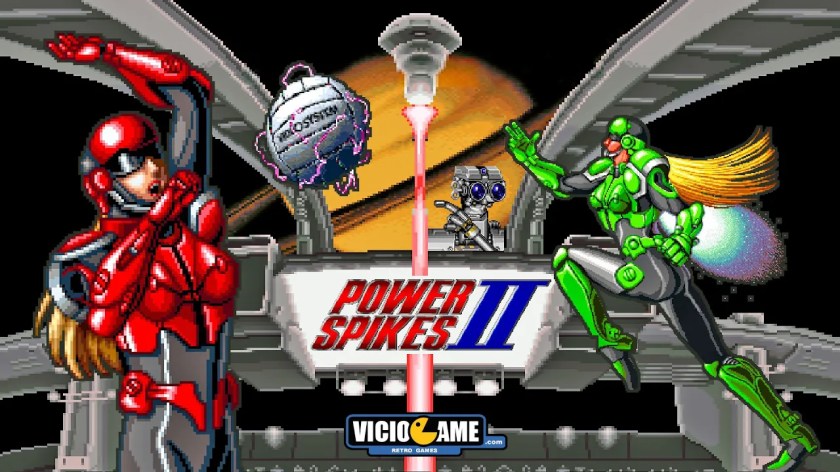
Power Spikes 2 is a volleyball game released in 1994 for arcade and home versions of the Neo Geo. In addition to competing in men’s and women’s tournaments, the game’s main attraction is the robot battles featuring special moves.
Developer: Video System
Publisher: SNK
Release date: 1994
Platform: Arcade Neo Geo MVS
Power Spikes II: The Ultimate Guide
Power Spikes II is a volleyball game released on October 19, 1994 for both the arcade and home versions of the Neo Geo. This is the final title in the Super Volleyball series and marks the end of a cycle that began with Super Volleyball in 1989, continued with Power Spikes in 1991 and its Hyper V-Ball conversion for SNES in 1992. The game expands the sport’s formula with the introduction of a futuristic mode featuring robotic teams and devastating special moves. Production was led by Koji Furukawa, who would later work as producer on Aero Fighters Assault, bringing together much of the team that would subsequently create various sequels to the Aero Fighters (Sonic Wings) franchise at Video System.
During its development, Power Spikes II carried the working title “Super Volley ’94”, reflecting Video System’s intention to evolve its volleyball franchise for the Neo Geo platform. An extremely rare prototype version with this name still circulates among collectors. The arcade version was distributed in both Japan and the United States, with no differences between regional versions. Later, an exclusive conversion for Neo Geo CD was released only in Japan on March 18, 1995. Curiously, despite running on SNK’s MVS hardware, the game never received a port for the Neo Geo AES home console, with its only home version limited to the Japanese Neo Geo CD.
Power Spikes II offers a five-on-five volleyball experience viewed from a side profile, with each team positioned on one side of the screen. The player controls a team of five athletes, with two positioned at the net and three at the back of the court. The gameplay mechanics follow most traditional volleyball rules, although these can be modified through the options menu, along with other settings that alter match characteristics. The control system uses an eight-way joystick and two buttons, with the main button (A) executing most actions such as serving, spiking, and blocking, while the secondary button (B) activates special Hyper Mode variants for enhanced serves and spikes.
The serve is executed by pressing the action button twice consecutively. During play, participants can apply fundamental skills such as serving, receiving, setting, attacking, and blocking for offensive and defensive purposes, aiming to score points. Movement is restricted to designated areas of the court, preventing players from crossing into invalid zones such as the opponent’s side, which reinforces spatial awareness and team coordination during rallies. The simplified input system emphasizes timing and positioning over complex commands, making the mechanics accessible yet strategically demanding.
An important feature of the gameplay is the absence of complete player rotations, a simplification of real volleyball rules that prioritizes accessibility and excitement over strict simulation. Matches focus exclusively on the final decisive set, where players control core actions. This approach allows for quick and intense confrontations, avoiding the prolonged games common in more realistic sports simulations.
The camera moves to focus where the ball is located, which occasionally results in characters being off-screen during certain game situations. When defending, the player can press the multifunctional action button to make the three front players jump in an attempt to block spikes, while a receiver stays further back and can be moved forward or backward to intercept serves or spikes that passed through the block. An arrow indicates where the ball will land on the court, helping with initial positioning, but after a few games this arrow disappears, requiring the player to judge the trajectory on their own based on acquired experience.
There is freedom over when to hit the ball, as long as it’s before it touches the ground, but the fastest and most powerful spikes are executed when the player times their button exactly when the ball turns pink. If the player can align the receiver with the opponent’s spike or serve, they can prepare their own offensive, but if they slightly miss the positioning, the ball will bounce behind them. Although preferable to completely missing the ball, recovering the situation after letting it bounce requires considerable work. After running to prevent it from hitting the ground, control is automatically transferred to another player who comes to assist in recovery, conveniently indicated by the flashing sprite.
Power Spikes II features three distinct game modes centered on competitive volleyball tournaments. The Men’s World Championship and Women’s World Championship allow selection between eight national teams representing countries such as the United States, Japan, and Brazil, where participants compete in tournaments progressing through multiple sets to determine the champion. These modes emphasize realistic international competition, with matches culminating in a final decisive set to break ties.
Each world league mode (men’s or women’s) features a series of matches that must be completed, all played only in the final set. Instead of the space backgrounds with planets that characterize the Hyper League, these traditional leagues feature crowds and a human referee. The game functions largely identically to the Hyper League, but without special power moves. Another crucial difference is that this time the player is competing for points. Starting the first match with a one-point advantage, by the time they reach the final the player faces a three-point deficit, adding progressive challenge as they advance, attempting to overcome the disadvantage. When successful, it can be more fun than the Hyper League, but it can also frustrate when there’s difficulty scoring points.
Complementing the traditional tournaments is the Hyper League, a futuristic variant set on science fiction courts that introduces eight robotic teams with enhanced abilities. This mode transforms traditional volleyball into an intense action-oriented experience, where teams leverage advanced techniques to dominate opponents in high-stakes confrontations. The Hyper League uses the same rules as the other leagues, but adds a special lethal maneuver activated with the B button. Doing this doesn’t reward a point, but instead deducts a portion of the opposition’s life bar. Completely depleting the bar results in victory. To avoid prolonged play, each match jumps directly to the final set, which must be won to progress.
The Hyper League’s robotic teams make direct references to other Video System games. The Turbo Force team is named in homage to the game Turbo Force, while Metal Breakers possibly references Spinal Breakers. The character Tee-Bee A-10, who appears in Aero Fighters and resembles Johnny 5, acts as referee in Hyper League matches. Additionally, Rabio serves as the cursor in the game’s menus, bringing more connections to the developer’s title universe.
Experimenting with special serves and spikes requires using a second button, where the player also needs to input a command when prompted to execute the desired move. Although not particularly complicated and allowing plenty of time to input the commands, it’s a bit laborious compared to the direct gameplay found in other parts of the title. Each team has its own command to perform the special serve or spike move.
| Team | Special Serve | Special Spike |
|---|---|---|
| Lethal Machines | → → B or → ↘ B | → → B or → ↘ B |
| Metal Breakers | → → B | → → B |
| Power Spikers | → → B or → ↘ B | → → B or → ↘ B |
| Turbo Force | → → B or → ↘ B | → → B or → ↘ B |
| Neo Crashers | → → B | → → B or → ↘ B |
| Steel Strikers | → → B | → → B or → ↘ B |
| Iron Fangs | → → B or → ↘ B | → → B |
| Grooscaps | → → B or → ↘ B | → → B |
All three modes can be played competitively for two players, and in the case of world leagues, the opening score is the same for both participants to prevent anyone from starting with an advantage. The game supports up to two players simultaneously through competitive versus mode, allowing direct confrontations between humans.
Visually, Power Spikes II features small sprites viewed from a side perspective that doesn’t allow free movement around the court. The animations for movements and dives are quite well executed, but some walks and runs are a bit basic. The game doesn’t look bad for its time, but is considerably simpler than most other titles on Neo Geo hardware. The characters lack facial details, although they are shown in boxes with celebration images. The Hyper League features backgrounds with planets in space, while traditional modes show crowds in the stands. The soundtrack composed by Soshi Hosoi accompanies the action, although the Neo Geo CD version didn’t take advantage of the CD format in terms of audio design. The sound effects created by Norie punctuate the on-court actions, but it’s one of the game’s weak points.
Since its original release, Power Spikes II has received multiple re-releases through digital distribution services on various modern platforms. Hamster Corporation, eventual holder of the game’s copyright, brought the title to Nintendo Switch, PlayStation 4, Xbox One, iOS, and Android through the Arcade Archives Neo Geo (ACA Neo Geo) series. This series faithfully reproduces classic arcade masterpieces, staying true to the original.
The legacy of Power Spikes II as the final title in the Super Volleyball series marks the end of a cycle that began with Super Volleyball in 1989, continued with Power Spikes in 1991 and its Hyper V-Ball conversion for SNES in 1992. It is also the only representative of the volleyball sport in the Neo Geo library, occupying a unique position in the platform’s catalog. Although it hasn’t achieved the venerated classic status of other arcade sports titles like Windjammers, which is frequently cited as the best “sports” game on Neo Geo, Power Spikes II remains a curious example of Video System’s approach to the sports genre during the golden age of arcades.
Power Spikes II: O Guia Definitivo
Power Spikes II é um jogo de vôlei lançado em 19 de outubro de 1994 para as versões arcade e doméstica do Neo Geo. Este é o título final da série Super Volleyball e marca o encerramento de um ciclo que começou com Super Volleyball em 1989, passou por Power Spikes em 1991 e sua conversão Hyper V-Ball para SNES em 1992. O jogo expande a fórmula do esporte com a introdução de um modo futurista protagonizado por equipes robóticas e movimentos especiais devastadores. A produção foi liderada por Koji Furukawa, que mais tarde trabalharia como produtor de Aero Fighters Assault, reunindo grande parte da equipe que posteriormente criaria diversas continuações da franquia Aero Fighters (Sonic Wings) na Video System.
Durante seu desenvolvimento, Power Spikes II carregava o título provisório “Super Volley ’94”, refletindo a intenção da Video System de evoluir sua franquia de vôlei para a plataforma Neo Geo. Uma versão protótipo extremamente rara com esse nome ainda circula entre colecionadores. A versão arcade foi distribuída tanto no Japão quanto nos Estados Unidos, sem diferenças entre as versões regionais. Posteriormente, uma conversão exclusiva para Neo Geo CD foi lançada apenas no Japão em 18 de março de 1995. Curiosamente, apesar de rodar no hardware MVS da SNK, o jogo nunca recebeu um port para o console doméstico Neo Geo AES, tendo sua única versão caseira limitada ao Neo Geo CD japonês.
Power Spikes II oferece uma experiência de vôlei cinco contra cinco vista de perfil lateral, com cada equipe posicionada em um lado da tela. O jogador controla um time de cinco atletas, sendo dois posicionados na rede e três no fundo da quadra. A mecânica de jogo segue a maioria das regras do vôlei tradicional, embora essas possam ser modificadas através do menu de opções, juntamente com outras configurações que alteram as características das partidas. O sistema de controle utiliza um joystick de oito direções e dois botões, sendo que o botão principal (A) executa a maioria das ações como sacar, cortar e bloquear, enquanto o botão secundário (B) ativa variantes especiais da Hyper Mode para saques e cortadas aprimorados.
O saque é executado pressionando o botão de ação duas vezes consecutivas. Durante o jogo, os participantes podem aplicar habilidades fundamentais como saque, recepção, levantamento, ataque e bloqueio para fins ofensivos e defensivos, visando marcar pontos. O movimento é restrito a áreas designadas da quadra, impedindo que jogadores cruzem para zonas inválidas como o lado adversário, o que reforça a consciência espacial e a coordenação em equipe durante os ralis. O sistema de entrada simplificado enfatiza timing e posicionamento acima de comandos complexos, tornando as mecânicas acessíveis, porém estrategicamente exigentes.
Uma característica importante da jogabilidade é a ausência de rotações completas dos jogadores, uma simplificação das regras reais do vôlei que prioriza acessibilidade e emoção sobre simulação estrita. As partidas focam exclusivamente no set decisivo final, onde os jogadores controlam ações centrais. Essa abordagem permite confrontos rápidos e intensos, evitando jogos prolongados comuns em simulações mais realistas do esporte.
A câmera move-se para focar onde a bola está localizada, o que ocasionalmente resulta em personagens ficando fora da tela durante certas situações de jogo. Quando defendendo, o jogador pode pressionar o botão de ação multifuncional para fazer os três jogadores da frente saltarem na tentativa de bloquear cortadas, enquanto um receptor fica mais atrás e pode ser movido para frente ou para trás para interceptar saques ou cortadas que passaram pelo bloqueio. Uma seta indica onde a bola cairá na quadra, ajudando no posicionamento inicial, porém após alguns jogos essa seta desaparece, exigindo que o jogador julgue por conta própria a trajetória baseando-se na experiência adquirida.
Existe liberdade sobre quando acertar a bola, desde que seja antes de tocar o chão, mas as cortadas mais rápidas e poderosas são executadas quando o jogador cronometra seu botão exatamente quando a bola fica rosa. Se o jogador conseguir alinhar o receptor com a cortada ou saque adversário, pode preparar sua própria ofensiva, mas se errar levemente o posicionamento, a bola saltará atrás dele. Embora seja preferível a perder completamente a bola, recuperar a situação após deixá-la quicar requer trabalho considerável. Depois de correr para impedir que atinja o solo, o controle é transferido automaticamente para outro jogador que vem auxiliar na recuperação, convenientemente indicado pelo sprite piscando.
Power Spikes II apresenta três modos de jogo distintos centrados em torneios competitivos de vôlei. O Campeonato Mundial Masculino e o Campeonato Mundial Feminino permitem a seleção entre oito seleções nacionais representando países como Estados Unidos, Japão e Brasil, onde os participantes competem em torneios progredindo através de múltiplos sets para determinar o campeão. Esses modos enfatizam competição internacional realista, com partidas culminando em um set decisivo final para quebrar empates.
Cada modo de liga mundial (masculino ou feminino) apresenta uma série de partidas que devem ser completadas, todas disputadas apenas no set final. Em vez dos fundos espaciais com planetas que caracterizam a Hyper League, essas ligas tradicionais apresentam multidões e um árbitro humano. O jogo funciona de forma amplamente idêntica à Hyper League, porém sem os movimentos especiais de poder. Outra diferença crucial é que desta vez o jogador está competindo por pontos. Começando a primeira partida com um ponto de vantagem, ao chegar à final o jogador enfrenta um déficit de três pontos, adicionando desafio progressivo conforme avança, tentando recuperar a desvantagem. Quando bem-sucedido, pode ser mais divertido que a Hyper League, mas também pode frustrar quando há dificuldade em marcar pontos.
Complementando os torneios tradicionais está a Hyper League, uma variante futurística ambientada em quadras de ficção científica que introduz oito equipes robóticas com habilidades aprimoradas. Este modo transforma o vôlei tradicional em uma experiência intensa orientada à ação, onde as equipes aproveitam técnicas avançadas para dominar oponentes em confrontos de alto risco. A Hyper League usa as mesmas regras das outras ligas, mas adiciona uma manobra letal especial ativada com o botão B. Fazer isso não recompensa com um ponto, mas sim deduz uma porção da barra de vida da oposição. Esgotar completamente a barra resulta em vitória. Para evitar jogo prolongado, cada partida pula diretamente para o set final, que deve ser vencido para progredir.
As equipes robóticas da Hyper League fazem referências diretas a outros jogos da Video System. A equipe Turbo Force é nomeada em homenagem ao jogo Turbo Force, enquanto Metal Breakers possivelmente referencia Spinal Breakers. O personagem Tee-Bee A-10, que aparece em Aero Fighters e se assemelha ao Johnny 5, atua como árbitro nas partidas da Hyper League. Além disso, Rabio serve como cursor nos menus do jogo, trazendo mais conexões com o universo de títulos da desenvolvedora.
Experimentar saques e cortadas especiais requer o uso de um segundo botão, onde o jogador também precisa inserir um comando quando solicitado para executar o movimento desejado. Embora não seja particularmente complicado e conceda bastante tempo para inserir os comandos, é um pouco trabalhoso comparado ao jogo direto encontrado em outras partes do título. Cada equipe possui o seu próprio comando para realizar o golpe especial de saque ou cortada.
| Time | Saque Especial | Cortada Especial |
|---|---|---|
| Lethal Machines | → → B ou → ↘ B | → → B ou → ↘ B |
| Metal Breakers | → → B | → → B |
| Power Spikers | → → B ou → ↘ B | → → B ou → ↘ B |
| Turbo Force | → → B ou → ↘ B | → → B ou → ↘ B |
| Neo Crashers | → → B | → → B ou → ↘ B |
| Steel Strikers | → → B | → → B ou → ↘ B |
| Iron Fangs | → → B ou → ↘ B | → → B |
| Grooscaps | → → B ou → ↘ B | → → B |
Todos os três modos podem ser jogados em competitivo para dois jogadores, e no caso das ligas mundiais, a pontuação de abertura é a mesma para ambos os participantes para evitar que alguém comece com vantagem. O jogo suporta até dois jogadores simultaneamente através do modo versus competitivo, permitindo confrontos diretos entre humanos.
Visualmente, Power Spikes II apresenta sprites pequenos vistos de uma perspectiva lateral que não permite movimento livre pela quadra. As animações para movimentos e mergulhos são bastante bem executadas, mas algumas caminhadas e corridas são um pouco básicas. O jogo não possui má aparência para a época, mas é consideravelmente mais simples que a maioria dos outros títulos no hardware Neo Geo. Os personagens carecem de detalhes faciais, embora sejam mostrados em boxes com imagens de celebrações. A Hyper League apresenta fundos com planetas no espaço, enquanto os modos tradicionais mostram multidões nas arquibancadas. A trilha sonora composta por Soshi Hosoi acompanha a ação, embora a versão Neo Geo CD não tenha aproveitado o formato CD em termos de design de áudio. Os efeitos sonoros criados por Norie pontuam as ações em quadra, mas é um dos pontos fracos do jogo.
Desde seu lançamento original, Power Spikes II recebeu múltiplos relançamentos através de serviços de distribuição digital em várias plataformas modernas. A Hamster Corporation, detentora eventual dos direitos autorais do jogo, trouxe o título para Nintendo Switch, PlayStation 4, Xbox One, iOS e Android através da série Arcade Archives Neo Geo (ACA Neo Geo). Esta série reproduz fielmente obras-primas clássicas de arcade, mantendo-se fiel ao original.
O legado de Power Spikes II como o título final da série Super Volleyball marca o encerramento de um ciclo que começou com Super Volleyball em 1989, passou por Power Spikes em 1991 e sua conversão Hyper V-Ball para SNES em 1992. É também o único representante do esporte de vôlei na biblioteca do Neo Geo, ocupando uma posição única no catálogo da plataforma. Embora não tenha alcançado o status de clássico venerado de outros títulos esportivos arcade como Windjammers, que é frequentemente citado como o melhor jogo “esportivo” do Neo Geo, Power Spikes II permanece como um exemplo curioso da abordagem da Video System ao gênero esportivo durante a era de ouro dos arcades.
🤑💲Earn money without doing anything! Just leave these apps open:
✓ https://r.honeygain.me/CONTA9DB02
✓ https://packetstream.io/?psr=1uPb
🤑💲1-Click button earns Bitcoin every 1 hour: https://freebitco.in/?r=53528449
⬛ 𝗧𝗶𝗸𝗧𝗼𝗸: https://www.tiktok.com/@viciogame
🟧 𝗜𝗻𝘀𝘁𝗮𝗴𝗿𝗮𝗺: http://www.instagram.com/viciogame
🟥 𝗬𝗼𝘂𝘁𝘂𝗯𝗲: http://www.youtube.com/viciogame
🟦 𝗙𝗮𝗰𝗲𝗯𝗼𝗼𝗸: http://www.facebook.com/viciogame
🔳 𝗧𝗵𝗿𝗲𝗮𝗱𝘀: https://www.threads.net/@viciogame
🟪 𝗧𝘄𝗶𝘁𝗰𝗵: https://www.twitch.tv/ViciogameRetroGames
🟨 𝗕𝗹𝗼𝗴: http://www.viciogameblog.com/
🟦𝗧𝘄𝗶𝘁𝘁𝗲𝗿: http://www.twitter.com/viciogame
#Viciogame #Gameplay #LetsPlay #Playthrough #Games #Gaming #Videogames #Review #Game #Detonado #Walkthrough #Ending #Reviews #Facts #Retro #RetroGaming #Roms #Emulator #Longplay #Speedrun #NoCommentary #PowerSpikesII #NeoGeo #volleyball #MVS #AES #PowerSpikes #VideoSystem #Volei #Arcade #Fliperama #Volley #NeoGeoCD #HyperVBall #SNES #Sega #SuperNes #MegaDrive #SuperNintendo #Genesis #nintendo #SegaGenesis #SuperFamicom #robot #SNK #PowerSpikes2 #SuperVball
 VICIOGAME