
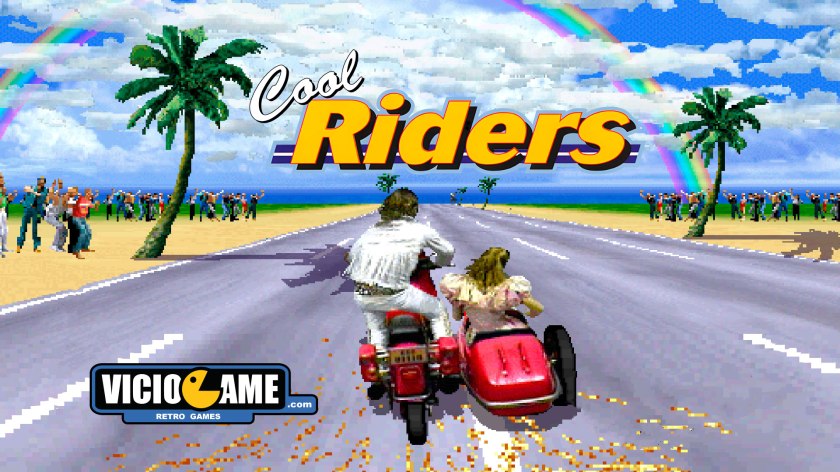
Cool Riders, from 1995, complete gameplay.
Developer: Sega Enterprises, Ltd.
Publisher: Sega AM1
Arcade Sega H1 Board version.
- 𝗧𝗵𝗶𝘀 𝗴𝗮𝗺𝗲 𝘄𝗮𝘀 𝗼𝗿𝗶𝗴𝗶𝗻𝗮𝗹𝗹𝘆 𝗿𝗲𝗹𝗲𝗮𝘀𝗲𝗱 𝘄𝗶𝘁𝗵 𝘁𝘄𝗼 𝗹𝗶𝗻𝗸𝗲𝗱 𝗰𝗮𝗯𝗶𝗻𝘀, 𝗮𝗻𝗱 𝘁𝗵𝗲 𝘀𝗼𝘂𝗻𝗱 𝗶𝘀 𝗺𝗶𝘅𝗲𝗱. 𝗢𝗻𝗹𝘆 𝗽𝗹𝗮𝘆𝗲𝗿 𝟭 𝗮𝗽𝗽𝗲𝗮𝗿𝘀 𝗶𝗻 𝘁𝗵𝗲 𝘃𝗶𝗱𝗲𝗼, 𝗯𝘂𝘁 𝘁𝗵𝗲 𝘀𝗼𝘂𝗻𝗱 𝗺𝘂𝘀𝘁 𝗯𝗲 𝗳𝗿𝗼𝗺 𝗯𝗼𝘁𝗵 𝗽𝗹𝗮𝘆𝗲𝗿𝘀.
Cool Riders: The Ultimate Guide
In Sega’s arcades, where legends like OutRun and Daytona USA reign, there exists a peculiar title, a daring experiment that mixed speed, bizarre humor, and cutting-edge technology for its time: Cool Riders. Released in April 1995 in Japan and arriving in North America in September of the same year, this title from Sega AM1 took the http://www.viciogame.com established formula of its spiritual predecessor, OutRunners, and put it on two wheels, swapping sports cars for motorcycles and adding a layer of digitized graphics that immediately evoke classics from that era. The result is an arcade racing experience that overflows with personality, even though it has remained relatively obscure. The pulsating soundtrack, which includes the iconic “Born to Be Wild” by Steppenwolf as the opening theme and selectable music during races, invites players to accelerate through a vibrant and completely unusual world.
Cool Riders represents an interesting technological milestone, being the only game to use the Sega H1 Board arcade hardware. This platform, although based on 2D sprite scaling technology—one of Sega’s last ventures in that style before polygons completely took over—allowed advanced graphical capabilities for its time. The H1 enabled higher graphic resolution and dual-monitor support for side-by-side multiplayer http://www.viciogame.com matches, something essential for the competitive arcade experience. Internally, the board featured processors such as a Hitachi SH2 (HD6417095) and a Toshiba TMP68HC000N-16 for main and sound tasks, respectively, as well as a Hitachi SH7032 (HD6417032F20). The sound system, credited to Hiroshi “Hiro” Kawaguchi in hidden messages within the code, utilized custom Sega PCM chips (similar to those of the Model 1, with 28 channels each for music and effects) and a Yamaha YM3834 chip for timing.
The H1 also employed a unique graphic compression scheme, which, combined with its exclusivity, made emulating Cool Riders a challenge for many years, with the game only being properly preserved in the MAME emulator in 2013. The H1’s graphical capabilities went beyond resolution: it supported 90-degree sprite rotation and sophisticated blending effects. This effect was used to smooth the transition between http://www.viciogame.com different types of terrain on the road, create smoke and fog effects, transparencies (such as in rainbows), and even lighting effects like red flashes in collisions, glare when exiting tunnels, and lightning. The way the H1 rendered roads was a hybrid: instead of traditional tilemaps or just layered sprites, it used an extension of the sprite system that allowed specifying zoom and displacement per line, effectively creating trapezoid-shaped sprites ideal for simulating track perspective.
This bet on a powerful but unique 2D platform with no successor ultimately isolated Cool Riders. Although it allowed distinctive visuals, the complexity and lack of other games for the H1 made it difficult to popularize and create ports for home http://www.viciogame.com consoles like the Sega Saturn or PlayStation, contributing to the game becoming a rarity dependent on emulation or the luck of finding an original cabinet.
What immediately jumps out about Cool Riders is its unmistakable visual style. Abandoning the hand-drawn sprites of OutRunners, the game embraces the aesthetics of digitized graphics, popularized by fighting games like Mortal Kombat. The riders and their motorcycles are represented by real actors captured and transformed into sprites, giving a photorealistic yet inevitably dated aspect that screams “90s.” This aesthetic choice permeates the entire game, from the character selection screen to the victory and defeat animations. The Sega H1 Board allowed these sprites to be displayed at higher http://www.viciogame.com resolution, giving more detail to the digitized models and vibrant sceneries. Graphical effects, such as the smooth gradient between track textures and atmospheric effects (smoke, fog, lightning), add a layer of visual polish that tries to maximize the potential of 2D technology. However, the charm lies less in technical realism and more in the absurd humor and exaggerated art direction. Caricatured characters, scenarios filled with unexpected elements (like dinosaurs and ninjas), and a general sense of parody create a unique visual identity that can be loved or hated, but never ignored. It’s a “beautiful and captivating mess.”
The sonic experience of Cool Riders is as energetic and memorable as its visuals. The soundtrack is signed by legendary Sega composer Hiroshi Kawaguchi, known for his work on classics like OutRun and Space Harrier. His sonic signature is present, with catchy melodies and contagious rhythms that propel the action. The opening track is none other than “Born to Be Wild” by Steppenwolf, a motorcycling anthem that perfectly sets the tone for the game. Beyond that, each rider has a default theme song, such as “Sightseeing at Mach 1” for Max or “Grandpa is Still Alive” for Dr. Vincent, but the player can choose from http://www.viciogame.com various tracks during the race. A curiosity is the existence of a secret song: by pressing both music buttons during the game, a version of “Jingle Bells” starts playing, and Santa Claus appears to deliver a present to the player. The H1 board’s sound system, with its custom PCM chips, ensures the quality of both music and sound effects. The sound effects are appropriate to the theme, with engine roars, skids, and collisions, but a highlight is the announcer’s voice, which repeats the iconic game over phrase from OutRunners: “I’m sorry. You didn’t make it.” This sonic connection reinforces the spiritual bond between the two games.
The gameplay of Cool Riders follows the classic structure established by OutRun and refined by OutRunners, but adapted to the motorcycle universe. The main objective is to traverse a series of interconnected stages, always fighting against the clock and against a computer-controlled rival. You need to reach the checkpoint at the end of each stage before time runs out. The big twist is that the winner of the dispute against the rival in each stretch (up to the fourth stage) earns the right to choose which will be the next route at the fork (or, in this case, trifurcation). Defeating the rival also grants a promotion to http://www.viciogame.com the player, indicated on the screen. The controls are direct, with support for cabinets that used handlebars. The physics of the bikes, although arcade-like, try to capture the sensation of riding on two wheels, being very similar to OutRunners. A fun addition is the ability to perform spectacular jumps when hitting ramps or elevations at high speed, at which point the game exclaims “Cool! Cool!” while the player is in the air. The difficulty is typical of a Sega arcade game: challenging, requiring quick reflexes and track memorization to master tight curves and avoid traffic and obstacles. The learning curve involves not only mastering riding but also understanding the most efficient routes and how to deal with each type of rival and terrain. The sense of speed, however, was a point of criticism, with some considering it insufficient.
One of the most striking and fun elements of Cool Riders is its roster of riders and their respective motorcycles. There are eight totally bizarre and caricatured options, each with distinct attributes that affect gameplay. This variety http://www.viciogame.com encourages experimentation, as each combination of rider and bike offers a different riding experience, suitable for specific game styles and stage challenges.
| Character | Motorcycle | Type | Strong Point | Weak Point | Theme Song |
|---|---|---|---|---|---|
| Max | Revolution | Resistance | Strength | Maneuverability | Sightseeing at Mach 1 |
| John Doe | Lightning | Agility | Maneuverability | Strength | A Little Good |
| Chris | I.C.B.M. | Speed | Acceleration and top speed | Maneuverability, strength, and off-road | Condition Red |
| Gloria | Wild Cat | Agility | Maneuverability | Top speed, strength, and off-road | Here Comes the Queen of Hurricane |
| David & Sharlie | LoveMachine | Power and Speed | Top speed and strength | Maneuverability | Blue Island |
| Dr. Vincent | Discovery | Agility | Maneuverability and top speed | Strength and off-road | Grandpa is Still Alive |
| Garcia | Grasshopper | Any terrain | Off-road | Average in everything | Into the Mountains |
| Big Boss | Daioh | Power and Speed | Strength | Maneuverability and off-road | The Fat is in the Fire |
The choice goes beyond aesthetics: taking the I.C.B.M. requires surgical precision in the curves due to the low maneuverability status, while the Grasshopper allows cutting through rough terrain more easily. This differentiation adds a strategic layer to the initial selection. The characters’ visuals greatly contribute to the http://www.viciogame.com comic tone: we have a cyborg (Chris), a political mobster on a Vespa (Gloria), a country singer duo (David & Sharlie), a stereotypical biker with two children dressed just like him (Max), and even an elderly gentleman pedaling an old bicycle (Dr. Vincent). This gallery of eccentric figures is an essential part of Cool Riders’ enduring charm.
Expanding on the classic formula, Cool Riders presents one of the most complex and extensive route structures ever seen in a Sega racing game. The game consists of a total of five stages. However, the way these stages connect is what impresses. At the end of the first four stages, the player doesn’t face a double fork like in OutRun, but rather a trifurcation. This means that at each junction, there are three possible paths to http://www.viciogame.com follow (left, center, right), determined by who won the dispute against the rival of the previous stage. This exponential structure results in a massive number of possible routes. There are three main routes crossing the United States: one heading west, one east, and one central. Considering the multiple choices at each junction, the game offers a total of 49 unique tracks distributed along these paths, culminating in 21 distinct route endings (before the final stage).
This vast amount of content ensures immense replayability, encouraging players to explore all possible routes. The fifth and final stage is always the same, called the “Extra Stage.” In it, the challenge is to compete against all seven computer-controlled rivals simultaneously in the streets of New York, with the goal of crossing the finish line in first place before time runs out. The stages themselves are as varied and eccentric as the riders. The routes take players to iconic (and not so iconic) locations around the world, often with rather free and humorous geographical and cultural interpretations. It’s possible to ride along http://www.viciogame.com the Great Wall of China avoiding figures reminiscent of Son Goku on his flying cloud, face ninjas in Japan, race through the West Indies, cross deserts, jungles, and cities. The scenarios are full of curious details, such as dinosaurs and yetis that serve only as background decoration. The representation of famous landmarks also follows the line of the absurd, with the Statue of Liberty appearing practically next to the Brooklyn Bridge. This mixture of real locations with fantasy and humor creates memorable and unpredictable stages.
Cool Riders offers an arcade experience focused on http://www.viciogame.com pure racing and competition, with direct and clear game systems.
Game Modes: The main structure supports both single-player mode, where the player competes against time and CPU-controlled rivals, and http://www.viciogame.com multiplayer mode. Thanks to the H1 board’s dual-monitor support, two players can compete side by side on linked cabinets, making the dispute even more exciting.
Scoring System: Scoring in Cool Riders is intrinsically linked to race performance. The main factor is the time remaining when crossing the finish line or checkpoints. Defeating the rival in each stage is also crucial, not only to choose the http://www.viciogame.com path but also contributing to the final score, in addition to guaranteeing promotions. The score primarily serves to rank the player on the high score table at the end of the game, where a fun touch is the appearance of the head icons of Sonic the Hedgehog and Tails to enter the player’s initials.
Weapons, Items, and Power-ups: Unlike combat racing games like Road Rash, Cool Riders has no weapons or direct combat mechanics between riders. The focus is on riding skill and speed. There are no traditional power-ups collectible on the track to increase speed or gain advantages. The only peculiar exception is the “present” http://www.viciogame.com received when activating the secret song “Jingle Bells.” Most of these presents have no practical effect on gameplay, but some can momentarily help or hinder progress. The main form of “advantage” comes from the strategic choice of a motorcycle with attributes suitable for each section of the race.
Available Endings: The game essentially has two main outcomes, depending on the player’s success in the final race, the “Extra Stage” in New York. If the player manages to cross the finish line before time runs out (ideally in first place, defeating the seven rivals), they will see a specific ending sequence for the chosen character, displayed on a projector on the screen. Then, a map shows the route taken during the game, and the http://www.viciogame.com word “FINISH” appears. If time runs out at any point in the game, including the Extra Stage, the player loses. A failure animation also specific to each character occurs (ranging from tantrums to being carried off screen), followed by the map of the route taken up to that point with the word “RETIRE” and the voice message “I’m sorry. You didn’t make it.” There are no complex narrative multiple endings based on moral choices or secondary tasks, just success or failure in the race.
The development of Cool Riders was the responsibility of Sega AM1 (Amusement Machine Research and Development Department #1), one of Sega’s internal arcade development divisions at the time. Led by Rikiya Nakagawa from 1991, AM1 was known for its versatility. Unlike Yu Suzuki’s AM2, famous for its technological advances and heavyweight franchises like Virtua Fighter, AM1 didn’t specialize in a single genre. Its http://www.viciogame.com portfolio included action games like Die Hard Arcade and Zombie Revenge, shooting games like The House of the Dead, and even more casual experiences like Sega Bass Fishing and Kiddie Ride. This flexibility allowed AM1 to experiment with different concepts. Cool Riders fits perfectly into this profile: a variation of a known formula (OutRunners) with an unusual aesthetic and technology (digitized graphics on the H1), seasoned with peculiar humor.
The team included notable talents, including veterans from Team Shinobi (responsible for Alien Syndrome and Golden Axe) and Makoto Uchida (director of Golden Axe and Altered Beast). For Cool Riders, the hidden credits point to important figures: Hiroshi Kawaguchi (“Hiro”), iconic Sega composer, and Kazunari Tsukamoto (“K.TSUKA”), a director who came from console development, having worked on the RPG Phantasy Star III. This mix of talents from different areas may have contributed to the unique http://www.viciogame.com nature of the game. Initially, the title would be “Outriders,” as displayed on banners in the game’s introduction. Despite its qualities and innovations, Cool Riders remained an arcade-exclusive title. The complexity and uniqueness of the H1 board, along with Sega’s growing focus on 3D platforms like the Model 2 (Daytona USA, Sega Rally) and the Saturn console, likely made a port unfeasible or low priority. Thus, AM1, in this case, created a distinctive work that, due to technological and market circumstances, did not have the same longevity as other classics from the company.
The reception of Cool Riders upon its release was mixed, reflecting the polarizing nature of its style and gameplay. In Japan, the game achieved considerable success, being listed by Game Machine magazine as the seventh most successful dedicated arcade game in July 1995. This demonstrates good acceptance in Sega’s home market. However, Western criticism was less enthusiastic. The influential Next Generation magazine, in its October 1995 edition, published a scathing analysis, giving the game only two out http://www.viciogame.com of five stars. The critic pointed to the lack of realism, an almost nonexistent sense of speed, and sloppy controls, concluding that the game wasn’t up to par with other motorcycle racing titles of the time, such as Namco’s Cyber Cycles. This discrepancy between Japanese success and Western criticism can be attributed to different cultural expectations or the strong competition in Western arcades, where Sega’s own 3D games were already beginning to dominate.
Several factors contributed to Cool Riders not achieving the status of an enduring classic like other Sega titles. The exclusivity of the H1 board and the consequent absence of ports to home consoles drastically limited its reach. The aesthetic of digitized graphics, although striking, aged quickly and became a symbol of a passing trend of the 90s. Criticisms of gameplay, especially of controls and the sense of speed, also drove away some players. Additionally, the game faced internal competition from Sega’s own 3D successes, which represented the future of arcades. Today, Cool Riders occupies a cult place. It is http://www.viciogame.com remembered by retro enthusiasts for its originality, its shameless humor, and its catchy soundtrack. It is often described as a game with flaws, but with undeniable personality. The story of Cool Riders illustrates the inherent risks of hardware innovation. The bet on the H1, despite its unique capabilities, did not generate an ecosystem of games to sustain it. Without the backing of ports or universally acclaimed reception, the platform and its only game ended up becoming an interesting but isolated footnote in Sega’s history.
Its place in Sega’s history is that of a fascinating experiment, one of the last gasps of the sprite-scaling era before the definitive transition to 3D. http://www.viciogame.com It’s an example of Sega AM1’s creativity and willingness to explore different ideas and aesthetics. For retro game aficionados and those interested in the rich history of arcades, seeking out and experiencing Cool Riders is a rewarding journey to a unique and fun corner of the Sega universe. It’s a noisy, strange, and unforgettable ride.
Cool Riders: O Guia Definitivo
Nos fliperamas da Sega, onde lendas como OutRun e Daytona USA reinam, existe um título peculiar, um experimento audacioso que misturou velocidade, humor bizarro e tecnologia de ponta para a época: Cool Riders. Lançado em abril de 1995 no Japão e chegando à América do Norte em setembro do mesmo ano, este título da Sega AM1 pegou a fórmula consagrada de seu antecessor espiritual, OutRunners, e a colocou http://www.viciogame.com sobre duas rodas, trocando os carros esportivos por motocicletas e adicionando uma camada de gráficos digitalizados que remetem imediatamente a clássicos daquela época. O resultado é uma experiência de corrida arcade que transborda personalidade, ainda que tenha permanecido relativamente obscura. A trilha sonora pulsante, que inclui a icônica “Born to Be Wild” da banda Steppenwolf como tema de abertura e música selecionável durante as corridas, convida o jogador a acelerar por um mundo vibrante e totalmente fora do comum.
Cool Riders representa um marco tecnológico interessante, sendo o único jogo a utilizar a placa de arcade Sega H1 Board. Esta plataforma, embora baseada em tecnologia 2D sprite scaling – uma das últimas investidas da Sega nesse estilo antes da dominação total dos polígonos –, permitia capacidades gráficas avançadas para a época. A H1 possibilitava uma resolução gráfica mais alta e suporte a dual-monitor para partidas http://www.viciogame.com multiplayer lado a lado, algo essencial para a experiência competitiva dos fliperamas. Internamente, a placa contava com processadores como um Hitachi SH2 (HD6417095) e um Toshiba TMP68HC000N-16 para tarefas principais e de som, respectivamente, além de um Hitachi SH7032 (HD6417032F20). O sistema de som, creditado a Hiroshi “Hiro” Kawaguchi em mensagens ocultas no código, utilizava chips PCM customizados da Sega (similares aos do Model 1, com 28 canais cada para música e efeitos) e um chip Yamaha YM3834 para temporização.
A H1 também empregava um esquema de compressão gráfica único, o que, aliado à sua exclusividade, tornou a emulação de Cool Riders um desafio por muitos anos, sendo o jogo só preservado corretamente no emulador MAME em 2013. As capacidades gráficas da H1 iam além da resolução: ela suportava rotação de sprites em 90 graus e efeitos de blending (mistura de cores) sofisticados. Esse efeito era usado para http://www.viciogame.com suavizar a transição entre diferentes tipos de terreno na estrada, criar efeitos de fumaça e neblina, transparências (como no arco-íris) e até efeitos de iluminação como flashes vermelhos em colisões, brilho ao sair de túneis e relâmpagos. A forma como a H1 renderizava as estradas era um híbrido: em vez de tilemaps tradicionais ou apenas sprites em camadas, ela usava uma extensão do sistema de sprites que permitia especificar zoom e deslocamento por linha, criando efetivamente sprites em formato de trapézio ideais para simular a perspectiva da pista.
Essa aposta em uma plataforma 2D poderosa, mas única e sem sucessora, acabou por isolar Cool Riders. Embora permitisse visuais distintos, a complexidade e a falta de outros jogos para a H1 dificultaram sua popularização e a criação de http://www.viciogame.com ports para consoles domésticos como o Sega Saturn ou PlayStation, contribuindo para que o jogo se tornasse uma raridade dependente de emulação ou da sorte de encontrar um gabinete original.
O que imediatamente salta aos olhos em Cool Riders é seu estilo visual inconfundível. Abandonando os sprites desenhados à mão de OutRunners, o jogo abraça a estética dos gráficos digitalizados, popularizada por jogos de luta como Mortal Kombat. Os pilotos e suas motocicletas são representados por atores reais capturados e transformados em sprites, conferindo um aspecto fotorrealista, porém inevitavelmente datado, que grita “anos 90”. Essa escolha estética permeia todo o jogo, desde a tela de seleção de personagens até as animações de vitória e derrota. A placa Sega H1 Board permitia http://www.viciogame.com que esses sprites fossem exibidos em maior resolução, dando mais detalhes aos modelos digitalizados e aos cenários vibrantes. Os efeitos gráficos, como o gradiente suave entre texturas de pista e os efeitos atmosféricos (fumaça, neblina, relâmpagos), adicionam uma camada de polimento visual que tenta maximizar o potencial da tecnologia 2D. No entanto, o charme reside menos no realismo técnico e mais no humor absurdo e na direção de arte exagerada. Personagens caricatos, cenários repletos de elementos inesperados (como dinossauros e ninjas) e uma sensação geral de paródia criam uma identidade visual única, que pode ser amada ou odiada, mas jamais ignorada. É uma “bagunça bonita e cativante”.
A experiência sonora de Cool Riders é tão energética e memorável quanto seus visuais. A trilha sonora é assinada pelo lendário compositor da Sega, Hiroshi Kawaguchi, conhecido por seu trabalho em clássicos como OutRun e Space Harrier. Sua assinatura sonora está presente, com melodias cativantes e ritmos contagiantes que impulsionam a ação. A faixa de abertura é nada menos que “Born to Be Wild” do Steppenwolf, um hino do motociclismo que estabelece perfeitamente o tom do jogo. Além dela, cada piloto possui uma música tema padrão, como “Sightseeing at Mach 1” para Max ou “Grandpa is http://www.viciogame.com Still Alive” para Dr. Vincent, mas o jogador pode escolher entre diversas faixas durante a corrida. Uma curiosidade é a existência de uma música secreta: ao pressionar ambos os botões de música durante o jogo, uma versão de “Jingle Bells” começa a tocar, e o Papai Noel aparece para entregar um presente ao jogador. O sistema de som da placa H1, com seus chips PCM customizados, garante a qualidade das músicas e dos efeitos sonoros. Os efeitos sonoros são adequados ao tema, com ronco de motores, derrapagens e colisões, mas um destaque é a voz do anunciador, que repete a icônica frase de game over de OutRunners: “I’m sorry. You didn’t make it“. Essa conexão sonora reforça o laço espiritual entre os dois jogos.
A jogabilidade de Cool Riders segue a estrutura clássica estabelecida por OutRun e aprimorada por OutRunners, mas adaptada para o universo das motocicletas. O objetivo principal é atravessar uma série de fases interconectadas, sempre lutando contra o relógio e contra um rival controlado pelo computador. É preciso alcançar o checkpoint no final de cada fase antes que o tempo se esgote. A grande sacada é que o vencedor da disputa contra o rival em cada trecho (até a quarta fase) ganha o direito de escolher qual será a próxima rota na bifurcação (ou, neste caso, trifurcação). Vencer o rival também concede uma http://www.viciogame.com promoção ao jogador, indicada na tela. Os controles são diretos, com suporte a gabinetes que utilizavam guidões. A física das motos, embora arcade, tenta capturar a sensação de pilotar sobre duas rodas, sendo muito similar à de OutRunners. Uma adição divertida é a capacidade de realizar saltos espetaculares ao atingir rampas ou elevações em alta velocidade, momento em que o jogo exclama “Cool! Cool!” enquanto o jogador está no ar. A dificuldade é típica de um jogo de fliperama da Sega: desafiadora, exigindo reflexos rápidos e memorização das pistas para dominar as curvas fechadas e evitar o tráfego e os obstáculos. A curva de aprendizado envolve não apenas dominar a pilotagem, mas também entender as rotas mais eficientes e como lidar com cada tipo de rival e terreno. A sensação de velocidade, no entanto, foi um ponto de crítica, com alguns considerando-a insuficiente.
Um dos elementos mais marcantes e divertidos de Cool Riders é seu elenco de pilotos e suas respectivas motocicletas. São oito opções totalmente bizarras e caricatas, cada uma com atributos distintos que afetam a jogabilidade. http://www.viciogame.com Essa variedade incentiva a experimentação, pois cada combinação de piloto e moto oferece uma experiência de pilotagem diferente, adequada a estilos de jogo e desafios específicos das fases.
| Personagem | Motocicleta | Tipo | Ponto Forte | Ponto Fraco | Música Tema |
|---|---|---|---|---|---|
| Max | Revolution | Resistência | Força | Dirigibilidade | Sightseeing at Mach 1 |
| John Doe | Lightning | Agilidade | Dirigibilidade | Força | A Little Good |
| Chris | I.C.B.M. | Velocidade | Aceleração e velocidade máxima | Dirigibilidade, força, e Off-road | Condition Red |
| Gloria | Wild Cat | Agilidade | Dirigibilidade | Velocidade máxima, força, e off-road | Here Comes the Queen of Hurricane |
| David & Sharlie | LoveMachine | Potência e Velocidade | Velocidade máxima e força | Dirigibilidade | Blue Island |
| Dr. Vincent | Discovery | Agilidade | Dirigibilidade e velocidade máxima | Força e off-road | Grandpa is Still Alive |
| Garcia | Grasshopper | Qualquer terreno | Off-road | Mediano em tudo | Into the Mountains |
| Big Boss | Daioh | Potência e Velocidade | Força | Dirigibilidade e off-road | The Fat is in the Fire |
A escolha vai além da estética: pegar a I.C.B.M. exige precisão cirúrgica nas curvas devido ao baixo status de dirigibilidade, enquanto a Grasshopper permite cortar caminho por terrenos acidentados com mais facilidade. Essa diferenciação adiciona uma camada estratégica à seleção inicial. O visual dos personagens contribui enormemente para o tom cômico: temos um ciborgue (Chris), uma mafiosa política numa Vespa (Gloria), http://www.viciogame.com uma dupla de cantores country (David & Sharlie), um motoqueiro estereotipado com duas crianças vestidas igual a ele (Max), e até um senhor de idade pedalando uma bicicleta antiga (Dr. Vincent). Essa galeria de figuras excêntricas é parte essencial do charme duradouro de Cool Riders.
Expandindo a fórmula clássica, Cool Riders apresenta uma das estruturas de rotas mais complexas e extensas já vistas em um jogo de corrida da Sega. O jogo é composto por um total de cinco fases. No entanto, a maneira como essas fases se conectam é o que impressiona. Ao final das quatro primeiras fases, o jogador não se depara com uma bifurcação dupla como em OutRun, mas sim com uma trifurcação. Isso significa que a cada junção, há três caminhos possíveis a seguir (esquerda, centro, direita), http://www.viciogame.com determinados por quem venceu a disputa contra o rival da fase anterior. Essa estrutura exponencial resulta em um número massivo de trajetos possíveis. Existem três rotas principais que atravessam os Estados Unidos: uma seguindo para oeste, uma para leste e uma central. Considerando as múltiplas escolhas em cada junção, o jogo oferece um total de 49 pistas únicas distribuídas ao longo desses caminhos, culminando em 21 finais de percurso distintos (antes da fase final).
Essa vasta quantidade de conteúdo garante uma rejogabilidade imensa, incentivando os jogadores a explorarem todas as rotas possíveis. A quinta e última fase é sempre a mesma, denominada “Extra Stage”. Nela, o desafio é competir contra todos os sete rivais controlados pelo computador simultaneamente nas ruas de Nova Iorque, com o objetivo de cruzar a linha de chegada em primeiro lugar antes que o tempo http://www.viciogame.com acabe. As fases em si são tão variadas e excêntricas quanto os pilotos. Os percursos levam os jogadores a locais icônicos (e nem tanto) ao redor do mundo, muitas vezes com interpretações geográficas e culturais bastante livres e humorísticas. É possível pilotar pela Grande Muralha da China desviando de figuras que lembram Son Goku em sua nuvem voadora, enfrentar ninjas no Japão, correr pelas Índias Ocidentais, atravessar desertos, selvas e cidades. Os cenários são repletos de detalhes curiosos, como dinossauros e yetis que servem apenas como decoração de fundo. A representação de marcos famosos também segue a linha do absurdo, com a Estátua da Liberdade aparecendo praticamente ao lado da Ponte do Brooklyn. Essa mistura de locais reais com fantasia e humor cria fases memoráveis e imprevisíveis.
Cool Riders oferece uma experiência arcade focada http://www.viciogame.com na corrida pura e na competição, com sistemas de jogo diretos e claros.
Modos de Jogo: A estrutura principal suporta tanto o modo single player, onde o jogador compete contra o tempo e rivais controlados pela CPU, quanto o modo multiplayer. Graças ao suporte dual-monitor da placa H1, dois jogadores http://www.viciogame.com podem competir lado a lado em gabinetes interligados, tornando a disputa ainda mais emocionante.
Sistema de Pontuação: A pontuação em Cool Riders está intrinsecamente ligada ao desempenho na corrida. O fator principal é o tempo restante ao cruzar a linha de chegada ou os checkpoints. Derrotar o rival em cada fase também é crucial, não apenas para escolher o caminho, mas contribuindo para a pontuação final, http://www.viciogame.com além de garantir as promoções. A pontuação serve principalmente para classificar o jogador na tabela de high score ao final do jogo, onde um toque divertido é a aparição dos ícones das cabeças de Sonic the Hedgehog e Tails para inserir as iniciais do jogador.
Armas, Itens e Power-ups: Diferente de jogos de corrida de combate como Road Rash, Cool Riders não possui armas ou mecânicas de combate direto entre os pilotos. O foco está na habilidade de pilotagem e na velocidade. Não existem http://www.viciogame.com power-ups tradicionais coletáveis na pista para aumentar a velocidade ou obter vantagens. A única exceção peculiar é o “presente” recebido ao ativar a música secreta “Jingle Bells”. A maioria desses presentes não tem efeito prático na jogabilidade, mas alguns podem ajudar ou atrapalhar o progresso momentaneamente. A principal forma de “vantagem” vem da escolha estratégica da moto com atributos adequados para cada trecho da corrida.
Finais Disponíveis: O jogo possui essencialmente dois desfechos principais, dependendo do sucesso do jogador na corrida final, a “Extra Stage” em Nova Iorque. Se o jogador conseguir cruzar a linha de chegada antes do tempo acabar (idealmente em primeiro lugar, derrotando os sete rivais), ele verá uma sequência de final específica para o personagem escolhido, exibida em um projetor na tela. Em seguida, um mapa mostra a http://www.viciogame.com rota percorrida durante o jogo, e a palavra “FINISH” aparece. Caso o tempo se esgote em qualquer ponto do jogo, incluindo a Extra Stage, o jogador perde. Ocorre uma animação de falha também específica para cada personagem (variando de birras a serem carregados para fora da tela), seguida pelo mapa da rota percorrida até aquele ponto com a palavra “RETIRE” e a mensagem de voz “I’m sorry. You didn’t make it“. Não há múltiplos finais narrativos complexos baseados em escolhas morais ou tarefas secundárias, apenas o sucesso ou fracasso na corrida.
O desenvolvimento de Cool Riders ficou a cargo da Sega AM1 (Amusement Machine Research and Development Department #1), uma das divisões internas de desenvolvimento de fliperamas da Sega na época. Liderada por Rikiya Nakagawa a partir de 1991, a AM1 era conhecida por sua versatilidade. Diferente da AM2 de Yu Suzuki, famosa por seus avanços tecnológicos e franquias de peso como Virtua Fighter, a AM1 não se especializava em um único gênero. Seu portfólio incluía desde jogos de ação como Die Hard Arcade http://www.viciogame.com e Zombie Revenge, jogos de tiro como The House of the Dead, até experiências mais casuais como Sega Bass Fishing e até Kiddie Ride. Essa flexibilidade permitia à AM1 experimentar com conceitos diferentes. Cool Riders se encaixa perfeitamente nesse perfil: uma variação de uma fórmula conhecida (OutRunners) com uma estética e tecnologia (gráficos digitalizados na H1) incomuns, temperada com um humor peculiar.
A equipe contava com talentos notáveis, incluindo veteranos da Team Shinobi (responsável por Alien Syndrome e Golden Axe) e Makoto Uchida (diretor de Golden Axe e Altered Beast). Para Cool Riders, os créditos ocultos apontam para figuras importantes: Hiroshi Kawaguchi (“Hiro”), compositor icônico da Sega, e Kazunari Tsukamoto (“K.TSUKA”), um diretor que veio do desenvolvimento de console, tendo trabalhado no RPG Phantasy Star III. Essa mistura de talentos de diferentes áreas pode ter contribuído http://www.viciogame.com para a natureza única do jogo. Inicialmente o título seria “Outriders”, como exibido em banners na introdução do jogo. Apesar de suas qualidades e inovações, Cool Riders permaneceu um título exclusivo dos fliperamas. A complexidade e singularidade da placa H1, juntamente com o foco crescente da Sega em plataformas 3D como o Model 2 (Daytona USA, Sega Rally) e o console Saturn, provavelmente tornaram um port inviável ou pouco prioritário. Assim, a AM1, nesse caso, criou uma obra distinta, mas que, devido às circunstâncias tecnológicas e de mercado, não teve a mesma longevidade de outros clássicos da casa.
A recepção de Cool Riders no seu lançamento foi mista, refletindo a natureza polarizadora de seu estilo e jogabilidade. No Japão, o jogo obteve um sucesso considerável, sendo listado pela revista Game Machine como o sétimo jogo de arcade dedicado mais bem-sucedido em julho de 1995. Isso demonstra uma boa aceitação no mercado doméstico da Sega. No entanto, a crítica ocidental foi menos entusiasta. A influente revista http://www.viciogame.com Next Generation, em sua edição de outubro de 1995, publicou uma análise contundente, concedendo ao jogo apenas duas de cinco estrelas. O crítico apontou a falta de realismo, uma sensação de velocidade quase nula e controles desleixados, concluindo que o jogo não estava à altura de outros títulos de corrida de moto da época, como Cyber Cycles da Namco. Essa discrepância entre o sucesso japonês e a crítica ocidental pode ser atribuída a diferentes expectativas culturais ou à forte concorrência nos fliperamas ocidentais, onde os jogos 3D da própria Sega já começavam a dominar.
Diversos fatores contribuíram para que Cool Riders não alcançasse o status de clássico duradouro como outros títulos da Sega. A exclusividade da placa H1 e a consequente ausência de ports para consoles domésticos limitaram drasticamente seu alcance. A estética de gráficos digitalizados, embora marcante, envelheceu rapidamente e se tornou um símbolo de uma tendência passageira dos anos 90. As críticas à jogabilidade, especialmente aos controles e à sensação de velocidade, também afastaram alguns http://www.viciogame.com jogadores. Além disso, o jogo enfrentava a competição interna dos próprios sucessos 3D da Sega, que representavam o futuro dos fliperamas. Hoje, Cool Riders ocupa um lugar de cult. É lembrado por entusiastas do retrô por sua originalidade, seu humor descarado e sua trilha sonora contagiante. É frequentemente descrito como um jogo com falhas, mas com uma personalidade inegável. A história de Cool Riders ilustra os riscos inerentes à inovação em hardware. A aposta na H1, apesar de suas capacidades únicas, não gerou um ecossistema de jogos que a sustentasse. Sem o respaldo de ports ou de uma recepção universalmente aclamada, a plataforma e seu único jogo acabaram se tornando uma nota de rodapé interessante, mas isolada, na história da Sega.
Seu lugar na história da Sega é o de um fascinante experimento, um dos últimos suspiros da era do sprite-scaling antes da transição definitiva para o 3D. É um exemplo da criatividade e da disposição da Sega AM1 em explorar diferentes http://www.viciogame.com ideias e estéticas. Para os aficionados por jogos retrô e pela rica história dos fliperamas, procurar e experimentar Cool Riders é uma viagem recompensadora a um canto único e divertido do universo Sega. É uma corrida barulhenta, estranha e inesquecível.
🤑💲Earn money without doing anything! Just leave the Honeygain app open: https://r.honeygain.me/CONTA9DB02
🤑💲1-Click button earns Bitcoin every 1 hour: https://freebitco.in/?r=53528449
⬛ 𝗧𝗶𝗸𝗧𝗼𝗸: https://www.tiktok.com/@viciogame
🟧 𝗜𝗻𝘀𝘁𝗮𝗴𝗿𝗮𝗺: http://www.instagram.com/viciogame
🟥 𝗬𝗼𝘂𝘁𝘂𝗯𝗲: http://www.youtube.com/viciogame
🟦 𝗙𝗮𝗰𝗲𝗯𝗼𝗼𝗸: http://www.facebook.com/viciogame
🔳 𝗧𝗵𝗿𝗲𝗮𝗱𝘀: https://www.threads.net/@viciogame
🟪 𝗧𝘄𝗶𝘁𝗰𝗵: https://www.twitch.tv/ViciogameRetroGames
🟨 𝗕𝗹𝗼𝗴: http://www.viciogameblog.com/
🟦𝗧𝘄𝗶𝘁𝘁𝗲𝗿: http://www.twitter.com/viciogame
#Viciogame #Gameplay #LetsPlay #Gamer #Playthrough #Games #News #Videogames #Review #Game #Detonado #Walkthrough #Ending #Reviews #Facts #Retro #Record #Roms #Emulator #Longplay #Speedrun #CoolRiders #arcade #sega #race #bike #racing #bikes #racer #moto #OutRunners #motos #outrun #Steppenwolf #BornToBeWild #fliperama #rider #RoadRash #クールライダーズ
 VICIOGAME