
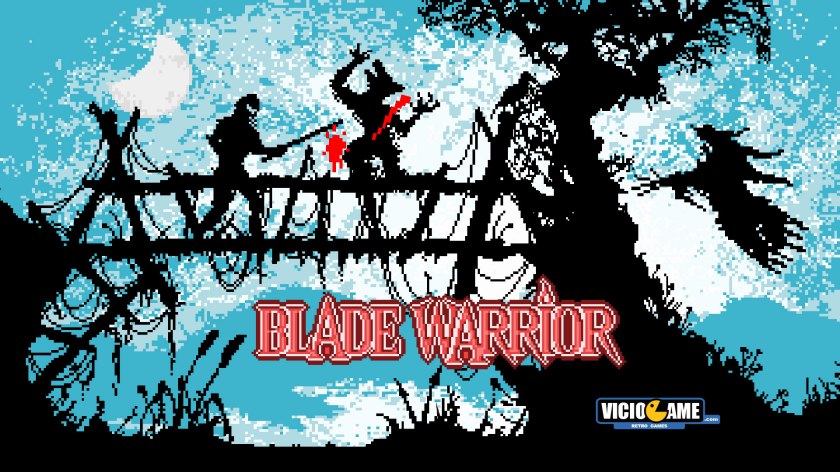
Blade Warrior is an action game with RPG elements released in 1991 for the Amiga. An evil entity has emerged, defeating the kingdom’s most powerful wizard and shattering his mystical stone into several fragments. Now Blade Warrior must gather all the pieces of the artifact, which is the only way to gain enough power to destroy the villain.
Developer: Jason Kingsley / James C. Bowman
Publisher: Image Works / Mirrorsoft
Release date: 1991
Platform: Commodore Amiga
Blade Warrior – The Ultimate Guide
Blade Warrior was released in 1991 by Image Works, a label of Mirrorsoft, for Amiga, Atari ST, and MS-DOS. The game was created by Jason Kingsley and developed over two years, originally having the working title “Palladin – Lord of the Dancing Blade” during its development phase. Curiously, in the executable file of the PC version there’s a line that reveals “BLADE WARRIOR written by James C. Bowman August 1990“, proving that, despite Jason Kingsley being credited as designer, James C. Bowman was the main programmer. The game represents a unique combination of action, adventure, and RPG elements, establishing itself as an atmospheric experience that stands out to this day for its bold visual presentation.
The story takes place in the distant and forgotten land of Joy, where a wise wizard named Ginti lived. Considered somewhat eccentric by most, but harmless enough to keep children entertained with his magic tricks, Ginti claimed to be a powerful sorcerer, but no one understood his ramblings, much less believed them. Everything changed when, after storms, plagues, and death, darkness arrived in the form of Murk, the personification of absolute evil. As the last ray of sunlight left the land and all hope of life with it, the forest exploded silently into a ball of light more intense than the sun itself. Murk watched with contained fear the featureless figure shining intensely at its center. It was Ginti, with an ancient mystical stone tablet at his heart. Murk uttered indecipherable sounds and, for an instant, light and darkness were one. Immediately everything ended, as quickly as it began. Murk came to dominate the land, his demonstration of supreme power forcing any surviving sorcerers to hide in their towers. The once joyful people were condemned to an eternity of torment and forced to live far from one another. Still, there was hope. Rumors said that, after the legendary battle, Ginti’s tablet was shattered into several small fragments. No one knew how many, but it was said that, when combined, the tablet’s power would be enough to overthrow Murk, if only someone could find the pieces and a sorcerer capable of uniting them.
The visual aspect of Blade Warrior constitutes its most distinctive and innovative element. The entire game world is rendered in black silhouettes against richly colored and animated backgrounds, creating an atmospheric and sinister effect reminiscent of shadow theater. This approach is not merely an aesthetic choice, but an integral part of the game’s identity, emphasizing shape recognition and visual storytelling without relying on detailed textures. The main character, all enemies, and most scenery elements appear as solid black shadows, while only collectible items, spell ingredients, and magical effects appear in vibrant colors. The background consists of a night sky with clouds, distant mountains, occasional lightning illuminating the landscape, and twisted trees in the foreground. The moon in the sky serves as a health indicator for the player, displaying its phases according to remaining hit points, a brilliant design solution that eliminates the need for traditional health bars. The effective use of shadows and light-affected palette creates a Twilight Zone-style atmosphere that few games have managed to replicate. The shadowy mountains in the background have become one of the most iconic images of the Amiga’s golden age, often compared by players to real landscapes they’ve visited throughout their lives.
The gameplay of Blade Warrior combines beat ‘em up action elements with adventure exploration and resource management. The player controls the titular warrior through a series of interconnected paths that form a large world map. Movement is two-dimensional side-scrolling, allowing the character to walk left and right, climb up and down hills, cross bridges, and pass through ancient stone arches that mark where paths intersect. These arches function as portals that allow switching from one trail to another. The player’s position is shown on the map by a sword symbol, and frequently consulting the map is essential to ensure staying on the right path. The world is inhabited by seven wizards, each living in a tower scattered across the map, in addition to the Master Sorcerer whose tower is marked differently. There’s also Murk, the powerful demon on the loose who wanders the land searching for the player. His position is indicated on the map as the only marker that moves, and his approach is signaled by a sudden change in weather. When Murk is very close, the sky takes on a reddish tone, the color of hell.
The control system varies slightly between platforms. In the PC version with keyboard, the left and right arrow keys move the character, up arrow allows picking up items in the air, and down arrow picks up items from the ground. Attacks are executed by combining CTRL with the directional arrows. To enter gates and towers, Page Up is used. The ESC key returns to the main menu, M opens the map screen, and I displays the inventory. In the Atari ST and Amiga versions with controller, movement is done with the directional pad, picking up items with up and down, and attacks are executed by combining the button with directions. The space bar fires a special anti-harpy spell available in fizzy bottles found throughout the world, with each bottle containing ten charges of this spell that cannot be created in the laboratory.
Combat is frequent and may initially seem simplistic, giving the impression that it consists only of frantically swinging the sword until something dies. However, as more enemies are introduced, the strategy behind confrontations becomes clear. Each type of monster has specific vulnerabilities to certain types of attacks. Spiders and werewolves are best fought with low strikes, skeletons crumble when hit hard on the head, stone monsters should not be attacked, and air elementals cannot be hurt with physical attacks, requiring the use of magic like fireballs. Some enemies retreat when hit, such as skeletons and mummies. The best general strategy is to approach monsters to hit them, as the strike will be more effective than fighting at a distance and allowing them to retreat. Some enemies are small and fast, delivering multiple blows while jumping across the screen, while others jump forcing quick side changes to attack. Finding the correct height to perform effective attacks is also crucial, as spiders, for example, are best faced on flat ground, while approaching from a descent they can bite and retreat before there’s a chance to retaliate.
We can list the game’s enemies in ascending order of power: spiders, goblins, trolls, wolves, skeletons, tree-men, stone monsters, werewolves, vampires, demons, dragonets, mummies, banshees, wraiths, and air elementals. Some of these monsters occur at different strength levels, for example, there’s a trap that releases a particularly powerful skeleton. Although monsters cause damage when they hit the player, they are also a source of power. Each time one of Murk’s servants is killed, the sword drains a bit of their life essence. The moon is used as a health guide, and if it wanes completely, the player dies. Killing some monsters also yields valuable spell ingredients. Occasionally, the player will be bothered by troublesome harpies, small flying creatures that arrive in flocks of three and can be obliterated with a firm blow or with the special anti-harpy spell. Intelligent trees and traps also populate the paths, requiring the player to figure out how to pass them safely.
Blade Warrior‘s progression system doesn’t involve traditional experience or levels. Instead, the character’s strength and defense are increased by possession of specific artifacts and the application of certain spells. Strength is shown by the number of glowing spheres around the player’s image on the inventory screen, with a novice possessing only one star. Defense is indicated by the glow surrounding the character, changing color more rapidly the better the defense. At the start of the game, the character is very weak and must be careful not to venture into dangerous paths. The southernmost paths, near the initial tower, are populated by weak enemies, being a good place to gain experience. The swamp is a good proving ground for novices. Later, aided by the power of magic, it will be possible to face the deadliest paths where much more powerful monsters reside, such as those leading to the towers of the Eastern and Palace wizards, which are situated in particularly unpleasant neighborhoods.
There are fourteen artifacts in the game, each with a dedicated space on the inventory screen. The primary purpose of collecting artifacts is to trade them with wizards for tablet fragments, although they can be very useful for increasing strength and defense until discovering which wizard wants them.
The magic system is based on the four elements: Earth, Air, Fire, and Water. To create a spell two things are needed: knowledge of how to make the spell and ingredients with sufficient essence of the elements needed to fuel it. Knowledge is obtained by making trades with the wizards. Ingredients are found by searching the world and appear as colored objects in the foreground. Each ingredient contains the essence of only one of the elements, for example, the firefly contains Fire Essence.
The four elemental spells – water ball, air ball, earth ball, and fireball – require only one elemental ingredient. All other spells require a combination of two elements. The player starts the game with knowledge of two spells: heal and water ball. On the spells screen, one can determine which elements are needed for a specific spell by selecting the desired spell in the spellbook and observing the activity above the four columns over the mixing flask. These columns correspond to earth, air, fire, and water. When selecting an ingredient, it’s added to the mixing flask, and the level of each element present in the mixture is shown in the four columns. When clicking on the mixing flask, if the elemental content of the ingredients was correctly combined with the requirement, the spell can be created and placed in one of the spell slots.
The quantity of ingredients is also important: too little and the mixture won’t work. If you put in more power than necessary, multiple spells will be created, up to a limit of four at a time. The quantity of each ingredient possessed is shown by the level in each storage jar. The number of spells in each spell slot, which correspond to the ten function keys during combat, is shown by the filled level in the slot. Up to sixteen spells can be kept in each slot, but all must be of the same type. Once you leave the laboratory, it’s up to the player to remember how many spells are in each slot. When spells run out, it’s necessary to return to the laboratory to make more.
Available spells include Heal, Water, Travele, Smoke, Earthe, Repelle, Air, and Fire, in addition to others that can be obtained from wizards. The Travele spell is particularly useful, allowing quick movement to different parts of the map without walking or riding a dragon, saving much time and also allowing escape from difficult fights. It’s recommended to obtain the Repelle spell as soon as possible, as it can help ward off creatures, being very useful when surrounded from left and right at the same time or when facing an annoying enemy. Traveling from your own tower on the back of a dragon can take you back to the last tower visited, depending on the dragon’s mood. Traveling from any other tower will always return to the initial tower, if the player survives the harpy attack. Dragons shoot fireballs to make travel safer, and using them to return to the laboratory and mix more spells is faster than walking.
There are also eight keys scattered across the map that open specific portals. The search for them can become tiresome and even frustrating if you don’t have a good sense of how the map works and your orientation in it. Memorizing scenery helps avoid recurrent and involuntary visits to the same stages.
Upon entering a wizard’s tower, the player receives a choice screen with three options. Left arrow leads to the roof, where it’s possible to borrow the wizard’s dragon to return to your own tower, rest and mix new spells, using the dragon to return to the wizard’s tower later. Up arrow leads to the wizard’s lair, where it’s possible to talk and, if he’s willing, negotiate. Right arrow returns to the forest. Visiting the Sorcerer, whose tower is marked differently on the map as a red tower, can be useful even before having all the tablet fragments, but his words should be heard carefully. Each wizard desires a specific item in exchange for their tablet fragment. The scrolls found scattered along the roads contain clues about what each wizard wants and where to find items.
In the final stretch of the game, you must visit the Sorcerer, and he will charge the sword with the only power capable of defeating the villain. Finally, you need to find Murk and kill him with the charged sword. There’s an important observation about Murk: he can be encountered during the game and each time he’s defeated he’ll return stronger the next time. If possible, you should try to avoid fighting him until the end, when he’ll be at his weakest due to multiple previous defeats not having occurred. Murk can be temporarily defeated even without an enchanted sword, but the process is painful and not recommended.
The game versions for different platforms present some differences. The Amiga version is considered superior in terms of sound and animation smoothness, benefiting from the platform’s audio capabilities and color palette. The MS-DOS version, while faithful to the design, tends to suffer from slower performance on lower-capacity machines and less rich audio. The Atari ST version is similar to the Amiga but with some technical limitations. The game was distributed in different regions: in Germany by Ariolasoft and in Italy by Leader. An “economy version” was later released by Zeppelin Platinum in 1993. The original 1991 game required only one floppy disk for the Amiga and Atari ST versions, while the PC version came on 5.25-inch floppy disks and required switching to disk 2 during loading. The game supported CGA, EGA, and VGA graphics adapters, with the options menu appearing in the middle of loading to select the appropriate adapter. The version available on Steam is pirated, containing secret files with information from the group that hacked the code.
The critical reception of Blade Warrior was mixed but generally positive, especially regarding the visual presentation. Amiga Power magazine published a review that highlighted the reviewer’s difficulty in deciding about the game. The first version of the review was absolutely euphoric, as it’s one of those games that intoxicates with atmospheric graphics and sound, making it easy to imagine there must be an excellent game underneath it all. After a few additional hours of play, however, doubts began. The game part itself – all the interaction with other characters, spells, and so on – seemed a bit shallow. Then another review was written in that vein. After playing a bit more, the reviewer really began to get involved again. The final verdict was that, visually, it’s superb, possibly the most atmospheric game ever made, and with the gameplay to back it up. Positive points included breathtaking graphics, but also lots of action and puzzles, with a complete solution promising to be time-consuming. Negative points were that the gameplay probably wouldn’t please everyone, and interest could fade along with the initial attraction.
The art direction and visual design were completely unique for the time. In an era where Amiga games tended to have bright pink gradient backgrounds and everything in front looked like airbrushed chrome, Blade Warrior stood out by having a specific dark fantasy style in mind. What’s especially interesting is that, technically speaking, the game doesn’t do anything special. It doesn’t use special modes to put loads of colors on the screen, doesn’t have fantastically smooth rotoscoped animation, nor does it scroll billions of parallax layers through your eyes like Shadow of the Beast does. The game has no music, only very good ambient sound effects that contribute significantly to the atmosphere. The night sky with occasional lightning, the movement of clouds, the distant mountains, and the twisted trees in the foreground create a tangible sensation of actually being there, completely absorbed in a unique, dark, and mysterious experience.
The game created a sense of presence that elevates the level of imagination. It’s the type of game for which someone would voluntarily make handwritten notes and find themselves thinking about enigmatic scroll messages at work. Treating the presentation as a completely separate entity would be like saying Monkey Island is a game about clicking on things, or that Phoenix Wright is just about reading. If Blade Warrior had been released today, it would be a digital indie sensation with an extremely expensive limited physical edition containing a pin and a decorative SNES cartridge. As it stands, it’s just another obscure old computer game that was far ahead of its time. The gameplay is deeply rooted in 8-bit traditions and reminiscent of Tir Na Nog for the ZX Spectrum, which is positive. You can walk left and right on a 2D plane, with many of these planes or scrolling fields linked together in a network.
The game world is extensive and interconnected, with paths forming a complex network that requires frequent map consultation for effective navigation. The difficulty level is geographic as much as power-based. This spatial progression of difficulty creates a metroidvania-like structure before the term existed, where certain areas are effectively blocked until the player is strong enough to survive the enemies there.
There’s a certain flexibility in the path to completing the game, although certain actions are absolutely necessary and in specific order, particularly the negotiations with the Eastern and Southern wizards that require precise sequences. The clue system through scrolls and wizard statements is well implemented, providing enough information for those paying attention, but obscure enough to maintain the challenge.
Blade Warrior remains a fascinating example of ambitious game design that prioritized atmosphere and unique presentation over established conventions. While its gameplay may not have been revolutionary, the execution of the visual concept and the integration of this aesthetic with game mechanics created an experience that has remained in players’ memories for more than three decades. The game demonstrates that presentation and atmosphere are not merely cosmetic, but can be fundamental to the gaming experience when implemented with vision and commitment. For players willing to accept its quirks and invest time in understanding its systems, Blade Warrior offers a journey through a truly distinct world that captures the imagination in a way few games can, remaining a title that deserves to be experienced by anyone interested in computer game history or bold visual design.
Blade Warrior – O Guia Definitivo
Blade Warrior foi lançado em 1991 pela Image Works, selo da Mirrorsoft, para Amiga, Atari ST e MS-DOS. O jogo foi criado por Jason Kingsley e desenvolvido ao longo de dois anos, tendo originalmente o título provisório de “Palladin – Lord of the Dancing Blade” durante sua fase de desenvolvimento. Curiosamente, no arquivo executável da versão PC existe uma linha que revela “BLADE WARRIOR written by James C. Bowman August 1990“, provando que, apesar de Jason Kingsley ser creditado como designer, James C. Bowman foi o programador principal. O jogo representa uma combinação única de ação, aventura e elementos de RPG, estabelecendo-se como uma experiência atmosférica que se destaca até hoje por sua apresentação visual ousada.
A história se passa na distante e esquecida terra de Joy, onde vivia um sábio mago chamado Ginti. Considerado um tanto excêntrico pela maioria, mas inofensivo o suficiente para manter as crianças entretidas com seus truques de mágica, Ginti alegava ser um poderoso feiticeiro, mas ninguém compreendia seus devaneios, muito menos acreditava neles. Tudo mudou quando, após tempestades, pragas e morte, chegou a escuridão na forma de Murk, a personificação do mal absoluto. Enquanto o último raio de sol deixava a terra e toda esperança de vida com ele, a floresta explodiu silenciosamente em uma bola de luz mais intensa que o próprio sol. Murk observou com temor contido a figura sem características brilhando intensamente em seu centro. Era Ginti, com uma antiga tábua mística de pedra em seu coração. Murk pronunciou sons indecifráveis e, por um instante, luz e trevas foram uma só. Imediatamente tudo acabou, tão rápido quanto começou. Murk passou a dominar a terra, sua demonstração de poder supremo forçando quaisquer feiticeiros sobreviventes a se esconderem em suas torres. O povo outrora alegre foi condenado a uma eternidade de tormento e forçado a viver longe uns dos outros. Ainda assim, havia esperança. Rumores diziam que, após a batalha lendária, a tábua de Ginti foi despedaçada em vários fragmentos pequenos. Ninguém sabia quantos, mas dizia-se que, quando combinados, o poder da tábua seria suficiente para derrubar Murk, se ao menos alguém pudesse encontrar os pedaços e um feiticeiro capaz de uni-los.
O aspecto visual de Blade Warrior constitui seu elemento mais distintivo e inovador. Todo o mundo do jogo é renderizado em silhuetas pretas contra fundos ricamente coloridos e animados, criando um efeito atmosférico e sinistro reminiscente de teatro de sombras. Esta abordagem não é apenas uma escolha estética, mas parte integrante da identidade do jogo, enfatizando o reconhecimento de formas e a narrativa visual sem depender de texturas detalhadas. O personagem principal, todos os inimigos e a maioria dos elementos do cenário aparecem como sombras negras sólidas, enquanto apenas itens colecionáveis, ingredientes para feitiços e os efeitos mágicos aparecem em cores vibrantes. O fundo é composto por um céu noturno com nuvens, montanhas ao longe, raios ocasionais iluminando a paisagem, e árvores retorcidas em primeiro plano. A lua no céu serve como indicador de saúde do jogador, exibindo suas fases de acordo com os pontos de vida restantes, uma solução de design genial que elimina a necessidade de barras de vida tradicionais. O uso efetivo de sombras e paleta afetada pela luz cria uma atmosfera ao estilo Twilight Zone que poucos jogos conseguiram replicar. As montanhas sombrias ao fundo tornaram-se uma das imagens mais icônicas da era de ouro do Amiga, frequentemente comparadas por jogadores a paisagens reais que visitaram ao longo de suas vidas.
A jogabilidade de Blade Warrior combina elementos de ação beat’em up com exploração de aventura e gerenciamento de recursos. O jogador controla o guerreiro titular através de uma série de caminhos interconectados que formam um grande mapa do mundo. O movimento é lateral bidimensional, permitindo ao personagem andar para a esquerda e direita, subir e descer colinas, atravessar pontes e passar por arcos de pedra antigos que marcam onde os caminhos se cruzam. Esses arcos funcionam como portais que permitem mudar de uma trilha para outra. A posição do jogador é mostrada no mapa por um símbolo de espada, e consultar frequentemente o mapa é essencial para garantir que se permaneça no caminho certo. O mundo é habitado por sete magos, cada um vivendo em uma torre espalhada pelo mapa, além do Feiticeiro mestre cuja torre é marcada de forma diferente. Há também Murk, o demônio poderoso à solta que vaga pela terra procurando o jogador. Sua posição é indicada no mapa como o único marcador que se move, e sua aproximação é sinalizada por uma mudança súbita no clima. Quando Murk está muito próximo, o céu adquire um tom avermelhado, a cor do inferno.
O sistema de controle varia ligeiramente entre as plataformas. Na versão PC com teclado, as setas esquerda e direita movem o personagem, seta para cima permite pegar itens no ar e seta para baixo pega itens do chão. Os ataques são executados combinando CTRL com as setas direcionais. Para entrar em portões e torres, usa-se Page Up. As teclas ESC retornam ao menu principal, M abre a tela do mapa e I exibe o inventário. Nas versões Atari ST e Amiga com controle, o movimento é feito com as direções do direcional, pegando itens com cima e baixo, e os ataques são executados combinando o botão com as direções. A barra de espaço dispara um feitiço especial anti-harpia disponível em garrafas espumantes encontradas pelo mundo, com cada garrafa contendo dez cargas deste feitiço que não pode ser criado no laboratório.
O combate é frequente e inicialmente pode parecer simplista, dando a impressão de que consiste apenas em balançar a espada freneticamente até que algo morra. Entretanto, conforme mais inimigos são introduzidos, a estratégia por trás dos confrontos se torna clara. Cada tipo de monstro possui vulnerabilidades específicas a certos tipos de ataque. Aranhas e lobisomens são melhor combatidos com golpes baixos, esqueletos desmoronam quando atingidos fortemente na cabeça, monstros de pedra não devem ser atacados, e elementais de ar não podem ser feridos com ataques físicos, exigindo o uso de magias como bola de fogo. Alguns inimigos recuam quando atingidos, como esqueletos e múmias. A melhor estratégia geral é aproximar-se dos monstros para atingi-los, pois o golpe será mais efetivo do que lutar à distância e permitir que recuem. Alguns inimigos são pequenos e rápidos, desferindo múltiplos golpes enquanto saltam pela tela, enquanto outros pulam forçando mudanças rápidas de lado para atacar. Encontrar a altura correta para realizar ataques efetivos também é crucial, pois aranhas, por exemplo, são melhor enfrentadas em terreno plano, enquanto se aproximam de uma descida podem morder e recuar antes que haja chance de retaliar.
Poldemos listar os inimigos do jogo em ordem crescente de poder: aranhas, goblins, trolls, lobos, esqueletos, homens-árvore, monstros de pedra, lobisomens, vampiros, demônios, dragonetes, múmias, banshees, wraiths e elementais de ar. Alguns desses monstros ocorrem em diferentes níveis de força, por exemplo, há uma armadilha que libera um esqueleto particularmente poderoso. Embora os monstros causem dano quando atingem o jogador, eles também são uma fonte de poder. Cada vez que se mata um dos servos de Murk, a espada drena um pouco de sua essência vital. A lua é usada como guia de saúde, e se minguar completamente, o jogador morre. Matar alguns monstros também rende valiosos ingredientes para feitiços. Ocasionalmente, o jogador será incomodado por harpias problemáticas, pequenas criaturas voadoras que chegam em bandos de três e podem ser obliteradas com um golpe firme ou com o feitiço anti-harpia especial. Árvores inteligentes e armadilhas também povoam os caminhos, exigindo que o jogador descubra como passar por elas com segurança.
O sistema de progressão de Blade Warrior não envolve experiência ou níveis tradicionais. Em vez disso, a força e defesa do personagem são aumentadas pela posse de artefatos específicos e pela aplicação de certos feitiços. A força é mostrada pelo número de esferas brilhantes ao redor da imagem do jogador na tela de inventário, com um novato possuindo apenas uma estrela. A defesa é indicada pelo brilho que circunda o personagem, mudando de cor mais rapidamente quanto melhor for a defesa. No início do jogo, o personagem é muito fraco e deve ter cuidado para não se aventurar em caminhos perigosos. Os caminhos mais ao sul, próximos à torre inicial, são povoados por inimigos fracos, sendo um bom local para pegar experiência. O pântano é um bom campo de provas para novatos. Mais tarde, auxiliado pelo poder da magia, será possível enfrentar os caminhos mais mortais onde residem monstros muito mais poderosos, como os que levam às torres dos magos do Leste e do Palácio, que estão situadas em vizinhanças particularmente desagradáveis.
Existem catorze artefatos no jogo, cada um com um espaço dedicado na tela de inventário. O propósito principal de coletar os artefatos é trocá-los com os magos por fragmentos de tábua, embora possam ser muito úteis para aumentar força e defesa até descobrir qual mago os deseja.
O sistema de magia baseia-se nos quatro elementos: Terra, Ar, Fogo e Água. Para criar um feitiço são necessárias duas coisas: o conhecimento de como fazer o feitiço e ingredientes com essência suficiente dos elementos necessários para alimentá-lo. O conhecimento é obtido realizando trocas com os magos. Os ingredientes são encontrados procurando pelo mundo e aparecem como objetos coloridos em primeiro plano. Cada ingrediente contém a essência de apenas um dos elementos, por exemplo, o vaga-lume contém Essência de Fogo.
Os quatro feitiços elementais – bola de água, bola de ar, bola de terra e bola de fogo – requerem apenas um ingrediente elemental. Todos os outros feitiços requerem uma combinação de dois elementos. O jogador começa o jogo com conhecimento de dois feitiços: cura e bola de água. Na tela de feitiços, pode-se determinar quais elementos são necessários para um feitiço específico selecionando o feitiço desejado no livro de feitiços e observando a atividade acima das quatro colunas sobre o frasco de mistura. Estas colunas correspondem a terra, ar, fogo e água. Ao selecionar um ingrediente, ele é adicionado ao frasco de mistura, e o nível de cada elemento presente na mistura é mostrado nas quatro colunas. Quando se clica no frasco de mistura, se o conteúdo elemental dos ingredientes foi corretamente combinado com o requisito, o feitiço pode ser criado e colocado em um dos espaços de feitiço.
A quantidade dos ingredientes também é importante: muito pouco e a mistura não funcionará. Se colocar mais poder do que o necessário, serão criados múltiplos feitiços, até um limite de quatro de cada vez. A quantidade de cada ingrediente possuído é mostrada pelo nível em cada jarro de armazenamento. O número de feitiços em cada espaço de feitiço, que correspondem às dez teclas de função durante o combate, é mostrado pelo nível preenchido no espaço. Até dezesseis feitiços podem ser mantidos em cada espaço, mas todos devem ser do mesmo tipo. Uma vez que se deixa o laboratório, cabe ao jogador lembrar quantos feitiços estão em cada espaço. Quando os feitiços acabam, é necessário retornar ao laboratório para fazer mais.
Os feitiços disponíveis incluem Heal, Water, Travele, Smoke, Earthe, Repelle, Air e Fire, além de outros que podem ser obtidos dos magos. O feitiço Travele é particularmente útil, permitindo mover-se rapidamente para diferentes partes do mapa sem caminhar ou montar um dragão, economizando muito tempo e também permitindo escapar de lutas difíceis. Recomenda-se obter o feitiço Repelle o quanto antes, pois pode ajudar a afugentar criaturas, sendo muito útil quando se é cercado pela esquerda e direita ao mesmo tempo ou ao enfrentar um inimigo irritante. Viajar da própria torre nas costas de um dragão pode levar de volta à última torre visitada, dependendo do humor do dragão. Viajar de qualquer outra torre sempre retornará à torre inicial, se o jogador sobreviver ao ataque das harpias. Os dragões atiram bolas de fogo para tornar a viagem mais segura, e usá-los para voltar ao laboratório e misturar mais feitiços é mais rápido do que caminhar.
Há também oito chaves espalhadas pelo mapa que abrem portais específicos. A busca por elas pode se tornar cansativa e até frustrante se você não tiver uma boa noção de como funiona o mapa e sua orientação nele. Memorizar cenários ajuda a evitar visitas recorrentes e involuntárioas pelas mesmas fases.
Ao entrar na torre de um mago, o jogador recebe uma tela de escolha com três opções. Seta para esquerda leva ao telhado, onde é possível pegar emprestado o dragão do mago para voltar à própria torre, descansar e misturar novos feitiços, usando o dragão para retornar à torre do mago posteriormente. Seta para cima leva ao covil do mago, onde é possível conversar e, se ele estiver disposto, negociar. Seta para direita volta para a floresta. Visitar o Feiticeiro, cuja torre é marcada de forma diferente no mapa como uma torre vermelha, pode ser útil mesmo antes de ter todos os fragmentos de tábua, mas suas palavras devem ser ouvidas com atenção. Cada mago deseja um item específico em troca de seu fragmento de tábua. Os pergaminhos encontrados espalhados pelas estradas contêm pistas sobre o que cada mago deseja e onde encontrar itens.
Na reta final do jogo, você deve visitar o Feiticeiro, e ele carregará a espada com o único poder capaz de derrotar o vilão. Finalmente, você precisa encontar Murk e matá-lo com a espada carregada. Há uma observação importante sobre Murk: ele pode ser encontrado durante o jogo e cada vez que for derrotado voltará mais forte na próxima vez. Se possível, deve-se tentar evitar lutar com ele até o fim, quando estará no mais fraco devido às múltiplas derrotas anteriores não terem ocorrido. Murk pode ser temporariamente derrotado mesmo sem uma espada encantada, mas o processo é doloroso e não recomendado.
As versões do jogo para plataformas distintas apresentam algumas diferenças. A versão Amiga é considerada superior em termos de som e suavidade de animação, beneficiando-se das capacidades de áudio da plataforma e da paleta de cores. A versão MS-DOS, embora fiel ao design, tende a sofrer de desempenho mais lento em máquinas de menor capacidade e áudio menos rico. A versão para Atari ST é similar à do Amiga mas com algumas limitações técnicas. O jogo foi distribuído em diferentes regiões: na Alemanha pela Ariolasoft e na Itália pela Leader. Uma “versão econômica” foi posteriormente lançada pela Zeppelin Platinum em 1993. O jogo original de 1991 requeria apenas um disquete para as versões Amiga e Atari ST, enquanto a versão PC vinha em disquetes de 5.25 polegadas e exigia trocar para o disco 2 durante o carregamento. O jogo suportava adaptadores gráficos CGA, EGA e VGA, com o menu de opções aparecendo no meio do carregamento para selecionar o adaptador apropriado. A versão disponível no Steam é pirata, contendo arquivos secretos com informações do grupo que hackeou o código.
A recepção crítica de Blade Warrior foi mista mas geralmente positiva, especialmente em relação à apresentação visual. A revista Amiga Power publicou uma análise que destacava a dificuldade do revisor em decidir sobre o jogo. A primeira versão da análise era absolutamente eufórica, pois é um daqueles jogos que intoxica com gráficos e som atmosféricos, facilitando imaginar que deve haver um jogo excelente por baixo de tudo. Após algumas horas adicionais de jogo, porém, começaram as dúvidas. A parte do jogo em si – toda a interação com outros personagens, feitiços e assim por diante – parecia um pouco superficial. Então outra análise foi escrita nesse sentido. Depois de jogar mais um pouco, o revisor começou realmente a se envolver novamente. O veredito final foi que, visualmente, é soberbo, possivelmente o jogo mais atmosférico já feito, e com a jogabilidade para sustentá-lo. Os pontos positivos incluíam gráficos de tirar o fôlego, mas também muita ação e quebra-cabeças, com uma solução completa prometendo ser demorada. Os pontos negativos eram que a jogabilidade provavelmente não agradaria a todos, e o interesse poderia desvanecer junto com a atração inicial.
A direção de arte e o design visual eram completamente únicos para a época. Em uma era onde jogos Amiga tendiam a ter fundos gradientes rosa brilhante e tudo à frente parecia cromo aerografado, Blade Warrior destacou-se por ter um estilo específico de fantasia sombria em mente. O que é especialmente interessante é que, tecnicamente falando, o jogo não faz nada especial. Não usa modos especiais para colocar cargas de cores na tela, não possui animação rotoscopiada fantasticamente suave, nem rola bilhões de camadas de paralaxe pelos olhos como Shadow of the Beast faz. O jogo não possui música, apenas efeitos sonoros ambientes muito bons que contribuem significativamente para a atmosfera. O céu noturno com raios ocasionais, o movimento das nuvens, as montanhas distantes e as árvores retorcidas em primeiro plano criam uma sensação tangível de estar realmente lá, completamente absorvido em uma experiência única, sombria e misteriosa.
O jogo criou uma sensação de presença que eleva o nível da imaginação. É o tipo de jogo para o qual alguém voluntariamente faria anotações manuscritas e se pegaria pensando sobre mensagens enigmáticas de pergaminhos no trabalho. Tratar a apresentação como uma entidade completamente separada seria como dizer que Monkey Island é um jogo sobre clicar em coisas, ou que Phoenix Wright é apenas sobre ler. Se Blade Warrior tivesse sido lançado hoje, seria uma sensação indie digital com uma edição física limitada caríssima contendo um pin e um cartucho de SNES decorativo. Como está, é apenas mais um jogo de computador antigo obscuro que estava muito à frente de seu tempo. A jogabilidade está profundamente enraizada nas tradições de 8 bits e lembra Tir Na Nog para o ZX Spectrum, o que é positivo. Pode-se andar para a esquerda e direita em um plano 2D, com muitos desses planos ou campos de rolagem ligados juntos em uma rede.
O mundo do jogo é extenso e interconectado, com caminhos formando uma rede complexa que requer consulta frequente ao mapa para navegação efetiva. O nível de dificuldade é geográfico tanto quanto baseado em poder. Esta progressão espacial de dificuldade cria uma estrutura semelhante a metroidvania antes do termo existir, onde certas áreas são efetivamente bloqueadas até que o jogador seja forte o suficiente para sobreviver aos inimigos lá.
Há uma certa flexibilidade no caminho para completar o jogo, embora certas ações sejam absolutamente necessárias e em ordem específica, particularmente as negociações com os magos do Leste e do Sul que requerem sequências precisas. O sistema de pistas através de pergaminhos e declarações de magos é bem implementado, fornecendo informações suficientes para aqueles que prestam atenção, mas obscuras o suficiente para manter o desafio.
Blade Warrior permanece um exemplo fascinante de design de jogos ambicioso que priorizou atmosfera e apresentação única sobre convenções estabelecidas. Enquanto sua jogabilidade pode não ter sido revolucionária, a execução do conceito visual e a integração desta estética com as mecânicas de jogo criaram uma experiência que permaneceu na memória dos jogadores por mais de três décadas. O jogo demonstra que apresentação e atmosfera não são meramente cosméticas, mas podem ser fundamentais para a experiência de jogo quando implementadas com visão e comprometimento. Para jogadores dispostos a aceitar suas particularidades e investir tempo em entender seus sistemas, Blade Warrior oferece uma jornada através de um mundo verdadeiramente distinto que captura a imaginação de uma forma que poucos jogos conseguem, permanecendo um título que merece ser experimentado por qualquer um interessado na história dos jogos de computador ou em design visual ousado.
🤑💲Earn money without doing anything! Just leave these apps open:
   ✓ https://r.honeygain.me/CONTA9DB02

   ✓ https://packetstream.io/?psr=1uPb
🤑💲1-Click button earns Bitcoin every 1 hour: https://freebitco.in/?r=53528449
⬛ 𝗧𝗶𝗸𝗧𝗼𝗸: https://www.tiktok.com/@viciogame
🟧 𝗜𝗻𝘀𝘁𝗮𝗴𝗿𝗮𝗺: http://www.instagram.com/viciogame
🟥 𝗬𝗼𝘂𝘁𝘂𝗯𝗲: http://www.youtube.com/viciogame
🟦 𝗙𝗮𝗰𝗲𝗯𝗼𝗼𝗸: http://www.facebook.com/viciogame
🔳 𝗧𝗵𝗿𝗲𝗮𝗱𝘀: https://www.threads.net/@viciogame
🟪 𝗧𝘄𝗶𝘁𝗰𝗵: https://www.twitch.tv/ViciogameRetroGames
🟨 𝗕𝗹𝗼𝗴: http://www.viciogameblog.com/
🟦𝗧𝘄𝗶𝘁𝘁𝗲𝗿: http://www.twitter.com/viciogame
#Viciogame #Gameplay #LetsPlay #Gamer #Playthrough #Games #News #Videogames #Review #Game #Detonado #Walkthrough #Ending #Reviews #Facts #Retro #Record #Roms #Emulator #Longplay #Speedrun #BladeWarrior #Amiga #Commodore #Palladin #MsDos #CommodoreAmiga #AtariST #RPG #JasonKingsley #JamesBowman #Amiga500 #Amiga600 #Amiga2000 #LemonAmiga #HallOfLight #AGA #Amiga1200 #CD32 #ZxSpectrum

