
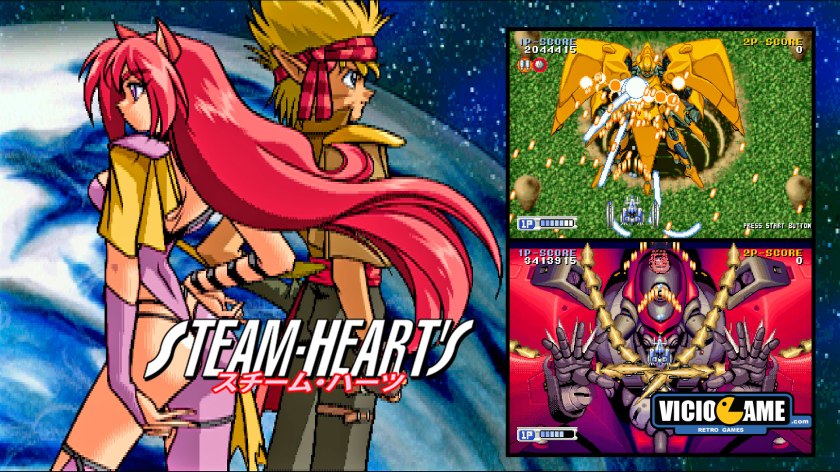
Steam-Heart’s is a shoot ‘em up game released in 1998 for the Sega Saturn. The young adventurer protagonist is naturally immune to the virus ravaging the world. His mission is to transfer his antibodies to save humanity and take down those responsible.
Developer: Giga
Publisher: TGL
Release date: 1998
Platform: Sega Saturn
🇺🇸 Steam-Heart’s (スチームハーツ) is one of the most unusual and curious titles ever released for the Sega Saturn, occupying a peculiar intersection between vertical shoot ‘em up and Japanese eroge — a genre of erotic games that, contrary to the immediate association many would make with graphic adventures or RPGs, here merges with the frantic action of a spacecraft navigating hostile skies filled with enemy fire. The game was developed by Giga and published by TGL (Technical Group Laboratory), a Japanese company that would become known among Saturn enthusiasts for releasing niche titles aimed at an adult audience. The character designer was animator Takahiro Kimura, whose art style gives the game’s female protagonists a striking and deliberately sexualized anime aesthetic — an element that would become the primary source of both fascination and controversy surrounding the title.
The story follows two siblings as they battle a virus that is possessing people throughout their world. More specifically, the plot is set in the distant future, on an alien planet ruled by seven princesses with elven or catgirl-like features who have fallen under the influence of a unique virus that has driven them mad and threatens to destroy the planet should all rulers declare all-out war. Only Blondia Varady (nicknamed “Blow”) and his sister Fallandia are immune to the disease, and they must pilot their combat ships deep into each princess’s domain, destroy her war machines, and administer the antidote. The narrative makes no effort to hide its erotic premise: after each boss is defeated, Blow and Falla interact with the women, and Blow must engage in intimate contact to cure them of the virus. This is a remarkably specific justification for narrative progression in a shoot ‘em up, but it defines the game’s identity in an unavoidable way, becoming the central element around which the entire structure of the game is built.
The game was originally released for NEC’s PC-9800 series of personal computers in Japan on March 15, 1994. The first console version was released on March 22, 1996, for the PC Engine Super CD-ROM². For that release, all graphics were redesigned, secondary weapons were weakened or removed entirely, and the two-player co-op mode was eliminated. It was released near the end of the system’s lifespan, as its final shooter. The PC Engine version has a notable quirk: players who do not understand Japanese can go through the entire experience without realizing the sexually charged nature of the cutscenes, since all dialogue remains exclusively in that language. The Sega Saturn version was released on September 23, 1998, as the console was beginning to lose its market share in the lead-up to the Dreamcast launch in November.
The Saturn version represents the most complete and refined edition of the game, restoring features that had been cut. All graphics were redesigned once more, the co-op mode was retained, and additional secondary weapons were included. The 32-bit Sega console’s version also makes greater use of the hardware’s scaling and rotation effects. In addition, it includes an Arcade Mode (a mode without any cutscenes or character dialogue) and a Score Attack Mode. These additional modes demonstrate that TGL recognized the dual audience the game was serving: those primarily interested in the erotic content, for whom the Story Mode was the natural destination, and shooter enthusiasts who could simply skip the scenes and enjoy the pure action in the dedicated Arcade Mode.
The player ship’s primary weapon can be either a vulcan cannon or a laser. The choice between the two playable characters, Blow and Falla, carries real tactical implications: for Blow, the vulcan shot splits and produces more consecutive bullets with each press. His laser is a single beam that grows with each power-up. Falla’s vulcan remains static and less powerful. However, her laser gains two additional shots for a wide alternate beam. Players can obtain and upgrade two types of primary shots and six types of sub-weapons. Special techniques include the “Weapon Crash,” which temporarily powers up sub-weapons, and the “Boost” ability, which allows the player to briefly accelerate to dodge incoming attacks. Available sub-weapons vary between versions of the game but include fixed turrets, flamethrowers, and satellite ships that chase enemies, among others.
The game’s life system differs from the standard found in many shooters of the era. The player has only one life but can take around six hits before losing it. There is only one continue in the two-player co-op mode. In single-player mode, the player restarts the stage after losing a life. The game is very generous with power-ups, which makes managing the frequent action easier. Boss battles are the highlight and represent a genuine challenge. They have numerous attacks and, while their patterns are easy to read, execution is still demanding. Many have multiple phases and alter their attacks in each one. The game’s overall difficulty is considered intermediate by genre standards — accessible enough for casual players without sacrificing challenge in the more advanced encounters.
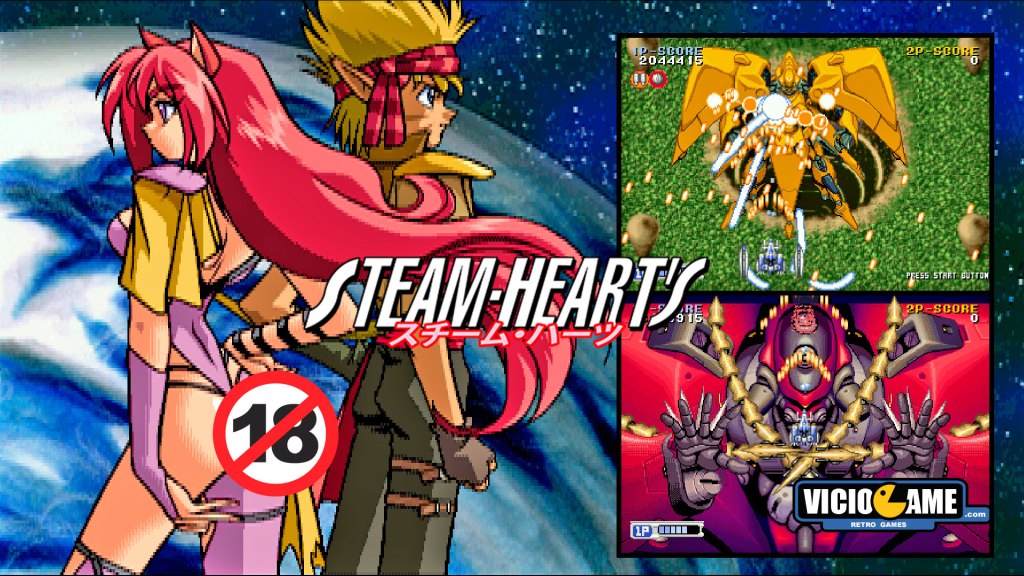
Regarding the erotic content, the Saturn version represents the most censored release in the franchise. The eroge was known to be more explicit on personal computers than on consoles, so when the game was ported to home platforms, the cutscenes were completely redesigned to be less graphic, though more suggestive. The scenes are fully voice-acted, including moaning sounds. The scrolling text of the original version was also replaced by voice acting. The packaging includes a small yellow sticker warning about the game’s erotic content. The cutscenes are presented through a succession of static images, and the transition between the gameplay itself and these narrative sequences lacks fluidity — the images remain on screen for excessive amounts of time while the voices continue.
Critical reception was largely lukewarm. Ralph Karels, writing for Video Games magazine, called the game an average shooter that was only worthwhile for players who enjoyed the erotic cutscenes. He felt the game did not hold up to comparison with Radiant Silvergun and R-Type Delta (both released in 1998), and considered the graphics no significant improvement over the PC Engine version. Reviewers at Famitsu gave it a score of 17/40. The game was also covered by reviewers at Sega Saturn Magazine (Japan). The most critical voices felt the gameplay was unbalanced and generally uninspired. The more receptive writers appreciated the erotic themes and found the bullet hell style to be balanced and enjoyable. The Spanish magazine Superjuegos noted that beyond the erotic content, the game could not compete graphically or mechanically with titles such as Galactic Attack. Super Game Power, on the other hand, was more favorable, giving the title a positive score.
In retrospect, Kurt Kalata of Hardcore Gaming 101 wrote that beyond the unique approach to cutscenes and the dodge mechanic, the game does little to distinguish itself from other shooters. He considered the Saturn version the best due to its improved graphics and gameplay, and the PC Engine version the worst due to its cut content and slower controls. He ranked it as better than most Raiden games, worse than Dodonpachi and Terra Diver (both from 1997), and roughly on par with Batsugun (1996). This context is useful for situating Steam-Heart’s within the shooter ecosystem of the 1990s without overstating or underselling its qualities as an action game.
The game is unusual for combining a shooting game with eroticism, since Japanese eroge titles more typically belong to genres such as RPG, adventure, strategy, or even beat ‘em up. This rarity of genre blending contributed to Steam-Heart’s carving out a specific niche and being remembered even decades after its release — not only for its adult content, but for managing to deliver a genuinely playable shoot ‘em up as the foundation for that content, something many action-oriented eroge of the era failed to achieve. The game shares spiritual DNA with another Giga/TGL title, the fighting series Advanced Variable Geo (also known as Variable Geo), which similarly blended competitive combat with erotic scenes.
The game’s arrival came at a delicate moment of transition: the console was losing ground in the market and Sega was already preparing for the launch of the Dreamcast. Releasing an erotic shooter in that context was a notably specific editorial decision, likely aimed at the loyal niche audience still investing in the platform. Interestingly, Steam-Heart’s is recorded as one of the final titles released for the Saturn in Japan — a detail that adds a layer of historical melancholy to its profile.
Steam-Heart’s remains, to this day, a fascinating artifact of 1990s Japanese gaming culture — a moment when the boundaries between genres and content were pushed in ways that would rarely be repeated, and which the Sega Saturn, with its rich and eclectic library, accommodated with its characteristic indifference to Western market conventions. For the player who comes to it on the merits of the shoot ‘em up, there is a solid experience to be found, visually accomplished for its time and equipped with weapon mechanics of genuine depth. For the player who comes for the adult content, there is a carefully constructed product built around an exotic science fiction premise, with memorable character design and a soundtrack fitting the space adventure tone the story proposes. That a single Saturn disc can house both of these very different propositions with equal conviction is, in itself, reason enough to justify its lasting place in the collective memory of the console’s fans.
🇧🇷 Steam-Heart’s (スチームハーツ) é um dos títulos mais incomuns e curiosos já lançados para o Sega Saturn, situando-se numa intersecção peculiar entre o shoot ‘em up vertical e o eroge japonês — gênero de jogos eróticos que, ao contrário da associação imediata que muitos fariam com aventuras gráficas ou RPGs, aqui se funde com a ação frenética de uma nave percorrendo céus hostis repletos de projéteis. O jogo foi desenvolvido pela Giga e publicado pela TGL (Technical Group Laboratory), empresa japonesa que ficaria conhecida entre os entusiastas do Saturn por publicar títulos de nicho voltados ao público adulto. O responsável pelo design de personagens foi o animador Takahiro Kimura, cujo traço confere às protagonistas femininas do game uma estética de anime marcante e deliberadamente sensualizada, elemento que se tornaria a principal fonte tanto de fascínio quanto de controvérsia em torno da obra.
A história do jogo acompanha dois irmãos enquanto combatem um vírus que está possuindo as pessoas em seu mundo. Detalhando melhor esse cenário, a trama se passa num futuro distante, num planeta alienígena dominado por sete princesas com traços élficos ou de catgirl que caíram sob o domínio de um vírus único, que as enlouqueceu e ameaça destruir o planeta caso todos os governantes declarem uma guerra total. Apenas Blondia Varady (apelidado de “Blow”) e sua irmã Fallandia estão imunes à doença e precisam pilotar suas naves de combate para penetrar fundo no domínio de cada princesa, destruir suas máquinas de guerra e administrar o antídoto. A narrativa não esconde o pretexto erótico que a sustenta: após cada chefe ser derrotado, Blow e Falla interagem com as mulheres, e Blow precisa ter contato íntimo para curá-las do vírus. Trata-se de uma justificativa extremamente particular para a progressão narrativa de um shoot ‘em up, mas ela define a identidade do título de forma incontornável, tornando-se o elemento central em torno do qual toda a estrutura de jogo é construída.
O jogo foi originalmente lançado para a série NEC PC-9800 de computadores pessoais no Japão em 15 de março de 1994. A primeira versão para console foi lançada em 22 de março de 1996 para o PC Engine Super CD-ROM² System. Para esse lançamento, todos os gráficos foram redesenhados, as armas secundárias foram enfraquecidas ou removidas completamente, e o modo cooperativo para dois jogadores foi eliminado. Foi lançado próximo ao fim da vida útil do sistema, como seu último shooter. A versão para PC Engine tem uma particularidade: jogadores que não dominam o japonês podem passar pela experiência inteira sem perceber o conteúdo sexualmente carregado das cenas, já que todo o diálogo permanece exclusivamente nesse idioma. A versão para o Sega Saturn foi lançada em 23 de setembro de 1998, enquanto o console começava a perder participação de mercado em preparação para o lançamento do Dreamcast em novembro.
A versão para Saturn representa a edição mais completa e refinada do jogo, trazendo de volta funcionalidades que haviam sido cortadas. Todos os gráficos foram novamente redesenhados, manteve-se o modo cooperativo e também inclui mais armas secundárias. A versão do 32 bits da Sega também faz maior uso dos efeitos de escala e rotação suportados pelo hardware. Além disso, inclui um arcade mode (um modo sem nenhuma cutscene ou diálogo de personagens) e um score attack mode. Esses modos adicionais demonstram que a TGL reconhecia o público duplo que o jogo atendia: aqueles interessados primariamente no conteúdo erótico, para quem o Story Mode era o destino natural, e os entusiastas de shooters que podiam simplesmente ignorar as cenas e usufruir da ação pura em seu arcade mode dedicado.
A arma primária da nave do jogador pode ser um vulcan cannon ou um laser. A escolha entre os dois personagens jogáveis, Blow e Falla, implica diferenças táticas reais: para Blow, o vulcan shot se divide e produz mais balas consecutivas a cada pressão. Seu laser é um feixe único que cresce com cada power-up. O vulcan de Falla permanece estático e menos potente. No entanto, o laser dela ganha dois tiros adicionais para um feixe largo alternativo. Os jogadores podem obter e melhorar dois tipos de tiros principais e seis tipos de sub-weapons. Técnicas especiais como o “Weapon Crash”, que potencializa temporariamente as sub-weapons, e a habilidade “Boost”, que permite acelerar momentaneamente para desviar de ataques inimigos. As sub-weapons disponíveis variam entre as versões do jogo, mas incluem torretas fixas, lança-chamas e naves-satélite que perseguem inimigos, entre outras.
O sistema de vida do jogo difere do padrão de muitos shooters da época. O jogador tem apenas uma vida, mas pode levar cerca de seis acertos antes de perdê-la. Há apenas um continue no modo cooperativo para dois jogadores. No modo single-player, o jogador reinicia a fase após perder uma vida. O jogo é muito generoso com power-ups, o que torna a ação frequente mais fácil de administrar. As batalhas contra chefes são o ponto alto e representam um desafio real. Eles têm numerosos ataques e, embora seus padrões sejam fáceis de reconhecer, a execução ainda é exigente. Muitos têm múltiplas fases e alteram seus ataques em cada uma delas. A dificuldade geral do jogo é considerada intermediária para os padrões do gênero, acessível o suficiente para jogadores casuais sem abrir mão de exigência nos confrontos mais avançados.
No que diz respeito ao conteúdo erótico, a versão para Saturn representa o ponto mais censurado de toda a franquia. O eroge era conhecido por ser mais gráfico em computadores pessoais do que em consoles, então quando o jogo foi portado para plataformas domésticas, as cutscenes foram completamente redesenhadas para serem menos explícitas, embora mais sugestivas. As cenas são totalmente dubladas, incluindo sons de gemidos. A rolagem de texto da versão original também foi substituída por dublagem. A embalagem vem com um pequeno selo amarelo advertindo sobre o conteúdo erótico do jogo. As cutscenes são narradas por meio de uma sucessão de imagens estáticas, e a transição entre o jogo em si e essas sequências narrativas carecem de fluidez — as imagens permanecem na tela por tempo excessivo enquanto as vozes continuam.
A recepção crítica foi morna em sua maioria. Ralph Karels, na revista Video Games, escreveu que o jogo era um shooter comum e só valia a pena para quem gostava das cutscenes eróticas. Ele acreditava que o jogo não resistia à comparação com Radiant Silvergun e R-Type Delta (ambos lançados em 1998), e considerou que os gráficos não eram uma melhora significativa em relação à versão para PC Engine. Revisores da Famitsu deram uma pontuação de 17/40. Revisores cobriram o jogo na Sega Saturn Magazine (Japão). Os mais críticos sentiram que a jogabilidade era desequilibrada e geralmente sem inspiração. Os redatores mais receptivos apreciaram os temas eróticos e consideraram o estilo bullet hell equilibrado e agradável. A revista espanhola Superjuegos notou que, além do conteúdo erótico, o jogo não podia competir em termos de gráficos ou gameplay com títulos como Galactic Attack. Já a Super Game Power foi mais receptiva, dando uma pontuação positiva ao título.
Em perspectiva histórica, Kurt Kalata, do Hardcore Gaming 101, escreveu que além da abordagem única das cutscenes e do mecanismo de esquiva, o jogo faz muito pouco para se distinguir de outros shooters. Ele considerou a versão do Saturn a melhor por causa dos gráficos e jogabilidade aprimorados, e a versão do PC Engine a pior por causa do conteúdo cortado e controle mais lento. Considerou melhor do que a maioria dos jogos Raiden, pior do que Dodonpachi e Terra Diver (ambos de 1997), e mais ou menos equivalente a Batsugun (1996). Essa contextualização é útil para situar Steam-Heart’s dentro do ecossistema de shooters dos anos 1990 sem exagerar nem subestimar suas qualidades como jogo de ação.
O jogo é incomum por combinar um shooting game com erotismo, já que os jogos eróticos japoneses são mais tipicamente gêneros como RPG, aventura, estratégia ou até beat ‘em up. Essa raridade de combinação de gêneros contribuiu para que Steam-Heart’s ocupasse um nicho específico e fosse lembrado mesmo décadas após seu lançamento, não apenas por seu conteúdo adulto, mas por ter conseguido entregar um shoot ‘em up genuinamente jogável como base para esse conteúdo — algo que muitos eroge de ação da época falhavam em fazer. O jogo compartilha DNA espiritual com outro título da Giga/TGL, a série de luta Advanced Variable Geo (também conhecida como Variable Geo), que também mesclava combate competitivo com cenas eróticas.
A chegada do jogo ocorreu num momento de transição delicada: o console estava perdendo espaço no mercado e a Sega já se preparava para o lançamento do Dreamcast. Lançar um shooter erótico nesse contexto foi uma decisão editorial notavelmente específica, provavelmente direcionada ao público fiel de nicho que ainda investia na plataforma. Curiosamente, Steam-Heart’s ficou registrado como um dos títulos finais lançados para o Saturn no Japão, um detalhe que adiciona uma camada de melancolia histórica ao seu perfil.
Steam-Heart’s permanece, até hoje, um título fascinante da cultura japonesa dos anos 1990 — um momento em que os limites entre gêneros e conteúdos eram testados de formas que raramente seriam repetidas, e que o Sega Saturn, com sua biblioteca rica e heterodoxa, acomodou com sua habitual indiferença às convenções ocidentais de mercado. Para o jogador que chega até ele pelo mérito do shoot ‘em up, encontra uma experiência sólida, visualmente caprichada para seu tempo e dotada de mecânicas de armas com profundidade genuína. Para aquele que chega pela reputação do conteúdo adulto, encontra um produto cuidadosamente construído ao redor de uma ficção científica exótica, com design de personagens marcante e uma trilha sonora adequada ao tom de aventura espacial que a trama propõe. Que um único disco do Saturn seja capaz de abrigar com igual convicção essas duas propostas tão distintas é, por si só, suficiente para justificar sua permanência no imaginário coletivo dos fãs do console.
🤑💲Earn money without doing anything! Just leave these apps open:
✓ https://r.honeygain.me/CONTA9DB02
✓ https://packetstream.io/?psr=1uPb
🤑💲1-Click button earns Bitcoin every 1 hour: https://freebitco.in/?r=53528449
⬛ 𝗧𝗶𝗸𝗧𝗼𝗸: https://www.tiktok.com/@viciogame
🟧 𝗜𝗻𝘀𝘁𝗮𝗴𝗿𝗮𝗺: http://www.instagram.com/viciogame
🟥 𝗬𝗼𝘂𝘁𝘂𝗯𝗲: http://www.youtube.com/viciogame
🟦 𝗙𝗮𝗰𝗲𝗯𝗼𝗼𝗸: http://www.facebook.com/viciogame
🔳 𝗧𝗵𝗿𝗲𝗮𝗱𝘀: https://www.threads.net/@viciogame
🟪 𝗧𝘄𝗶𝘁𝗰𝗵: https://www.twitch.tv/ViciogameRetroGames
🟨 𝗕𝗹𝗼𝗴: http://www.viciogameblog.com/
🟦𝗧𝘄𝗶𝘁𝘁𝗲𝗿: http://www.twitter.com/viciogame
#Viciogame #Gameplay #LetsPlay #Playthrough #Games #Gaming #Videogames #Review #Game #Detonado #Walkthrough #Ending #Reviews #Facts #Retro #RetroGaming #Roms #Emulator #Longplay #Speedrun #NoCommentary #SteamHearts #Saturn #Sega #ShootEmUp #SegaSaturn #shooting #PC98 #PcEngine #Manga #Anime #hentai #eroge #Gradius #bullethell #Rtype #スチームハーツ #セガサターン #セガ #PCエンジン #エヌイーシー #日本電気
 VICIOGAME