
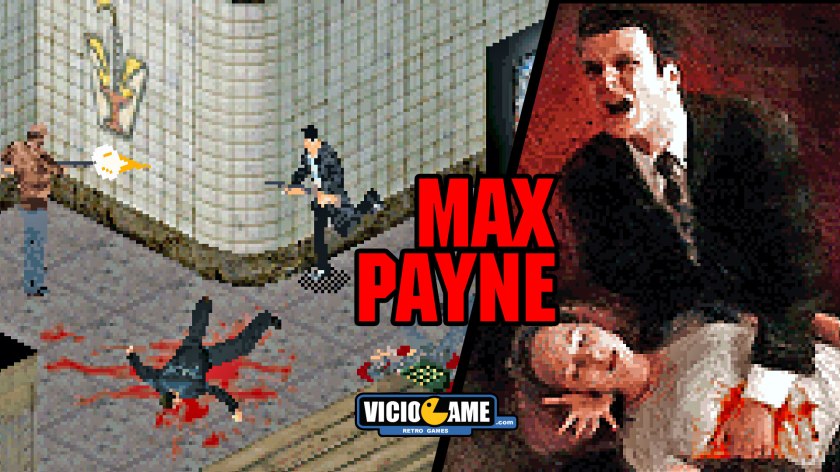
Max Payne is a 2D isometric action game released in 2003 for the Game Boy Advance. Driven by an obsession for revenge, the detective plunges into the criminal underworld. Through a series of twists and turns, he uncovers a conspiracy involving corruption, the mob, and a drugs.
Developer: Mobius Entertainment
Publisher: Rockstar Games
Release date: 2003
Platform: Game Boy Advance
🇺🇸 The story of Max Payne for the Game Boy Advance inevitably begins at the starting point of the entire franchise: the original game released in July 2001 for PC by Remedy Entertainment and published by Gathering of Developers. That original version set a new standard for third-person shooters by combining a noir-heavy narrative with the innovative bullet time mechanic — the slow-motion technique popularized by the film The Matrix (1999) and Hong Kong action cinema, particularly the works of director John Woo. Max Payne for PC sold more than four million copies worldwide, won a BAFTA Award for Best PC Game of 2001, and was later ported to the PlayStation 2 by Rockstar Canada and to the Xbox by Neo Software, both in December 2001. A Mac OS X version was developed by Westlake Interactive in 2002. With such assured success, it was only a matter of time before the franchise made its way to handheld platforms — and that is exactly what happened in December 2003, when the Game Boy Advance received its own surprising version of the game.
The studio responsible for bringing Max Payne to the Game Boy Advance was the British developer Möbius Entertainment, based in Leeds, England. The company had been founded in December 1997 by Gordon Hall, Jason McGann, Dave Box, Ian Bowden, and Justin Johnson, all former employees of a studio called Hookstone. By that point, Möbius had already built up solid experience developing games for handheld platforms, having worked with multiple publishers to produce titles for the Game Boy Color and the Game Boy Advance, including games for The 3DO Company. The studio’s reputation as a handheld development specialist was a decisive factor in Rockstar Games trusting them with the task of adapting one of the biggest hits of the generation to the Nintendo portable’s three-inch screen. The game was published by Rockstar Games and Take-Two Interactive in the United States, launching on December 16, 2003 — just days before Christmas that year. In Europe, the version hit shelves on March 19, 2004.
The greatest technical challenge facing Möbius Entertainment was obvious: how do you port a fully three-dimensional third-person shooter to hardware with drastically inferior processing capabilities? The solution they found was both elegant and pragmatic. Rather than trying to force a 3D engine onto the Game Boy Advance, the studio chose to recreate the game entirely using sprite-based graphics rendered from an isometric perspective. This top-down diagonal visual style had already been used successfully in other titles for the handheld, such as Tony Hawk’s Pro Skater 2, which launched alongside the console. The result is that Max Payne on the GBA looks visually similar to the original, but seen from a tilted angle, drawing comparisons to isometric strategy games — even though the gameplay is pure arcade action. Remarkably, despite this shift in perspective, the game’s characters were rendered using polygonal graphics — an unusual technical choice for the hardware that reinforced the impression of volume and depth within the console’s limitations.
The faithfulness with which Möbius replicated the environments from the original game is one of the most praised aspects of the portable version. Room layouts, subway maps, building floor plans, and enemy placements were reproduced with as much precision as the isometric perspective allowed. The player still boards a run-down subway train, chases enemies across snow-covered rooftops, and shoots their way through a bank. The snow that defines the noir aesthetic of the original is present in this version as well, creating a grim atmosphere even within the compressed visuals of the Game Boy Advance. The narrative structure remained divided into three major parts — The American Dream, A Cold Day in Hell, and A Bit Closer to Heaven — subdivided into chapters, though some levels from the original version were cut to fit the handheld format.
The story told in this version is essentially the same as in the PC game. Max Payne is an NYPD detective who, in August 1998, returns home to find his wife, Michelle, and newborn daughter murdered by junkies strung out on a new designer drug called Valkyr. Shattered by grief, Max transfers to the DEA and, in February 2001, goes undercover to infiltrate the Punchinello Crime Family, which controls the Valkyr trade in New York City. The plot explodes when Max is called by his colleague B.B. to meet his friend and DEA partner Alex Balder at Roscoe Street Station — where Alex is gunned down right before his eyes. Max is immediately framed for the murder and finds himself hunted by both the police and the mob, becoming a fugitive with literally nothing left to lose. This dramatic setup — one man alone against the system, lost in the snowy streets of New York — runs through the game from beginning to end, and the GBA version captures it with surprising efficiency.
As Max progresses through the chapters, he dives deeper into the city’s criminal underworld, facing down gunmen from the Punchinello family — including the boss himself, Angelo Punchinello — while piecing together clues about the origins of Valkyr. At a certain point, he encounters Mona Sax, a hired assassin and the twin sister of Lisa Punchinello, Angelo’s abused wife. Mona is presented as a classic noir femme fatale — ambiguous, dangerous, and captivating. In the Game Boy Advance game, just as in the original, she drugs Max and vanishes before he can interrogate her, leaving more questions than answers. Max’s investigation leads him to a secret underground military complex, where he discovers that Valkyr is the product of the Valhalla Project, a Gulf War-era military experiment designed to enhance soldiers’ physical and moral performance. The project was shut down by the government after unsatisfactory results, but was secretly revived by Nicole Horne, CEO of the pharmaceutical corporation Aesir. When Max’s wife accidentally stumbled upon the project while working in the District Attorney’s office, Horne ordered her death — sending Valkyr test subjects to the Payne family home in New Jersey — making her the definitive villain and the ultimate architect of the tragedy that set the whole story in motion.
After escaping the complex before Horne triggers the self-destruct protocol, Max is contacted by B.B. for a meeting at a parking structure — where he discovers that B.B. was the double agent who killed Alex Balder and framed him for it. An intense armed chase ends with B.B.’s death. Shortly after, Max receives a call from Alfred Woden, a mysterious senator who invites him to the old Asgard Building. There, Woden reveals himself to be a member of a secret society known as the Inner Circle — a group of powerful figures with ties to governments, corporations, and criminal organizations. The Inner Circle offers to clear Max’s criminal charges in exchange for him eliminating Nicole Horne. During the meeting, Horne’s agents storm the conference room and massacre those present — only Max and Woden survive, with the senator playing dead. Max then moves toward the final confrontation, storming Aesir Headquarters, fighting his way to the top of the building through waves of mercenaries and bodyguards, and facing off against Horne in the narrative’s climax, before watching the first rays of sunlight break over New York City as police helicopters circle overhead.
On the gameplay side, the GBA version preserves with great integrity the elements that made the original so memorable. The central mechanic — bullet time — is activated via the console’s R button. When pressed, all on-screen action slows dramatically while the player retains a slightly superior reaction speed compared to enemies. This allows for planning escape routes, aiming more precisely, and surviving situations that would otherwise be fatal when surrounded. The mechanic is powered by a bullet time meter that drains during use and gradually recharges over time. Beyond simply triggering slow motion, Max can also perform the shootdodge — an acrobatic airborne dive with gun blazing, straight out of a John Woo film — which allows repositioning mid-flight to hit multiple enemies at once. When combined with bullet time, the effect is devastating. The game’s frame rate holds reasonably stable during these moments, with noticeable drops only when large numbers of enemies appear on screen simultaneously.
The arsenal available to the player includes more than ten distinct weapons, which is an impressive level of fidelity to the options found in the original. Players can choose from single or dual pistols, an Ingram MAC-10, a shotgun, an assault rifle, a sniper rifle, a grenade launcher, and loose grenades, among other destructive items. Each weapon has distinct stats for damage, range, and rate of fire, and the system encourages players to adapt their combat style to the situation at hand. Max’s health is managed by collecting painkillers scattered throughout the environments — faithfully replicating the health recovery system from the PC game. There is no automatic health regeneration: players must manage their supplies carefully, especially during the most intense confrontations.
The controls represented one of the biggest challenges for both the developers and the players. The Game Boy Advance‘s four-directional D-pad is not ideal for isometric movement, which demands constant diagonal navigation — a limitation that was widely cited in contemporary reviews as the conversion’s primary weak point. The A and B buttons handle attacking and interacting, while the L and R triggers manage weapon selection and bullet time, respectively. Despite the initial learning curve, most critics acknowledged that, after some adjustment, the control scheme works surprisingly smoothly for a game of this genre on handheld hardware.
The narrative in the GBA version is presented in a manner very similar to the original, through the iconic graphic novel sequences — static comic book-style panels with expressive monochromatic artwork, accompanied by voice acting. The portable version preserves a large portion of these sequences, including much of the original PC game’s voice cast, and adds speech bubbles that substitute for ambient sound effects the hardware could not reproduce adequately. This combination of slideshow and dialogue balloons produces an aesthetic that, ironically, can feel even more faithful to the spirit of comic books than the three-dimensional version. The game includes over 30 minutes of voiced dialogue — an impressive figure for a cartridge, and a testament to Möbius’s commitment to preserving the original’s narrative experience. The portable version’s soundtrack was composed by Tom Kingsley, who created new tracks inspired by the noir and melancholic style of the original music without directly copying it. The result is compositions that capture the atmospheric tone of the PC game well, though the limited number of tracks was flagged as a minor shortcoming by some critics.
The campaign’s length was another characteristic that generated divided opinions. Players who completed the game on their first run reported a completion time of around four hours — or slightly more, depending on skill level and chosen difficulty. That number is considerably shorter than the PC and home console versions, though it is partly a reflection of the chapters cut from the original. The 12 available stages cover the most relevant moments for the story’s progression, ensuring that the essential narrative beats are kept intact. For a handheld game designed for quick play sessions, the short length can be seen as both a limitation and a strength — the title naturally fits a pick-up-and-play format, since each level can be completed in just a few minutes.
From a ratings standpoint, Max Payne for the Game Boy Advance received an M for Mature (17+) rating from the ESRB in North America and a PEGI 16+ rating in Europe — making it one of the very few games on the handheld to carry such a restriction. The title is part of a list of only nine games on the system to receive an M rating, making it a rarity in a catalog notoriously dominated by titles aimed at younger audiences. The game’s content fully justifies the rating: it features explicit blood, intense violence, drug use as a central narrative element, and mature themes of corruption and conspiracy that run throughout the entire story.
Critical reception was predominantly positive, especially given the hardware’s limitations. On Metacritic, the GBA version earned a score of 78 out of 100 — a remarkable result for such an unlikely port. Eurogamer described the game as “undeniably compelling, with tolerable flaws, offering a concise and essential digest of the central plot points for anyone planning to play the sequel on PC.” WorthPlaying praised the smooth controls, sharp visuals, and effectiveness of bullet time, pointing to enemies that frequently appeared off-screen as the main obstacle to enjoyment. Pocket Gamer, in retrospect, called the adaptation an incredible achievement in creative fidelity, highlighting how Möbius had almost reverentially replicated the original’s environment layouts and enemy placements. Overall, the critical consensus recognized the game as technically impressive for the hardware, with minor gameplay flaws that became acceptable when considered as part of the whole package.
The impact of Max Payne on the GBA goes well beyond the game’s own quality: the port served as the springboard that launched Möbius Entertainment into the spotlight of the games industry. The studio’s work impressed Rockstar Games and Take-Two Interactive to such a degree that, in April 2004 — just months after the game’s release — the company was acquired by Take-Two and rebranded as Rockstar Leeds. Housed in an office set inside a converted 18th-century church in the Lower Wortley neighborhood of Leeds, the team became part of the creative ecosystem of one of the world’s largest publishers. Under the new name and with new resources at their disposal, the studio took on prominent roles in developing major Rockstar titles: they served as the lead developer on Grand Theft Auto: Liberty City Stories and Grand Theft Auto: Vice City Stories for the PlayStation Portable, and contributed artwork and design elements to Grand Theft Auto IV, Grand Theft Auto V, and Red Dead Redemption 2. In short, Max Payne on the GBA can be seen as the portfolio piece that opened the doors of the Rockstar universe to a talented and ambitious English studio.
Within the history of the series, this title occupies a unique place: it is the only official adaptation of the original Max Payne to opt for a perspective and visual style completely distinct from the PC and home console versions. The Nintendo handheld received a creative reimagining that establishes its own visual and mechanical identity — one that feels, curiously, closer to early entries in the GTA series than to the original that inspired it. This reinvention does not diminish the game: on the contrary, it is precisely the courage not to attempt the impossible that makes this version a technical and creative achievement worthy of recognition — and proof that great stories can be told on small screens without losing their essence.
🇧🇷 A história do Max Payne para o Game Boy Advance começa, inevitavelmente, pelo ponto de partida de toda a franquia: o jogo original lançado em julho de 2001 para PC pela Remedy Entertainment e publicado pela Gathering of Developers. Aquela versão original estabeleceu um novo padrão para os jogos de tiro em terceira pessoa ao combinar uma narrativa noir carregada com o inovador mecanismo de bullet time — a técnica de desaceleração do tempo popularizada pelo filme The Matrix (1999) e pelo cinema de ação de Hong Kong, especialmente nas obras do diretor John Woo. O Max Payne para PC vendeu mais de quatro milhões de cópias em todo o mundo, ganhou um BAFTA Award como Melhor Jogo de PC de 2001 e foi posteriormente portado para o PlayStation 2 pela Rockstar Canada e para o Xbox pela Neo Software, ambos em dezembro de 2001. Uma versão para Mac OS X foi desenvolvida pela Westlake Interactive em 2002. Com tamanho sucesso garantido, era apenas questão de tempo que a franquia chegasse aos portáteis — e foi exatamente o que aconteceu em dezembro de 2003, quando o Game Boy Advance recebeu sua própria e surpreendente versão do jogo.
O responsável por trazer Max Payne ao Game Boy Advance foi o estúdio britânico Möbius Entertainment, sediado em Leeds, na Inglaterra. A empresa havia sido fundada em dezembro de 1997 por Gordon Hall, Jason McGann, Dave Box, Ian Bowden e Justin Johnson, todos ex-funcionários de um estúdio chamado Hookstone. Até aquele momento, a Möbius já acumulava experiência no desenvolvimento de jogos para plataformas portáteis, tendo trabalhado com múltiplos publishers na produção de títulos para o Game Boy Color e o Game Boy Advance, entre eles jogos para a The 3DO Company. A reputação do estúdio como especialista em desenvolvimento handheld foi decisiva para que a Rockstar Games confiasse a ele a tarefa de adaptar um dos maiores sucessos da geração para a tela de três polegadas do portátil da Nintendo. O jogo foi publicado pela Rockstar Games e pela Take-Two Interactive nos Estados Unidos, com lançamento no dia 16 de dezembro de 2003 — apenas dias antes do Natal daquele ano. Na Europa, a versão chegou às prateleiras em 19 de março de 2004.
O maior desafio técnico enfrentado pela Möbius Entertainment era evidente: como transpor um jogo de tiro em terceira pessoa em plena tridimensionalidade para um hardware com capacidades de processamento radicalmente inferiores? A solução encontrada foi igualmente elegante e pragmática. Em vez de tentar forçar um engine 3D no Game Boy Advance, o estúdio optou por recriar o jogo inteiramente com gráficos baseados em sprites, apresentados a partir de uma perspectiva isométrica. Esse estilo visual, de cima para baixo e em diagonal, já havia sido utilizado com sucesso em outros títulos para o portátil, como o Tony Hawk’s Pro Skater 2, lançado junto com o console. O resultado é que o Max Payne do GBA se parece visualmente com original, mas visto de um ângulo inclinado, evocando comparações com jogos de estratégia isométricos, embora a jogabilidade seja pura ação arcade. É incrível que, mesmo com essa mudança de perspectiva, os personagens do jogo foram renderizados com gráficos poligonais — uma escolha técnica incomum para o hardware, que reforçava a impressão de volume e profundidade dentro das limitações do console.
A fidelidade com que a Möbius replicou os ambientes do jogo original é um dos aspectos mais elogiados da versão portátil. Os layouts dos cômodos, os mapas dos metrôs, as plantas baixas dos edifícios e o posicionamento dos inimigos foram reproduzidos com o máximo de precisão que a perspectiva isométrica permitia. O jogador ainda embarca em um trem de metrô deteriorado, persegue inimigos pelos telhados cobertos de neve e ainda abre o caminho por dentro de um banco. A neve que marca a estética noir da obra original está presente também nessa versão, criando uma atmosfera sombria mesmo nos gráficos comprimidos do Game Boy Advance. A estrutura narrativa permaneceu dividida em três grandes partes — The American Dream, A Cold Day in Hell e A Bit Closer to Heaven — subdivididas em capítulos, ainda que alguns níveis da versão original tenham sido omitidos para caber no formato portátil.
A história contada nessa versão é essencialmente a mesma do jogo de PC. Max Payne é um detetive da NYPD que, em agosto de 1998, retorna para casa e encontra sua esposa, Michelle, e sua filha recém-nascida assassinadas por viciados ensandecidos sob os efeitos de uma nova droga de designer chamada Valkyr. Devastado, Max transfere-se para a DEA e, em fevereiro de 2001, infiltra-se como agente encoberto na Família do Crime Punchinello, responsável pelo tráfico de Valkyr em Nova York. A trama explode quando Max é convocado pelo colega B.B. para encontrar Alex Balder, seu amigo e parceiro na DEA, na estação Roscoe Street — onde Alex acaba sendo assassinado diante de seus olhos. Max é imediatamente incriminado pelo crime e passa a ser caçado tanto pela polícia quanto pela máfia, tornando-se um fugitivo com literalmente nada a perder. Essa configuração dramática — um homem só contra o sistema, perdido nas ruas nevadas de Nova York — atravessa o jogo do começo ao fim, e a versão do GBA a captura com surpreendente eficiência.
À medida que avança nos capítulos, Max se aprofunda no submundo criminal da cidade, enfrentando pistoleiros da família Punchinello, incluindo o próprio chefão Angelo Punchinello, e acumulando pistas sobre a origem da Valkyr. Em determinado momento, encontra Mona Sax, uma assassina de aluguel e irmã gêmea de Lisa Punchinello, esposa abusada de Angelo. Mona é apresentada como a femme fatale clássica do noir — ambígua, perigosa e fascinante. No jogo do Game Boy Advance, assim como no original, ela droga Max e desaparece antes que ele possa interrogá-la, deixando mais perguntas do que respostas. As investigações levam Max a um complexo militar subterrâneo secreto, onde descobre que a Valkyr é resultado do Valhalla Project, um experimento militar da era da Guerra do Golfo destinado a melhorar o desempenho físico e moral dos soldados. O projeto foi descontinuado pelo governo após resultados insatisfatórios, mas foi retomado secretamente por Nicole Horne, CEO da corporação farmacêutica Aesir. Quando a esposa de Max descobriu acidentalmente a existência do projeto enquanto trabalhava no escritório do Promotor Distrital, Horne ordenou sua morte, enviando os próprios cobaias da Valkyr ao endereço da família Payne em Nova Jersey — tornando-se a arquivilã definitiva e a responsável última pela tragédia que desencadeou toda a história.
Após escapar do complexo antes que Horne ative o protocolo de autodestruição, Max é contactado por B.B. para um encontro num complexo de estacionamentos — onde descobre que B.B. era o agente duplo que assassinou Alex Balder e o incriminou. Uma intensa perseguição armada termina com a morte de B.B. Em seguida, Max recebe uma ligação de Alfred Woden, um senador misterioso que o convida ao antigo Asgard Building. Lá, Woden revela ser membro de uma sociedade secreta chamada Inner Circle, um grupo de figuras de poder com conexões em governos, corporações e organizações criminosas. A Inner Circle oferece ajudar Max a se livrar das acusações criminais em troca de que ele elimine Nicole Horne. Durante a reunião, agentes de Horne invadem a sala de conferências e massacram os presentes — apenas Max e Woden sobrevivem, com o senador fingindo estar morto. Max então parte para o confronto final, invadindo a Aesir Headquarters, ascendendo até o topo do prédio entre ondas de mercenários e guarda-costas, e enfrentando Horne no clímax da narrativa, antes de contemplar os primeiros raios de sol surgindo sobre Nova York enquanto helicópteros da polícia sobrevoam a cena.
Sobre a jogabilidade, a versão do GBA preserva com grande integridade os elementos que tornaram o original tão marcante. O recurso central — o bullet time — funciona através do botão R do console. Ao pressioná-lo, toda a ação na tela desacelera drasticamente, enquanto o jogador mantém uma capacidade de reação ligeiramente superior à dos inimigos. Isso permite planejar rotas de fuga, mirar com mais precisão e sair ileso de situações em que estar cercado seria normalmente fatal. O recurso é alimentado por uma barra de bullet time que se esgota durante o uso e se recarrega gradualmente com o tempo. Além de simplesmente ativar o modo lento, Max também pode executar o shootdodge — um mergulho acrobático no ar com arma em punho, no melhor estilo dos filmes de John Woo — que permite reposicionar o corpo durante o movimento para atingir múltiplos inimigos ao mesmo tempo. Quando usado em conjunto com o bullet time, o efeito é devastador. O framerate do jogo se mantém razoavelmente estável durante esses momentos, com quedas perceptíveis apenas quando muitos inimigos aparecem simultaneamente na tela.
O arsenal disponível ao jogador chega a mais de dez armas distintas, o que representa uma fidelidade admirável ao leque de opções do original. Entre as opções, o jogador pode contar com pistolas de uso simples ou dual, uma Ingram MAC-10, uma shotgun, um rifle de assalto, um sniper rifle, uma grenade launcher e granadas avulsas, além de outros itens destrutivos. Cada arma possui características distintas de dano, alcance e cadência de tiro, e o sistema encoraja o jogador a adaptar seu estilo de combate conforme a situação. A saúde de Max é gerenciada pelo consumo de painkillers — os analgésicos espalhados pelos cenários —, replicando fielmente o sistema de recuperação do jogo de PC. Não há regeneração automática de vida: o jogador precisa gerenciar seus recursos com cuidado, especialmente nos confrontos mais intensos.
Os controles do jogo representaram um dos maiores desafios tanto para os desenvolvedores quanto para os jogadores. O direcional de quatro direções do Game Boy Advance não é ideal para movimento isométrico, que exige deslocamentos diagonais constantes — e essa limitação foi amplamente apontada pelas análises da época como o principal ponto fraco da conversão. Os botões A e B cuidam das ações de ataque e interação, enquanto os gatilhos L e R gerenciam respectivamente a seleção de armas e o bullet time. Apesar da curva de aprendizado inicial, a maioria dos críticos reconheceu que, após alguma adaptação, o esquema de controles funciona de forma surpreendentemente fluida para um jogo desse gênero num hardware portátil.
A narrativa da versão do GBA é apresentada de forma muito semelhante ao original, por meio das icônicas telas de graphic novel — painéis estáticos no estilo de história em quadrinhos, com arte monocromática e expressiva, acompanhados por dublagem. A versão portátil preserva grande parte dessas sequências, incluindo boa parte das vozes originais do jogo de PC, e adiciona balões de fala que substituem os efeitos sonoros ambientais que o hardware não conseguia reproduzir adequadamente. Essa combinação de slideshow com balões de diálogo resulta numa estética que, ironicamente, pode soar ainda mais fiel ao espírito das histórias em quadrinhos do que a versão tridimensional. O jogo inclui mais de 30 minutos de diálogos falados — uma cifra impressionante para um cartucho, e que demonstra o esforço da Möbius em preservar a experiência narrativa do original. A trilha sonora da versão portátil foi composta por Tom Kingsley, que criou novas faixas inspiradas no estilo noir e melancólico da música original, sem copiá-la diretamente. O resultado são composições que imitam bem o tom atmosférico do jogo de PC, ainda que a pouca quantidade de faixas tenha sido apontada como uma pequena limitação por alguns críticos.
A duração da campanha é outra característica que gerou opiniões divididas. Jogadores que completaram o jogo de primeira reportaram um tempo de conclusão em torno de quatro horas — ou pouco mais, dependendo da habilidade e do nível de dificuldade escolhido. Esse número é consideravelmente menor do que o das versões de PC e consoles domésticos, embora seja, em parte, reflexo das omissões de alguns capítulos da versão original. As 12 fases disponíveis cobrem os momentos mais relevantes para a progressão da história, garantindo que os pontos narrativos essenciais sejam mantidos. Para um jogo portátil pensado para sessões rápidas de jogo, a duração curta pode ser vista tanto como uma limitação quanto como uma virtude — o título se encaixa naturalmente no formato de jogar em pequenos intervalos, já que cada nível pode ser completado em poucos minutos.
Do ponto de vista da classificação etária, Max Payne para o Game Boy Advance recebeu a classificação M for Mature (17+) pelo ESRB americano e PEGI 16+ na Europa — tornando-se um dos poucos jogos do portátil a ostentar tal restrição. O título faz parte de uma lista de apenas nove jogos do sistema a receberem a classificação M, tornando-se uma raridade no catálogo do console, notoriamente dominado por títulos voltados ao público jovem. O conteúdo do jogo justifica plenamente a classificação: há sangue explícito, violência intensa, uso de drogas como elemento central da narrativa e temáticas adultas de corrupção e conspiração que permeiam toda a história.
A recepção crítica foi predominantemente positiva, especialmente levando em consideração as limitações do hardware. No agregador Metacritic, a versão do GBA obteve uma pontuação de 78 sobre 100 — um resultado notável para uma conversão tão improvável. A publicação Eurogamer descreveu o jogo como “inegavelmente cativante, com falhas toleráveis e que oferece um resumo conciso e essencial dos pontos centrais da trama para quem planeja jogar a sequência no PC“. A WorthPlaying elogiou os controles fluidos, os visuais nítidos e a eficácia do bullet time, apontando apenas o problema dos inimigos que frequentemente aparecem fora do campo visual como principal obstáculo à diversão. O Pocket Gamer, em retrospectiva, classificou a adaptação como um trabalho incrível de fidelidade criativa, destacando que a Möbius havia replicado de forma quase reverencial o layout dos ambientes e o posicionamento dos inimigos do original. Em geral, o consenso crítico reconhecia que o jogo era tecnicamente impressionante para o hardware, com falhas de jogabilidade menores que se tornavam aceitáveis diante do conjunto da obra.
O impacto do Max Payne para o GBA vai além da própria qualidade do jogo: a adaptação foi o trampolim que catapultou a Möbius Entertainment ao estrelato do mercado de games. O trabalho do estúdio impressionou a Rockstar Games e a Take-Two Interactive a tal ponto que, em abril de 2004 — poucos meses após o lançamento do jogo —, a empresa foi adquirida pela Take-Two e rebatizada como Rockstar Leeds. Instalada em um escritório localizado em uma igreja do século XVIII convertida no bairro de Lower Wortley, em Leeds, a equipe passou a integrar o ecossistema criativo de um dos maiores publishers do mundo. Com o novo nome e os novos recursos à disposição, o estúdio assumiu papéis de destaque no desenvolvimento de títulos importantes da Rockstar: foi o principal responsável pelos jogos Grand Theft Auto: Liberty City Stories e Grand Theft Auto: Vice City Stories para o PlayStation Portable, além de contribuir com arte e elementos de design para Grand Theft Auto IV, Grand Theft Auto V e Red Dead Redemption 2. Resumindo, o Max Payne do GBA pode ser visto como o portfólio que abriu as portas do universo Rockstar para um estúdio inglês talentoso e ambicioso.
Dentro da história da série, este título ocupa um lugar singular: é a única adaptação oficial do Max Payne original que optou por uma perspectiva e um estilo visual completamente distintos das versões para PC e consoles domésticos. O portátil da Nintendo recebeu uma releitura criativa que impõe sua própria identidade visual e mecânica — mais próxima, curiosamente, de jogos como GTA dos primeiros jogos da série do que do original que a inspirou. Essa reinvenção não diminui o jogo: ao contrário, é justamente a coragem de não tentar imitar o impossível que faz desta versão uma realização técnica e criativa digna de nota, e uma prova de que grandes histórias podem ser contadas em telas pequenas sem perder sua essência.
🤑💲Earn money without doing anything! Just leave these apps open:
✓ https://r.honeygain.me/CONTA9DB02
✓ https://packetstream.io/?psr=1uPb
🤑💲1-Click button earns Bitcoin every 1 hour: https://freebitco.in/?r=53528449
⬛ 𝗧𝗶𝗸𝗧𝗼𝗸: https://www.tiktok.com/@viciogame
🟧 𝗜𝗻𝘀𝘁𝗮𝗴𝗿𝗮𝗺: http://www.instagram.com/viciogame
🟥 𝗬𝗼𝘂𝘁𝘂𝗯𝗲: http://www.youtube.com/viciogame
🟦 𝗙𝗮𝗰𝗲𝗯𝗼𝗼𝗸: http://www.facebook.com/viciogame
🔳 𝗧𝗵𝗿𝗲𝗮𝗱𝘀: https://www.threads.net/@viciogame
🟪 𝗧𝘄𝗶𝘁𝗰𝗵: https://www.twitch.tv/ViciogameRetroGames
🟨 𝗕𝗹𝗼𝗴: http://www.viciogameblog.com/
🟦𝗧𝘄𝗶𝘁𝘁𝗲𝗿: http://www.twitter.com/viciogame
#Viciogame #Gameplay #LetsPlay #Playthrough #Games #Gaming #Videogames #Review #Game #Detonado #Walkthrough #Ending #Reviews #Facts #Retro #RetroGaming #Roms #Emulator #Longplay #Speedrun #NoCommentary #MaxPayne #GameBoyAdvance #GBA #Nintendo #GameBoy #Rockstar #Mobius #PC #PlayStation #PlayStation2 #PS2 #XBOX #ゲームボーイアドバンス #任天堂 #gta #gtav #gta5 #gta6 #gtavi #matrix
 VICIOGAME