
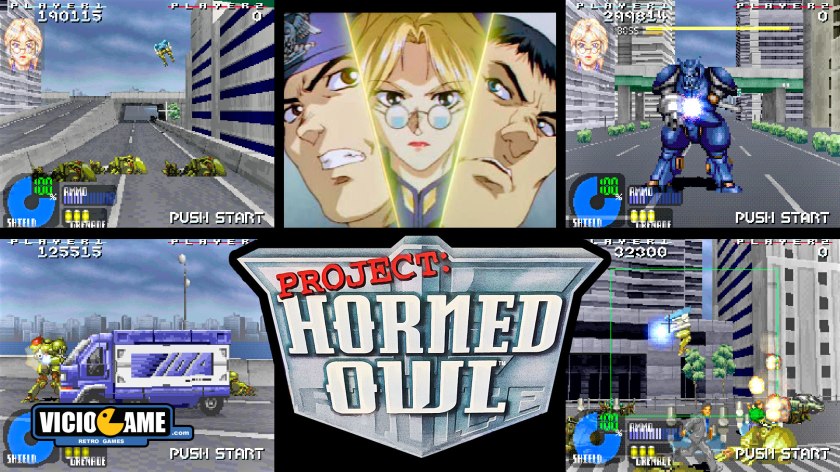
Project: Horned Owl is a light gun shooter released in 1996 exclusively for the PlayStation. An elite police officer, armed with a powerful mech suit, must take on a terrorist organization that has seized control of the city. Fight through endless waves of enemies until you finally come face to face with their leader.
Developer: Alfa System
Publisher: Sony Computer Entertainment of America
Release date: 1996
Platform: PlayStation
🇺🇸 Project: Horned Owl (ホーンドアウル) was released exclusively for the PlayStation and arrived in North America on August 9, 1996, becoming the first light gun rail shooter available for the platform in the Western market. Alfa System is a developer founded in 1988 in the city of Kumamoto, Japan, whose experience up to that point had been accumulated primarily through ports for the PC Engine. This title for Sony’s console represented one of the company’s first major original bets, marking its entry into hardware development and serving as a creative laboratory for what would be developed years later. Sony Japan Studio collaborated on the game’s production, while the animation studio Movic was responsible for creating the anime-style cinematics that punctuate the narrative between stages.
The game features character designs by manga artist Masamune Shirow, internationally recognized for creating the Ghost in the Shell franchise, whose impact on cyberpunk culture is undeniable. Shirow’s involvement gives Project: Horned Owl a sophisticated and immediately recognizable visual identity for anime and manga fans of the era: the mechs display that dense, functional metallic linework for which the artist is celebrated, with an obsessive attention to engineering detail that makes each mechanical unit believable within its universe. Although Ghost in the Shell is the first reference that comes to mind, the game’s setting and themes more closely resemble an interactive version of Patlabor, another iconic work in the Japanese police mecha genre. Commissioning the designs from Shirow was a strategic decision by Sony and Alfa System to elevate the product above the average shooter of the time, leveraging the artist’s reputation as a selling point in a market still consolidating around Sony’s new hardware.
The narrative takes place in Metro City, a slightly futuristic metropolis where the elite police unit known as the Horned Owl operates combat mechas. Protagonists Hiro Utsumi and Nash Stolar are the finest soldiers in the Horned Owl Armored Mechanized Unit, and when a terrorist organization known only as Metalica launches an invasion with an seemingly endless horde of robots, the player takes control of one of the mechs to face the mechanical enemies across levels that span the city, an airport, an industrial zone, and culminate in a space station. The game’s main villain is Blaire, the mastermind behind the organization, whose nature and motivations are only sketched out by the narrative, and whose final confrontation raises more questions than it answers — something the developers themselves appear to have left deliberately open, possibly anticipating a sequel that never materialized given the title’s modest commercial performance. The game’s manual suggests that rogue programmers are somehow involved in the chaos, and Blaire appears to possess telepathic and near-magical abilities, but these elements function only as throwaway observations in the narrative, never developed in any satisfying way.
The perspective is always first-person. The player does not control the character’s movement through space: an automatic camera guides progression through the three-dimensional environment on invisible rails — hence the term rail shooter — while the player is solely responsible for aiming and shooting at enemies that appear at different points in the scenery. This gameplay model, popularized in arcades by titles such as Virtua Cop and Time Crisis, found in the PlayStation an opportunity to migrate into the home environment, and Project: Horned Owl was Sony’s answer to fill that gap in the platform’s library before competitors could. At launch, no official light gun yet existed for the PlayStation, so the game offers a variety of control options to compensate: the Konami Justifier pistol, the PlayStation mouse, and even the console’s standard controller.
The Justifier, developed by Konami, is the closest option to an authentic arcade experience, offering precision consistent with the genre’s demands. In Japanese versions, the Justifier was released in black; in the United States, the gun came in a vibrant green due to legal regulations concerning firearm replicas. When used with the mouse, the left button fires the main weapon and the right button activates the grenade launcher — however, a curious limitation of this mode is the inability to pause the game, an oversight that critics of the era were quick to point out. The standard controller also works surprisingly well, as the cursor moves at an adequate speed and most enemies do not fire immediately upon appearing on screen, giving the player enough reaction time. There is also a somewhat counterintuitive detail: positioning the cursor at the extreme edge of the screen triggers an automatic weapon reload, meaning enemies that appear in that area cannot be taken out that way.
The development team missed a good opportunity to introduce some interactivity into the character’s path: at certain moments, a maze map is displayed on the side of the screen, giving the impression that the player should choose a route. But it is merely part of the cinematic presentation, and the camera follows a single fixed rail without any input from the player. Even basic branching paths would have given the gameplay a less rigid feel.
The game offers both a single-player mode and a cooperative mode for two simultaneous players, both unfolding across urban environments in which the player controls a giant mech and battles a variety of mechanical enemies. The five stages cover distinct locations within the universe of Metro City: the city streets form the opening setting, filled with vehicles, building facades, and destructible urban elements; next comes an airport, with planes in the background and corridors that demand constant attention to multiple attack angles; the third stage begins in an absurdly spacious sewer system, where enemy robots even fly through the interior of the tunnels; then comes an industrial plant or office complex; and the final confrontation takes place at Blaire’s secret base, a space station with an enormous hangar whose windows reveal the vacuum of outer space as a backdrop. In this final stage, Hiro and Nash infiltrate the enemy base by hijacking one of Metalica’s ships and deliberately crashing it into the station’s structure.
Enemy types are divided into four categories: soldier, animal, aerial, and boss. At any given moment, up to around ten enemies can be present on screen simultaneously. A distinctive aspect of Alfa System’s enemy design is that most robots can be eliminated with a single well-placed shot, regardless of difficulty level, which shifts the gameplay focus away from the number of shots required and toward the precision of aiming itself. After being destroyed, enemies do not immediately disappear from the screen, allowing piles of metallic scrap to accumulate after particularly intense segments — a detail that contributes to the satisfying sense of progress within each area. There is something viscerally gratifying about taking down the robots, a quality that cannot be easily reduced to graphics or sound, but that simply works while you’re playing.
The player’s arsenal consists of three attack options: a rapid-fire main gun that functions as an energy machine gun; a grenade launcher for area damage; and a weak scatter shot activated by holding the fire button for one second and releasing, useful primarily for intercepting missiles without the need for precise aiming. Each character begins each stage with three smart bombs, which deal massive damage to everything on screen — against bosses, the impact ranges from 15% to 40% of the health bar depending on proximity — and serve as an emergency resource for desperate situations. All of the game’s bosses attack with projectiles that can be intercepted before they reach the player, making the act of shooting back at enemy fire a recurring and strategically relevant mechanic in each stage’s final confrontation.
Unlike other light gun games that limit the player to three or five hits, Project: Horned Owl adopts an extended health bar, making the experience more accessible and less punishing than competing titles. The player has three continues, and difficulty scales gradually as the stages progress. There is a training mode — the Training Room — where the player can practice aiming at stationary enemies before tackling the main missions; a perfect score in that room means eliminating 50 enemies without taking any damage, totaling 200 points. The game also features four difficulty levels, and completing it on the highest difficulty unlocks new options in the main menu: Mission Select, Movie Test to replay cinematics, Audio Test to listen to the soundtrack, and Polygon Test, a 3D model viewer for the enemy units that allows Shirow’s mech designs to be examined in free rotation.
The Demo PlayStation Vol. 13 disc contains a playable demo version of Project: Horned Owl whose files are dated October 4, 1995 — twenty-six days before the final version of the game. This pre-release build allows the player to experience most of the first mission before forcibly ending on the Game Over screen, but the disc contains a complete set of the game’s files. If a restriction-removal patch is applied, it is possible to freely explore this unfinished version, revealing differences from the commercial release: the mission select screen has a distinct layout, the Training Room does not work in this build, and the Gun Adjust screen can be accessed even without a light gun connected to the console — a restriction that was implemented in the final version. The missions in the demo build are largely complete, but lack interface overlays: the characters do not appear to speak with the player during gameplay, and the situation maps are not displayed on the transition screens.
The audiovisual presentation of Project: Horned Owl combines three-dimensional environments with characters and enemies represented as two-dimensional sprites. This mix of 2D and 3D works well because the enemy sprites were drawn with different animation frames for different angles, adapting to the camera position during the rail. The polygonal scenery has aged with more dignity than much of the 3D work from the same period, with the exception of a few specific elements — the airplane in the background of the second stage, for instance, is the game’s most visually dated element. The enemy sprites, though well drawn, feature only two or three frames of animation and become pixelated when approaching the player. The environments feature partial interactivity: cars, barrels, assembly lines, and even a giant aquarium can be destroyed by gunfire, adding a layer of visual feedback to the chaos of combat. The soundtrack features compositions with electronic and rock influences that pair well with the energy of the battles.
The anime cutscenes produced by Movic represent a rare differentiator for the genre. The fourth mission, for example, ends with the entire Horned Owl team being lured into an ambush, with Hiro and Nash separated from their allies as they face wave after wave of robotic soldiers before reaching the game’s first truly challenging boss. The cutscene that closes this mission reveals that the victory was a Pyrrhic one: most of the Horned Owl operatives are dead or gravely wounded. This kind of narrative consequence was uncommon at the time, and the animators executed the scenes with above-average quality compared to what was typically seen in other PlayStation games. The voice cast includes Andrew House, Sachi Tsuchiya, Deborah Sale Butler, and Ron Evans. Andrew House, who would go on to become President and CEO of Sony Interactive Entertainment years later, lent his voice to one of the game’s characters — a detail that carries a certain historical irony.
According to Famitsu, Project: Horned Owl sold approximately 35,733 copies in Japan over its commercial lifespan. The game received mixed reviews from critics. Scores varied widely across publications: AllGame gave it 2 out of 5 stars, Computer and Video Games awarded 58 out of 100, Edge rated it 5 out of 10, Game Informer gave it 5 out of 10, GameSpot 5 out of 10, and IGN 6 out of 10, while VideoGames Magazine was more generous with 8 out of 10. Next Generation highlighted the detailed futuristic 3D environments, the interactive backgrounds, the generously lengthy missions, and the product’s undeniable Japanese style, but concluded that the game was simply average — nothing wrong with it, but nothing particularly exciting either. Aaron Curtiss of the Los Angeles Times wrote that, although the PlayStation had gone nearly a year without a decent shooter, it had finally received one worthy of the platform with Project: Horned Owl. Bill Hutchens of The News Tribune noted that while the game is playable with the standard controller, it is far more enjoyable with a light gun. The Classic-Games.net review summarized the general consensus by concluding that the game’s premise is squandered on rudimentary gameplay that fails to hold the player’s attention for extended periods.
In the mid-1990s, Alfa System began diversifying beyond the PC Engine and the Super Famicom by entering the PlayStation market with Project: Horned Owl, drawing on its experience with action game ports to produce original content optimized for the platform’s capabilities. That experience would be refined and expanded two years later with the release of Elemental Gearbolt in 1997, also for Sony’s first console, which elevated the visual elements, mechanics, and narrative of the model established by Horned Owl and would become the company’s most celebrated title within the genre. The TCRF itself documents that much of the gameplay seen in the first game was refined for the follow-up title, acknowledging the direct relationship between the two as part of a continuous evolution of the developer’s design language. Alfa System remained active for decades, producing series such as Castle of Shikigami and collaborating on franchises like Tales of and Phantasy Star Portable, until being acquired by Meteorise Co. Ltd in 2021.
The game has never received an official re-release through digital means and is not part of any classic game library on Sony’s modern platforms. It stands as a reflection of a specific and unrepeatable era in the industry: the moment when the PlayStation was still building its library, the aesthetic of Japanese science fiction anime was a novelty in Western markets, and the light gun shooter genre was living through its domestic peak. Its many strengths give Project: Horned Owl a relevance that transcends its initially mixed reception, making it a valuable piece of both the console’s history and Alfa System’s creative legacy.
🇧🇷 Project: Horned Owl (ホーンドアウル) foi lançado exlusivamente para PlayStation e chegou à América do Norte em 9 de agosto de 1996, tornando-se o primeiro rail shooter com light gun a ser disponibilizado para a plataforma no mercado ocidental. A Alfa System é uma desenvolvedora fundada em 1988 na cidade de Kumamoto, no Japão, que até então acumulava experiência principalmente em ports para o PC Engine. Este título para o console da Sony representou uma das primeiras grandes apostas originais da empresa, marcando sua entrada no ecossistema do hardware e servindo como laboratório criativo para o que viria a ser desenvolvido anos depois. O Sony Japan Studio colaborou na produção do jogo, enquanto o estúdio de animação Movic ficou responsável pela criação das cinemáticas em estilo anime que pontuam a narrativa entre as fases.
O jogo conta com designs de personagens do mangaká Masamune Shirow, mundialmente reconhecido pela criação da franquia Ghost in the Shell, cujo impacto na cultura cyberpunk é inegável. A presença de Shirow confere a Project: Horned Owl uma identidade visual sofisticada e imediatamente reconhecível para os fãs de anime e manga da época: os mechs apresentam aquele traço metálico denso e funcional pelo qual o artista é celebrado, com atenção obsessiva a detalhes de engenharia que tornam cada unidade mecânica crível dentro de seu universo. Embora Ghost in the Shell seja a primeira referência que vem à mente, o jogo em sua ambientação e temática se assemelha mais a uma versão interativa de Patlabor, outra obra icônica do gênero mecha policial japonês. A encomenda dos designs a Shirow foi uma decisão estratégica da Sony e da Alfa System para elevar o produto acima da média dos shooters da época, usando a reputação do artista como argumento de venda em um mercado ainda se consolidando em torno do novo hardware da Sony.
A narrativa se passa em Metro City, uma metrópole de aspecto levemente futurista, onde a unidade policial de elite conhecida como Horned Owl opera com mechas de combate. Os protagonistas Hiro Utsumi e Nash Stolar são os melhores soldados da Horned Owl Armored Mechanized Unit, e quando uma organização terrorista conhecida apenas como Metalica lança uma invasão com uma horda aparentemente infinita de robôs, o jogador assume o controle de um deles para enfrentar os inimigos mecanizados em níveis que se estendem pela cidade, pelo aeroporto, pela zona industrial e culminam em uma estação espacial. O vilão principal do jogo é Blaire, o cérebro por trás da organização, cuja natureza e motivações são apenas esboçadas pela narrativa e cujo confronto final levanta mais perguntas do que respostas — algo que os próprios desenvolvedores parecem ter deixado em aberto, possivelmente prevendo uma continuação que nunca chegou a existir dado o desempenho comercial modesto do título. O manual do jogo sugere que programadores desonestos estariam de alguma forma envolvidos no caos, e Blaire aparenta ter habilidades telepáticas e quase mágicas, mas esses elementos funcionam apenas como observações descartáveis na narrativa, sem jamais serem desenvolvidos de forma satisfatória.
A perspectiva é sempre em primeira pessoa. O jogador não controla o movimento do personagem no espaço: uma câmera automática guia a progressão pelo ambiente tridimensional em trilhos invisíveis — daí o termo rail shooter — enquanto o jogador é responsável exclusivamente por mirar e atirar nos inimigos que surgem em diferentes pontos do cenário. Esse modelo de jogabilidade, popularizado em fliperamas por títulos como Virtua Cop e Time Crisis, encontrou no PlayStation uma oportunidade de migração para o ambiente doméstico, e Project: Horned Owl foi a resposta da Sony para preencher esse espaço no catálogo da plataforma antes que concorrentes o fizessem. Quando foi lançado, ainda não existia uma pistola oficial para o PlayStation, de modo que o jogo disponibiliza uma variedade de opções de controle para compensar essa lacuna: a pistola Justifier da Konami, o mouse do PlayStation e até o controle padrão do console.
A Justifier, desenvolvida pela Konami, é a opção mais próxima de uma experiência arcade autêntica, oferecendo precisão compatível com a proposta do gênero. Em versões japonesas, a Justifier foi lançada na cor preta; nos Estados Unidos, a arma veio em verde vibrante devido às regulamentações legais relacionadas a réplicas de armas de fogo. Quando usada com o mouse, o botão esquerdo dispara a arma principal e o botão direito ativa o lançador de granadas — porém, uma limitação curiosa nesse modo é a impossibilidade de pausar o jogo, um descuido que os próprios críticos da época apontaram. O controle padrão também funciona de forma surpreendentemente jogável, pois o cursor se movimenta em velocidade adequada e a maioria dos inimigos não dispara imediatamente ao aparecer na tela, dando margem para reação. Há ainda um detalhe pouco intuitivo: posicionar o cursor na borda extrema da tela funciona como recarga automática da arma, o que significa que inimigos que surgem nessa região não podem ser eliminados por esse meio.
O time de desenvolveres perdeu uma boa oportunidade de colocar certa interatividade na trajetória do personagem: em determinados momentos um mapa de labirinto é exibido na lateral da tela, dando a impressão de que deveríamos fazer o caminho correto. Mas é apenas parte da cinemática, e a câmera segue o trilho único sem qualquer decisão do jogador. Bifurcações, mesmo que simplórias, dariam um aspector menos engessado à jogabilidade.
O jogo oferece tanto o modo single-player quanto o modo cooperativo para dois jogadores simultâneos, ambos se desenvolvendo ao longo de ambientes urbanos, nos quais o jogador controla um mecha gigante e combate uma variedade de inimigos mecanizados. As cinco fases percorrem locações distintas dentro do universo de Metro City: as ruas da própria cidade formam o cenário inicial, repleto de veículos, fachadas de prédios e elementos urbanos destruíveis; em seguida vem um aeroporto, com aviões ao fundo e corredores que exigem atenção constante a múltiplos ângulos de ataque; a terceira fase começa em um sistema de esgoto de proporções absurdamente generosas, onde os robôs inimigos até mesmo voam pelo interior dos túneis; depois vem uma planta industrial ou complexo de escritórios; e o confronto final acontece na base secreta de Blaire, uma estação espacial com um hangar imenso cujas janelas revelam o vácuo do espaço exterior como pano de fundo. Nessa fase final, Hiro e Nash se infiltram na base inimiga ao sequestrar uma das naves da Metalica e colidir deliberadamente com a estrutura da estação.
Os tipos de inimigo são divididos em quatro categorias: soldado, animal, aéreo e boss. Em qualquer momento, até cerca de dez inimigos podem estar presentes na tela simultaneamente. Um aspecto distinto do design de inimigos da Alfa System é que a maioria dos robôs pode ser eliminada com um único tiro preciso, independentemente do nível de dificuldade, o que desloca o foco da jogabilidade da quantidade de disparos necessários para a precisão da mira em si. Após serem destruídos, os inimigos não desaparecem da tela imediatamente, deixando acumular montes de sucata metálica após segmentos particularmente intensos — um detalhe que contribui para a sensação satisfatória de progresso dentro de cada área. Há algo de visceralmente satisfatório no ato de abater os robôs, uma qualidade que não se reduz facilmente a gráficos ou som, mas que simplesmente funciona enquanto se joga.
O arsenal disponível ao jogador consiste em três opções de ataque: a arma principal de disparo rápido, que funciona como metralhadora de energia; o lançador de granadas para dano de área; e um scatter shot fraco ativado ao manter o botão de disparo pressionado por um segundo e soltar, útil principalmente para interceptar mísseis sem necessidade de apontar com precisão. Cada personagem começa cada fase com três smart bombs, que causam dano massivo a tudo na tela — contra chefes, o impacto varia entre 15% e 40% da barra de vida dependendo da proximidade — e funcionam como recurso de emergência para situações desesperadoras. Todos os chefes do jogo atacam com projéteis que podem ser interceptados antes de atingir o jogador, o que torna o ato de atirar nos próprios projéteis uma mecânica recorrente e estrategicamente relevante nos confrontos finais de cada estágio.
Diferentemente de outros jogos de tiro com pistola que limitam o jogador a três ou cinco golpes, Project: Horned Owl adota uma barra de vida extensa, tornando a experiência mais acessível e menos punitiva do que títulos concorrentes. O jogador dispõe de três continues, e a dificuldade aumenta gradualmente com o avanço nas fases. Existe um modo de treino — o Training Room — onde o jogador pode praticar a mira em inimigos estacionários antes de encarar as missões principais; uma pontuação perfeita nessa sala equivale a eliminar 50 inimigos sem sofrer dano algum, totalizando 200 pontos. O jogo também apresenta quatro níveis de dificuldade, e ao concluir o jogo na maior dificuldade, novas opções se desbloqueiam no menu principal: Mission Select, Movie Test para rever as cinemáticas, Audio Test para ouvir a trilha sonora e o Polygon Test, um visualizador de modelos 3D dos inimigos que permite examinar os mech designs de Shirow em rotação livre.
O disco Demo PlayStation Vol. 13 contém uma versão de demonstração jogável de Project: Horned Owl cujos arquivos datam de 4 de outubro de 1995 — vinte e seis dias antes da versão final do jogo. Essa build de pré-lançamento permite jogar a maior parte da primeira missão antes de encerrar forçosamente na tela de Game Over, mas o disco contém um conjunto completo de arquivos do jogo. Se aplicado um patch de remoção de restrições, é possível explorar livremente essa versão inacabada, revelando diferenças em relação à versão comercial: a tela de seleção de missão tem layout distinto, o Training Room não funciona nessa build, e o Gun Adjust screen pode ser acessado mesmo sem uma light gun conectada ao console — restrição que foi implementada na versão final. As missões da build de demonstração estão em grande parte completas, mas carecem dos overlays de interface: os personagens não aparecem para dialogar com o jogador durante o gameplay, e os mapas de situação não são exibidos nas telas de transição.
A apresentação audiovisual de Project: Horned Owl combina cenários tridimensionais com personagens e inimigos representados como sprites bidimensionais. Essa mistura de 2D e 3D funciona bem porque os sprites dos inimigos foram desenhados com diferentes frames de animação para diferentes ângulos, adaptando-se à posição da câmera durante o rail. Os cenários poligonais envelheceram com mais dignidade do que boa parte dos trabalhos em 3D do mesmo período, com exceção de alguns elementos pontuais — o avião no fundo do segundo estágio, por exemplo, é o elemento visualmente mais datado do jogo. Os sprites dos inimigos, apesar de bem desenhados, apresentam apenas dois ou três frames de animação e ficam pixelados quando se aproximam do jogador. Os ambientes contam com interatividade parcial: carros, barris, linhas de montagem e até um aquário gigante podem ser destruídos a tiros, o que adiciona uma camada de feedback visual ao caos dos confrontos. A trilha sonora apresenta composições de influência eletrônica e rock que acompanham bem a energia dos combates.
As cutscenes em anime produzidas pela Movic representam um diferencial raro para o gênero. A quarta missão, por exemplo, termina com toda a equipe Horned Owl sendo atraída para uma emboscada, com Hiro e Nash separados de seus aliados enquanto enfrentam ondas intermináveis de soldados robóticos antes de chegar ao primeiro chefe realmente desafiador do jogo. A cutscene que encerra essa missão revela que a vitória foi uma vitória de Pirro: a maioria dos operativos Horned Owl está morta ou gravemente ferida. Esse tipo de consequência narrativa era incomum, e os animadores executaram as cenas com qualidade acima da média do que se via em outros jogos de PlayStation. O elenco de dublagem inclui Andrew House, Sachi Tsuchiya, Deborah Sale Butler e Ron Evans. Andrew House, que viria a ser presidente e CEO da Sony Interactive Entertainment anos depois, emprestou sua voz a um dos personagens do jogo — um dado que não deixa de ter uma certa ironia histórica.
De acordo com a Famitsu, Project: Horned Owl vendeu aproximadamente 35.733 cópias no Japão ao longo de sua vida comercial. O jogo recebeu avaliações mistas da crítica especializada. As notas variaram amplamente entre as publicações: a AllGame atribuiu 2 de 5 estrelas, a Computer and Video Games deu 58 de 100, a Edge avaliou em 5 de 10, o Game Informer em 5 de 10, a GameSpot em 5 de 10 e a IGN em 6 de 10, enquanto a VideoGames Magazine foi mais generosa com 8 de 10. A Next Generation destacou os ambientes 3D futuristas e detalhados, os fundos interativos, as missões de duração generosa e o inegável estilo japonês do produto, mas concluiu que o jogo era simplesmente médio — sem nada de errado, mas sem nada de particularmente empolgante. Aaron Curtiss, do Los Angeles Times, escreveu que, embora o PlayStation tivesse ficado quase um ano sem um shooter decente, finalmente recebeu um à sua altura com Project: Horned Owl. Bill Hutchens, do The News Tribune, observou que, embora o jogo seja jogável com o controle padrão, é muito mais divertido com uma light gun. A crítica do Classic-Games.net resumiu o consenso geral ao definir que a premissa do jogo é desperdiçada em uma jogabilidade rudimentar que não sustenta a atenção por longos períodos.
Em meados dos anos 1990, a Alfa System iniciou sua diversificação para além do PC Engine e do Super Famicom ao entrar no mercado do PlayStation com Project: Horned Owl, aproveitando sua experiência em ports de jogos de ação para produzir conteúdo original otimizado para as capacidades da plataforma. Essa experiência seria refinada e aprofundada dois anos depois com o lançamento de Elemental Gearbolt em 1997, também para o primeiro console da Sony, que elevou os elementos visuais, as mecânicas e as narrativas do modelo estabelecido por Horned Owl e se tornaria o título mais celebrado da empresa dentro do gênero. A própria TCRF documenta que grande parte da jogabilidade vista no primeiro jogo foi refinada para o título seguinte, reconhecendo a relação direta entre os dois títulos como parte de uma evolução contínua da linguagem de design da desenvolvedora. A Alfa System continuou ativa por décadas, produzindo séries como Castle of Shikigami e colaborando em franquias como Tales of e Phantasy Star Portable, até ser adquirida pela Meteorise Co. Ltd em 2021.
O jogo nunca recebeu relançamento oficial por meios digitais e não integra nenhuma biblioteca de jogos clássicos das plataformas modernas da Sony. Ele representa um reflexo de uma época específica e irrepetível da indústria: o momento em que o PlayStation ainda consolidava seu catálogo, a estética do anime de ficção científica japonesa era uma novidade nos mercados ocidentais, e o gênero de tiro com pistola vivia seu apogeu doméstico. Os inúmeros pontos positivos conferem a Project: Horned Owl uma relevância que ultrapassa sua recepção inicial mista, tornando-o um título valioso tanto da história do console quanto da trajetória criativa da Alfa System.
🤑💲Earn money without doing anything! Just leave these apps open:
✓ https://r.honeygain.me/CONTA9DB02
✓ https://packetstream.io/?psr=1uPb
🤑💲1-Click button earns Bitcoin every 1 hour: https://freebitco.in/?r=53528449
⬛ 𝗧𝗶𝗸𝗧𝗼𝗸: https://www.tiktok.com/@viciogame
🟧 𝗜𝗻𝘀𝘁𝗮𝗴𝗿𝗮𝗺: http://www.instagram.com/viciogame
🟥 𝗬𝗼𝘂𝘁𝘂𝗯𝗲: http://www.youtube.com/viciogame
🟦 𝗙𝗮𝗰𝗲𝗯𝗼𝗼𝗸: http://www.facebook.com/viciogame
🔳 𝗧𝗵𝗿𝗲𝗮𝗱𝘀: https://www.threads.net/@viciogame
🟪 𝗧𝘄𝗶𝘁𝗰𝗵: https://www.twitch.tv/ViciogameRetroGames
🟨 𝗕𝗹𝗼𝗴: http://www.viciogameblog.com/
🟦𝗧𝘄𝗶𝘁𝘁𝗲𝗿: http://www.twitter.com/viciogame
#Viciogame #Gameplay #LetsPlay #Playthrough #Games #Gaming #Videogames #Review #Game #Detonado #Walkthrough #Ending #Reviews #Facts #Retro #RetroGaming #Roms #Emulator #Longplay #Speedrun #NoCommentary #HornedOwl #PlayStation #lightgun #shooter #psx #shooting #thehouseofthedead #virtuacop #psone #ps #ps1 #ps2 #ps3 #ps4 #ps5 #ps6 #ホーンドアウル #PcEngine #anime #manga #GhostInTheShell #ElementalGearbolt #プレイステーション #ソニー

