
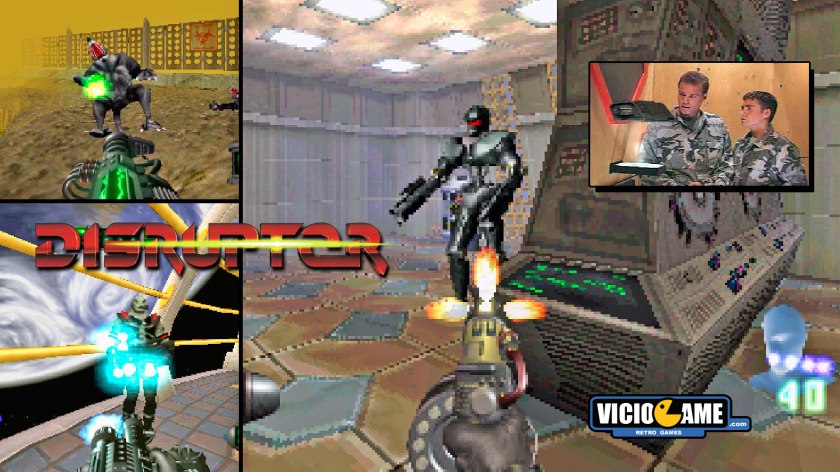
Disruptor is a first-person shooter released in 1996 for the PlayStation. An elite space force soldier is granted psychic powers to fight evil on various colonies across the universe, all while uncovering a plot involving politics, conspiracy, and betrayal.
Developer: Insomniac Games
Publisher: Interplay / Universal Interactive
Release Date: 1996
Platform: Sony PlayStation
🇺🇸 Before it became the home of Spyro the Dragon, Ratchet & Clank, and Marvel’s Spider-Man, Insomniac was a 100-square-foot office, a 3DO dev kit paid for with a good chunk of the founder’s savings, and one nagging question: how do you make a real game? Ted Price was 24, had come from a medical startup, and had incorporated a company called Xtreme Software in February 1994. Experience in the industry: none. Faith in Doom: plenty. The plan was easy to state and treacherous to pull off: a first-person shooter for a CD-based console. Nearly three years later, in November 1996, the result hit shelves as Disruptor, after surviving a failed console, a hastily made name change, a TV cast, and a long line of doors slammed in their faces.
The turning point began with Al Hastings, a Princeton senior (Price’s alma mater) who arrived in California in the summer of 1994 and, in about a month, wrote an FPS engine that the founder calls magic. With the demo recorded on a VHS tape, the pair spent weeks driving around the state in a Saturn (the car, not Sega’s console), knocking on the door of any publisher willing to answer and hearing no after no. When they were down to their last $1,000 to cover rent, the office, and food, a friend tipped them off that Universal had just opened an interactive division. Price and Hastings drove from San Diego to Los Angeles and showed the tape to Mark Cerny, the veteran who had designed Marble Madness at 18 and was now scouting talent for the new label. His verdict was that they were pretty talented for amateurs and that he needed to think it over. When they got back, the light on the answering machine was blinking with a short message from Cerny: “Let’s make a deal.” It was a three-game contract, and Price doesn’t hesitate to say it saved the company. Brian Hastings, Al’s brother, quit his job at Siemens to complete the trio.
Choosing the 3DO as a starting point looks absurd in hindsight, but it made sense in 1994. It was the only CD-based console with development kits within reach of a lone adventurer (Price paid close to $8,000 for his), while Sony still wasn’t handing out equipment to anyone who asked. Al Hastings admits that plenty of people thought Trip Hawkins’s machine could take off and that the naïveté was widespread. Midway through production, reality came knocking: the 3DO sank, the Sega Saturn and the PlayStation emerged as ways out, and Universal suggested a switch to Sony’s console. Price panicked. Al calmly said it was no problem and, in about two weeks, the engine was already running on the PlayStation. A version for the Panasonic M2, the planned successor to the 3DO, was also considered at one point and died along with the machine. Cerny summed up the irony: the game exists only because an enthusiast could get started on inexpensive hardware, and Universal decided to fund it after seeing that prototype up and running.
With the contract signed, the studio got six months to deliver a first playable build, and the newcomers struggled so badly that Universal offered free space at its Los Angeles headquarters, where the programmers had equipment and advice from more experienced people within arm’s reach. When the build finally arrived, the response was blunt: it wasn’t enough, and the team needed to step it up. Price, who drew the maps on graph paper and plotted them point by point before running them through Brian’s tools and Al’s engine, heard the lesson there that he still repeats today: you have to be better than you think. Cerny took on the role of teacher. He showed them how an FPS is planned, how an environment is laid out, where enemies go, and how to think through weapon strategy, and he ended up contributing directly to the level design. The contract also brought Silicon Graphics workstations running Alias Wavefront, Price’s dream setup.
Universal also introduced the studio to a production designer with a film résumé, Catherine Hardwicke, then known for the movie Tank Girl, who years later would direct Thirteen and the first Twilight movie. Price remembers their first meeting: she walked in wearing a hat decorated with a bird that he swore was real. The eccentricity hid a talent for organizing artists and giving a project its visual direction, and it was she who helped the studio bring the game’s look to life. Price figures that those first two years of Insomniac taught him more than the previous ten combined.
The studio’s name also came about because of the game. In the spring of 1996, on the eve of announcing Disruptor at E3, they were still presenting themselves as Xtreme Software, until a lawyer’s letter arrived: a database company in Arizona was already using the name. Only a few days were left. They filled a board with about a hundred suggestions (Ragnarok, Black Sun, Monument, Planet X, Firestorm), and Price’s favorite, suggested by Brian Hastings, was Ice-9, a reference to Kurt Vonnegut. They even got the author’s permission, only to discover that someone with no permission at all was already using the name. With about twenty-four hours on the clock, Insomniac Games emerged, a name that fit a team that barely slept.
In the future of Disruptor, the LightStormer Corps is the elite force of United Earth, and its soldiers receive psionic implants that grant them mental powers. Jack Curtis is a recruit trying to live up to his older brother and commander, Blake, and to the memory of their father, a legend of the Corps, alongside fellow recruit Troy Alexander and under the watchful eye of a mysterious Eve. The plot kicks off with President Krieger giving a speech about defending democracy across the galaxy and, as befits a 1990s sci-fi president, he hides more than he shows. Over thirteen missions, Jack goes from the training levels to Jupiter Station, overrun by the Cryo-Pirates, then to the Triton science colony and on through Mars, Antarctica, and Io, until it all leads to a conspiracy at the top of the government, complete with two different endings depending on the difficulty level chosen.
The conspiracy is told through live-action video, not computer graphics. Price and company drew inspiration from games like Warhawk and Wing Commander, which used real actors, and Universal made the production possible with the group’s television infrastructure, MCA Television Entertainment: the video is directed by Adam Weissman and written by Peter Hankoff, with CGI effects by Foundation Imaging, the studio behind the ships of Babylon 5. The budget, however, was a video game’s budget, and it shows in the cheap sets, the thrifty costumes, and the lack of any room for reshoots. The cast mixes low-profile names with veterans: Don Jeffcoat plays Jack, Christine Champion is Eve, and President Krieger is played by Vaughn Armstrong, one of the most recurring faces in Star Trek, where he played twelve different characters. The result is 1990s cable TV science fiction staged with absolute seriousness, and that seriousness is what makes it irresistible: “think fast, shoot fast, and kick ass,” advises Jack’s brother Blake, without an ounce of irony. Price admits the team set out to tell a serious story and ended up unintentionally funny, and players returned the favor with affection.
On a PlayStation where the genre still lived on ports and Doom imitations, Disruptor hides more interesting technology than the clone label suggests. The levels are polygonal environments with ramps, height changes, and walls that break from right angles, something the Doom engine couldn’t do, and the enemies are pre-rendered sprites that gain volume inside that space, under an atmospheric fog that makes for stunning visuals. The frame rate is steady, which keeps the action fluid, and the art direction conceived by Hardwicke gives each level its own palette and architecture, which helps players find their bearings in corridors that could otherwise all look alike. Electronic Gaming Monthly went so far as to call the visuals the best-looking 3D graphics on the PlayStation, and in the European press previews from mid-1996 there is a curiosity: the enemies were polygonal models, and the final version went with sprites instead.
David Bergeaud’s soundtrack is another strong point. Orchestral and dramatic, it changes arrangement depending on the situation, speeding up in firefights and pulling back during tense pauses, a technique that Next Generation praised and that gives the action its pacing. Bergeaud would go on to work with Insomniac again and write the first Ratchet & Clank scores, which explains why the orchestral sound of Disruptor feels familiar to anyone who knows the series.
The arsenal has the variety the genre called for. The 18mm Automatic opens the list, and the rest come in families: the Phase Rifle and the Phase Repeater, energy weapons that get a temporary power boost from High Frequency Cells; the Lock-On Cannon, which fires homing explosive projectiles; the AM Blaster and the AM Cyclone, which launch antimatter in a cone and in bursts; and two disposable weapons, the Zodiac and the Plasma Lance, brutal in effect and good for a single use. The box promised nine weapons, more than twenty enemies, and twenty real-time environments, but the math that matters is scarcity: you rarely have ammo to spare. The controls, without the analog sticks that were still on their way to the PlayStation, split strafing and the switching of weapons and powers across the shoulder buttons, a scheme the press at the time found precise and that more recent reviews consider a bit clumsy. It takes some getting used to, and it rewards those who learn to aim calmly, which is exactly what scarcity demands.
What sets Disruptor apart from the other clones is the Psionics system. Every few levels, Jack gains a new ability, all of them powered by a single psionic points meter: Shock, a short-range electric shock that costs 5 points; Drain, which costs 1, weakens the target and leaves collectible orbs on the ground; Heal, which restores 20% of health for 20 points; Shield, which protects Jack for 15 points at the cost of a drastic drop in speed; and Blast, a 25-point explosive ball that clears the room and also drops orbs, later upgraded to the TeraBlast version, which can pass through walls. The design is smarter than it looks, because the points barely regenerate on their own: the meter refills with the orbs left behind by Drain and Blast, and you have to go pick them up, which often means running toward the enemy in the middle of a firefight. The powers work less like magic and more like a second resource economy alongside ammo. Price says that balancing weapons and Psionics taught the studio to handle more complex gameplay loops, and the game goes out of its way to test that lesson: on Mars, Jack fights with little besides his powers, and what had been an accessory becomes the main tool. Critics were divided: GameSpot saw the Psionics as nothing more than extra weapons that burn energy, while other critics point to them as what makes the game interesting.
The structure is mission-based, not one continuous maze, and variety is one of its strengths. There is a level with explosive hostages, an open desert level in search of a secret temple, the Dream level, in which Jack is dragged into a hallucination, and a few platforming sections that the game handles with less luck. Enemies are placed with intent, calling for specific weapons and powers, and there are secret areas for those hunting for hidden ammo. The difficulty curve is uneven: some find the beginning easy, and from the midpoint on the game tightens the screws, with narrower environments, tougher enemies, and scarcer items. Levels like Jupiter Station and Antarctica can run from fifteen to thirty minutes, and the checkpoint system offers only three restarts per mission before sending the player back to the start. There are three difficulty levels (Practice, Regular, and Hard), but Practice only unlocks the first five levels and Hard adds just an alternate ending. Passwords let you skip ahead to later levels, although the game won’t let you save after using them, and cheat codes entered with the Select button hand out invincibility, full ammo, and full health to anyone who would rather just see the story. Those who decide to take on the campaign typically spend something like a dozen hours.
The 1996 reception was good without being fervent. Next Generation gave it four stars out of five, praising the balance, the controls, the secret areas, and the sound, and saw in the game as much novelty as a saturated genre allowed. Electronic Gaming Monthly settled on an average of 7.5 and singled out the visuals. GamePro warned that the ammo scarcity and the demand for precise aim can scare off beginners, but said the gameplay keeps even those who don’t like a challenge coming back. IGN gave it an 8 out of 10 and placed the game above the average Doom clone on the PlayStation. GameSpot, with a 7, used Dark Forces and Duke Nukem 3D as examples of the genre’s top tier and left Disruptor among the clones that merely limp along, though it acknowledged the precise controls and had fun with the story and the briefings, which send you off hunting for the Phase Rifle to cook the organic enemies just right. Computer and Video Games gave it 3 out of 5, GamesMaster gave it 84 out of 100, and the average across aggregators sits between 76% and 80%, a number that describes a competent game the press respects without falling in love with.
The recognition, however, didn’t turn into sales. The game reached North America through Universal, with Interplay distributing, and Interplay itself published it in Europe in December 1996 and in Japan in April 1997. There was almost no marketing, and Price remembers seeing the game described in one review as the best game nobody had heard of. It sold around 200,000 copies, a number that barely broke even and left the studio in a serious bind, even though some outlets at the time had named Disruptor the dark horse of the year, which sounded more like a consolation prize than a final score. Morale on the team plummeted, the idea of a sequel was scrapped, and the group concluded what the sales had already said: the audience for that kind of game was somewhere else.
It was Cerny, once again, who pointed the way out. The PlayStation was growing but couldn’t break into the family market, which Nintendo dominated, and a team that had just spent two years in a dark universe wanted something lighter. In a brainstorming session, one of the artists said he had always wanted to make a game about a dragon, and it fell to Craig Stitt, who handled art and design on Disruptor, to present color versions of the character until the purple body with yellow horns and wings won out. Al Hastings’s engine, this time, was built for the opposite of Disruptor: vast horizons instead of claustrophobic corridors. Spyro the Dragon arrived in 1998 and pulled Insomniac out of anonymity, but the lineage was right there: the level design rigor learned the hard way and an engine that got more out of the PlayStation than anyone expected.
History has curious symmetries. The executive who helped design levels for Disruptor in 1996 would go on to become the lead architect of the PlayStation 4 and the PlayStation 5. The studio wouldn’t return to first-person shooters until ten years later, with Resistance: Fall of Man, a PlayStation 3 launch title. It joined Sony in 2019 and released Marvel’s Spider-Man, which topped nine million copies sold within a few months, with Al Hastings, the programmer of the original engine, as lead architect at the time. Between the tiny office of 1994 and that milestone, the distance is measured in lessons, and almost all of them began right there.
Almost thirty years later, Disruptor still hands players stories to tell. Anyone who hunts retro achievements knows that few brave souls dare to try Hard mode. At the end of each level, a status screen shows how complete your run has been up to that point, including the percentage of enemies killed and of the map explored. None of that is required to reach the end of a level, and it doesn’t change the ending of the game either, since it’s merely informational data and documented recognition that massages the egos of the most dedicated players. Killing every enemy isn’t necessarily a problem, especially in the early levels. The real challenge is the map exploration percentage, which depends on hidden triggers in specific spots to be counted. It’s frustrating, for example, to discover that you had to go to one particular corner of an empty room you had already entered, just to get 100% completion (that is, if you manage to work out that this is the right spot for the job). Not to mention that, because of some bugs, getting the best percentage becomes impossible at several points, since it’s not uncommon for enemies to get stuck outside the map, beyond the player’s reach.
The consensus is that Disruptor looks like Doom but wasn’t built to be sprinted through: anyone who tries to play it that way pays the price, because in every room, reading the environment counts for more than reflexes. Retrospectives, like the one Game Informer devoted to the game in 2018, conclude that it remains fun more than twenty years later, and Insomniac itself showcases it as the first item on its list of games.
Disruptor has turned thirty, and the final verdict can’t be reduced to a sales tally. It isn’t the best first-person shooter on the PlayStation, and it doesn’t pretend to be. It’s a portrait of a team that learned to make games by making one, with an engine that a 21-year-old programmer wrote in a month, a science fiction story staged on cheap sets, and a design idea (mental powers subject to the same scarcity logic as ammo) that sounds better than the clone label suggests. Anyone who comes to it today finds a game that demands patience, punishes haste, and rewards those who read the environment, and that carries, in every narrow corridor, the first steps of a studio that didn’t yet know what it would become. The charm of Disruptor lies right there: in the awkward boldness of people who believed in what they were doing and in a talent that was already showing, without asking permission, between one firefight and the next.
🇧🇷 Antes de virar a casa de Spyro the Dragon, de Ratchet & Clank e de Marvel’s Spider-Man, a Insomniac era um escritório de nove metros quadrados, uma estação de desenvolvimento do 3DO paga com boa parte das economias do fundador e uma dúvida incômoda: como se faz um jogo de verdade? Ted Price tinha 24 anos, vinha de uma startup médica e havia incorporado, em fevereiro de 1994, uma empresa chamada Xtreme Software. Experiência no ramo, nenhuma. Fé em Doom, de sobra. O plano era simples de enunciar e traiçoeiro de executar: um tiro em primeira pessoa para console de CD. Quase três anos depois, em novembro de 1996, o resultado chegava às prateleiras com o nome de Disruptor, depois de atravessar um console fracassado, uma troca de nome feita às pressas, um elenco de televisão e uma fila de portas na cara.
A virada começou com Al Hastings, aluno do último ano em Princeton (a mesma universidade de Price), que chegou à Califórnia no verão de 1994 e, em cerca de um mês, escreveu um motor de FPS que o fundador chama de mágica. Com a demonstração gravada numa fita VHS, a dupla passou semanas rodando o estado num Saturn (o automóvel, não o console da Sega), batendo à porta de qualquer publicadora que atendesse e ouvindo um não atrás do outro. Quando restavam mil dólares para bancar aluguel, escritório e comida, um amigo avisou que a Universal acabava de abrir uma divisão interativa. Price e Hastings dirigiram de San Diego até Los Angeles e mostraram a fita a Mark Cerny, o veterano que desenhara Marble Madness aos 18 anos e agora garimpava talentos para o novo selo. O veredito foi que eram bem talentosos para amadores e que ele precisava pensar. Na volta, a luz da secretária eletrônica piscava com um recado curto de Cerny: “vamos fechar negócio”. Era um contrato para três jogos, e Price não hesita em dizer que ele salvou a empresa. Brian Hastings, irmão de Al, deixou o emprego na Siemens para completar o trio.
Escolher o 3DO como ponto de partida parece absurdo em retrospecto, mas tinha lógica em 1994. Era o único console baseado em CD com kits de desenvolvimento ao alcance de um aventureiro solitário (Price pagou algo perto de oito mil dólares pelo dele), enquanto a Sony ainda não entregava equipamento a qualquer interessado. Al Hastings admite que muita gente achava que o aparelho de Trip Hawkins podia vingar e que a ingenuidade era coletiva. Na metade da produção, a realidade bateu à porta: o 3DO naufragou, o Sega Saturn e o PlayStation apareciam como saídas, e a Universal sugeriu a mudança para o console da Sony. Price entrou em pânico. Al respondeu com calma que não havia problema e, em cerca de duas semanas, o motor já rodava no PlayStation. Uma versão para o Panasonic M2, sucessor planejado do 3DO, também chegou a ser cogitada e morreu junto com a máquina. Cerny resumiu a ironia: o jogo só existe porque um entusiasta pôde começar num hardware barato, e a Universal decidiu financiá-lo ao ver aquele protótipo funcionando.
Com o contrato assinado, o estúdio ganhou seis meses para entregar um primeiro build jogável, e o novato penou a tal ponto que a Universal ofereceu espaço de graça em sua sede em Los Angeles, onde os programadores tinham equipamento e conselhos de gente mais experiente ao alcance da mão. Quando o build finalmente chegou, o veredito foi seco: aquilo não era suficiente, e a equipe precisava se mexer. Price, que desenhava os mapas em papel quadriculado e marcava ponto por ponto antes de passá-los pelas ferramentas de Brian e pelo motor de Al, ouviu ali a lição que ainda repete: é preciso ser melhor do que se imagina. Cerny assumiu o papel de professor. Mostrou como um FPS se planeja, como se distribui um ambiente, onde se colocam os inimigos e como se pensa a estratégia das armas, e acabou contribuindo diretamente com o design das fases. O contrato também trouxe estações Silicon Graphics rodando Alias Wavefront, o sonho de consumo de Price.
A Universal também apresentou ao estúdio uma designer de produção com currículo de cinema, Catherine Hardwicke, então conhecida pelo filme Tank Girl e que anos depois dirigiria Thirteen e o primeiro Crepúsculo. Price lembra do primeiro encontro: ela entrou usando um chapéu enfeitado com um pássaro que ele jurou ser de verdade. A excentricidade escondia o talento para organizar artistas e dar rumo visual a um projeto, e foi ela quem ajudou o estúdio a tirar o visual do papel. Price calcula que aqueles dois primeiros anos de Insomniac lhe ensinaram mais do que os dez anteriores somados.
O batismo do estúdio também aconteceu por causa do jogo. Na primavera de 1996, às vésperas de anunciarem Disruptor na E3, ainda se apresentavam como Xtreme Software, até que chegou a carta de um advogado: uma empresa de banco de dados do Arizona já usava o nome. Sobravam poucos dias. Encheram um quadro com cerca de cem sugestões (Ragnarok, Black Sun, Monument, Planet X, Firestorm), e o favorito de Price, sugerido por Brian Hastings, era Ice-9, referência a Kurt Vonnegut. Chegaram a obter a permissão do escritor, só para descobrir que alguém sem permissão nenhuma já usava o nome. Com cerca de vinte e quatro horas no relógio, surgiu Insomniac Games, que combinava com uma equipe que quase não dormia.
No futuro de Disruptor, a LightStormer Corps é a força de elite da United Earth, e seus soldados recebem implantes psiônicos que lhes dão poderes mentais. Jack Curtis é um recruta que tenta alcançar o desempenho do irmão mais velho e comandante, Blake, e a memória do pai, lenda da corporação, ao lado do colega Troy Alexander e sob o olhar de uma misteriosa Eve. A trama inicia com o presidente Krieger discursando sobre a defesa da democracia na galáxia e, como convém a presidentes de ficção científica dos anos 90, ele esconde mais do que mostra. Ao longo de treze missões, Jack passa das fases de treinamento à Jupiter Station, tomada pelos Cryo-Pirates, depois à colônia científica de Triton e, em seguida, por Mars, Antarctica e Io, até desembocar numa conspiração no topo do governo, com direito a dois finais diferentes conforme a dificuldade escolhida.
A conspiração é contada em vídeo filmado, não em computação gráfica. Price e companhia se inspiravam em jogos como Warhawk e Wing Commander, que usavam atores de verdade, e a Universal viabilizou a produção com a estrutura de televisão do grupo, a MCA Television Entertainment: o vídeo tem direção de Adam Weissman, roteiro de Peter Hankoff e efeitos em CGI da Foundation Imaging, o estúdio das naves de Babylon 5. O dinheiro, porém, era o de um jogo, e isso aparece em cenários baratos, figurinos econômicos e nenhum espaço para refilmagens. O elenco mistura nomes discretos e veteranos: Don Jeffcoat dá corpo a Jack, Christine Champion é Eve e o presidente Krieger é Vaughn Armstrong, um dos rostos mais recorrentes de Star Trek, onde viveu doze personagens diferentes. O resultado é uma ficção científica de TV a cabo dos anos 90 encenada com seriedade absoluta, e é a seriedade que a torna irresistível: “Pense rápido, atire rápido e detone!”, aconselha o irmão Blake, sem um pingo de ironia. Price admite que a equipe quis contar uma história séria e acabou fazendo graça sem querer, e o público retribuiu com carinho.
Num PlayStation em que o gênero ainda vivia de conversões e imitações de Doom, Disruptor esconde uma tecnologia mais interessante do que o rótulo de clone sugere. Os cenários são ambientes poligonais com rampas, desníveis e paredes que fogem do ângulo reto, algo que o motor de Doom não fazia, e os inimigos são sprites pré-renderizados que ganham volume dentro desse espaço, sob uma neblina atmosférica que rende imagens incríveis. O framerate é estável, o que dá fluidez à ação, e a direção de arte conceituada por Hardwicke dá a cada fase uma paleta e uma arquitetura próprias, o que ajuda o jogador a se orientar em corredores que poderiam ser todos iguais. A Electronic Gaming Monthly chegou a chamar o visual de o mais bonito em 3D do PlayStation, e nas prévias da imprensa europeia de meados de 1996 há uma curiosidade: os inimigos eram modelos poligonais, e a versão final preferiu os sprites.
A trilha de David Bergeaud é outro trunfo. Orquestral e dramática, ela muda de arranjo conforme a situação, acelerando nos tiroteios e recuando nas pausas tensas, um recurso que a Next Generation elogiou e que dá ritmo à ação. Bergeaud voltaria a trabalhar com a Insomniac e assinaria as primeiras trilhas de Ratchet & Clank, o que explica por que o orquestral de Disruptor soa familiar a quem conhece a série.
O arsenal tem a variedade que o gênero pedia. A 18mm Automatic abre a lista, e o resto vem em famílias: o Phase Rifle e o Phase Repeater, de energia, que ganham potência temporária com as High Frequency Cells; o Lock-On Cannon, que dispara projéteis explosivos teleguiados; o AM Blaster e o AM Cyclone, que lançam antimatéria em cone e em rajada; e duas armas descartáveis, o Zodiac e o Plasma Lance, de efeito brutal e uso único. A embalagem prometia nove armas, mais de vinte inimigos e vinte ambientes em tempo real, mas a conta que importa é a da escassez: a munição raramente sobra. Os comandos, sem os analógicos que ainda iriam chegar ao PlayStation, dividem o strafe e a troca de armas e poderes entre os botões de ombro, um esquema que a imprensa da época achou preciso e que análises recentes consideram um pouco desajeitado. Pede adaptação, e recompensa quem aprende a mirar com calma, justamente o que a escassez exige.
O que separa Disruptor dos outros clones é o sistema de Psionics. A cada poucas fases, Jack ganha uma nova habilidade, todas alimentadas por um único medidor de pontos psiônicos: Shock, um choque elétrico de curto alcance que custa 5 pontos; Drain, que custa 1, enfraquece o alvo e deixa pelo chão esferas coletáveis; Heal, que devolve 20% da vida por 20 pontos; Shield, que protege Jack por 15 pontos ao custo de uma queda drástica de velocidade; e Blast, uma bola explosiva de 25 pontos que limpa a sala e também solta esferas, depois aprimorada na versão TeraBlast, capaz de atravessar paredes. O design é mais esperto do que parece, porque os pontos praticamente não se regeneram sozinhos: o medidor se recompõe com as esferas deixadas por Drain e Blast, e é preciso ir buscá-las, o que muitas vezes significa correr em direção ao inimigo em plena troca de tiros. Os poderes funcionam menos como mágica e mais como uma segunda economia de recursos ao lado da munição. Price diz que equilibrar armas e Psionics ensinou o estúdio a lidar com ciclos de jogo mais complexos, e o jogo faz questão de testar a lição: em Mars, Jack luta com pouco além dos poderes, e o que era acessório vira ferramenta principal. A crítica se dividiu: a GameSpot viu nos Psionics apenas armas extras que gastam energia, enquanto outros críticos os apontam como o que torna o jogo interessante.
A estrutura é de missões, não de labirinto contínuo, e a variedade é um dos trunfos. Há fase de reféns explosivos, fase de deserto aberto à procura de um templo secreto, a Dream, em que Jack é arrastado para uma alucinação, e algumas incursões por plataformas que o jogo tenta com menos sorte. Os inimigos são distribuídos com intenção, pedindo armas e poderes específicos, e há áreas secretas para quem procura munição escondida. A curva de dificuldade é desigual: há quem ache o começo fácil, e a partir da metade o jogo aperta, com ambientes mais estreitos, inimigos mais resistentes e itens mais raros. Fases como Jupiter Station e Antarctica chegam a durar de quinze a trinta minutos, e o sistema de checkpoints oferece só três recomeços por missão antes de mandar o jogador de volta ao início. Existem três níveis de dificuldade (Practice, Regular e Hard), mas Practice só libera as cinco primeiras fases e Hard acrescenta apenas um final alternativo. Passwords permitem pular para fases mais avançadas, embora o jogo não deixe salvar depois de usá-las, e os códigos de trapaça digitados com o botão Select entregam invencibilidade, munição e vida cheias a quem prefere ver a história. Quem decide enfrentar a campanha costuma gastar algo como uma dúzia de horas.
A recepção de 1996 foi boa, sem ser fervorosa. A Next Generation deu quatro estrelas de cinco, elogiando o equilíbrio, os controles, as áreas secretas e o som, e viu no jogo o máximo de novidade que um gênero saturado permitia. A Electronic Gaming Monthly fechou numa média de 7,5 e destacou o visual. A GamePro avisou que a escassez de munição e a exigência de mira precisa podem assustar iniciantes, mas que a jogabilidade traz de volta até quem não gosta do desafio. A IGN deu 8 de 10 e colocou o jogo acima da média dos clones de Doom do PlayStation. A GameSpot, com um 7, usou Dark Forces e Duke Nukem 3D como exemplos do topo do gênero e deixou Disruptor entre os clones que apenas se arrastam, embora tenha reconhecido os comandos precisos e se divertido com a história e com os briefings, que mandam caçar o Phase Rifle para deixar os inimigos orgânicos no ponto. A Computer and Video Games deu 3 de 5, a GamesMaster, 84 de 100, e a média nos agregadores fica entre 76% e 80%, número de jogo competente que a imprensa respeita sem se apaixonar.
O reconhecimento, porém, não virou venda. O jogo chegou à América do Norte pela Universal, com a Interplay distribuindo, e a própria Interplay o publicou na Europa em dezembro de 1996 e no Japão em abril de 1997. Quase não houve marketing, e Price se lembra de ver o jogo descrito numa crítica como o melhor de que ninguém ouviu falar. Foram cerca de 200 mil cópias, número que mal empatava as despesas e deixou o estúdio num aperto sério, apesar de alguns veículos da época terem apontado Disruptor como azarão do ano, o que soava mais como consolo do que como placar. O moral da equipe despencou, a ideia de uma sequência foi descartada e o grupo concluiu o que as vendas já diziam: o público para aquele tipo de jogo estava em outro lugar.
Foi Cerny, mais uma vez, quem apontou a saída. O PlayStation crescia, mas não conseguia entrar no mercado familiar, que a Nintendo dominava, e uma equipe que acabara de passar dois anos num universo sombrio queria algo mais leve. Numa rodada de ideias, um dos artistas disse que sempre quis fazer um jogo sobre um dragão, e coube a Craig Stitt, que em Disruptor assina arte e design, apresentar as versões de cor do personagem até que o corpo roxo com chifres e asas amarelos se impôs. O motor de Al Hastings, desta vez, nasceu para o oposto de Disruptor: horizontes vastos em vez de corredores claustrofóbicos. Spyro the Dragon chegou em 1998 e tirou a Insomniac do anonimato, mas a linhagem estava ali: o rigor de design de fases aprendido a duras penas e um motor que fazia o PlayStation render além do esperado.
A história tem simetrias curiosas. O executivo que ajudou a desenhar fases de Disruptor em 1996 viria a ser o arquiteto-chefe do PlayStation 4 e do PlayStation 5. O estúdio só voltaria ao tiro em primeira pessoa dez anos depois, com Resistance: Fall of Man, lançamento do PlayStation 3, passou a integrar a Sony em 2019 e lançou Marvel’s Spider-Man, que ultrapassou nove milhões de cópias vendidas em poucos meses, com Al Hastings, o programador do motor original, como arquiteto-chefe na época. Entre o escritório minúsculo de 1994 e esse patamar, a distância se mede em lições, e quase todas começaram ali.
Quase trinta anos depois, Disruptor continua rendendo histórias a quem o joga. Quem caça conquistas retrô sabe que poucos corajosos ousam ativar o modo Hard. No fim de cada fase, um status indica o quão completa foi sua jornada até ali, incluindo porcentagem de inimigos mortos e de exploração do mapa. Nada disso é obrigatório para chegar ao fim da fase, tampouco muda o final do jogo, pois é apenas um dado informativo e reconhecimento comprovado que massageia o ego dos jogadores mais esforçados. Matar todos os inimigos não é necessariamente um problema, principalmente nas fases iniciais. O verdadeiro desafio fica por conta da porcentagem da exploração do mapa, que depende de gatilhos ocultos em locais específicos para ser contabilizado. É frustrante, por exemplo, descobrir que era necessário ir em um canto específico de uma sala vazia, na qual você já havia entrado, só para obter 100% de completude (isso se você deduzir que ali é o ponto correto para esta função). Sem contar que, por conta de alguns bugs, em vários momentos se torna impossível obter a melhor pocentagem, pois não é raro inimigos ficarem presos fora do mapa, fora do alcance do jogador.
O consenso é que Disruptor parece Doom, mas não foi feito para ser corrido: quem tenta tratá-lo assim paga o preço, porque a cada sala a leitura do ambiente pesa mais do que o reflexo. Retrospectivas, como a que a Game Informer dedicou ao jogo em 2018, concluem que ele segue divertido mais de vinte anos depois, e a própria Insomniac o exibe como o primeiro item de sua lista de jogos.
Disruptor completou trinta anos, e o balanço não se fecha pelo placar de vendas. Ele não é o melhor tiro em primeira pessoa do PlayStation e nem pretende ser. É o retrato de uma equipe que aprendeu a fazer jogos fazendo um jogo, com um motor que um programador de 21 anos escreveu em um mês, uma ficção científica encenada com cenários baratos e uma ideia de design (poderes mentais submetidos à mesma lógica de escassez da munição) que soa melhor do que o rótulo de clone sugere. Quem chega a ele hoje encontra um jogo que cobra paciência, castiga a pressa e recompensa quem lê o ambiente, e que traz, em cada corredor estreito, os primeiros passos de um estúdio que ainda não sabia o que viria a ser. A graça de Disruptor está justamente aí: na ousadia desajeitada de quem acreditava no que fazia e no talento que já aparecia, sem pedir licença, entre um tiroteio e outro.
🤑💲Earn money without doing anything! Just leave these apps open:
https://r.honeygain.me/CONTA9DB02
https://packetstream.io/?psr=1uPb
⬛ 𝗧𝗶𝗸𝗧𝗼𝗸: https://www.tiktok.com/@viciogame
🟧 𝗜𝗻𝘀𝘁𝗮𝗴𝗿𝗮𝗺: http://www.instagram.com/viciogame
🟥 𝗬𝗼𝘂𝘁𝘂𝗯𝗲: http://www.youtube.com/viciogame
🟦 𝗙𝗮𝗰𝗲𝗯𝗼𝗼𝗸: http://www.facebook.com/viciogame
🔳 𝗧𝗵𝗿𝗲𝗮𝗱𝘀: https://www.threads.net/@viciogame
🟪 𝗧𝘄𝗶𝘁𝗰𝗵: https://www.twitch.tv/ViciogameRetroGames
🟨 𝗕𝗹𝗼𝗴: http://www.viciogameblog.com/
🟦𝗧𝘄𝗶𝘁𝘁𝗲𝗿: http://www.twitter.com/viciogame
#Viciogame #Gameplay #LetsPlay #Playthrough #Games #Gaming #Videogames #Review #Game #Detonado #Walkthrough #Ending #Reviews #Facts #Retro #RetroGaming #Roms #Emulator #Longplay #Speedrun #NoCommentary #Disruptor #PlayStation #FPS #Doom #fistpersonshooter #Quake #DukeNukem #Spyro #ratchetandclank #SpiderMan #Insomniac #PSX #PsOne #PS #PS1 #PS2 #PS3 #PS4 #PS5 #PS6 #3DO #SegaSaturn

